
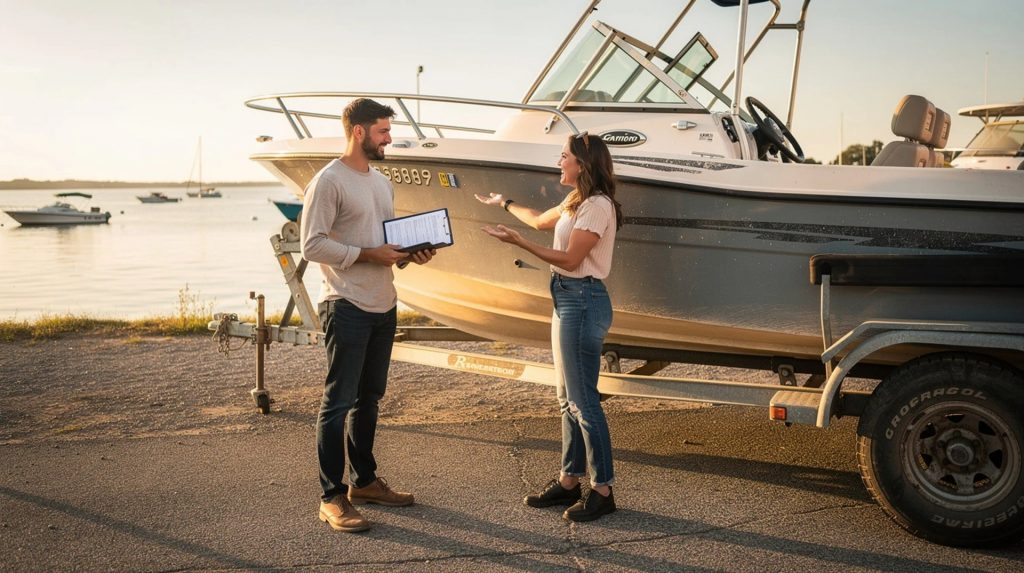
Yes, if you buy a used boat, you typically need to re-register it in your name before operating it. Registration stays tied to the previous owner, so the title transfer and new registration are your responsibility as the buyer.
Does a Used Boat Registration Transfer Automatically to the New Owner?
No. Registration does not automatically transfer when a boat changes hands. The seller’s registration becomes invalid the moment the title is signed over, and you’re operating unregistered until you complete the paperwork in your own name.
- Title transfer must happen first, before new registration is issued
- Bill of sale is required in most states as proof of purchase
- Grace periods vary by state, typically 15 to 30 days after purchase
- Operating without valid registration can result in fines or impoundment
A solid automotive bill of sale protects both buyer and seller during the transition. Knowing What Is the Best Proof of Vehicle Ownership? can help you confirm which documents actually hold weight during a title transfer.
What Documents Do You Need to Re-Register a Used Boat?
The exact list varies by state, but most states require the same core documents. Missing even one can stall the process for weeks.
Ready to register your vehicle?
Join thousands of vehicle owners who use Dirt Legal to handle their registration quickly and hassle-free.
Register Your Vehicle Today → →- Signed title from the previous owner (front and back)
- Bill of sale showing purchase price, date, and both parties’ signatures
- Photo ID matching the buyer’s name
- Completed registration application from your state’s agency
- Payment for registration and title transfer fees
- Hull Identification Number (HIN) verification in some states
If the title is missing or has discrepancies, you may face additional steps, similar to the process for vehicles with title defects. Understanding What Makes a Vehicle Title Invalid can help you spot problems before you sign anything.
How Do State Registration Fees and Timelines Compare?
Fees and processing times differ significantly by state. Here’s a general comparison of what buyers can expect across a few common states.
| State | Typical Title Transfer Fee | Registration Fee (annual) | Processing Time |
|---|---|---|---|
| Florida | $78.25 | $5, $22 (by length) | 2, 4 weeks |
| Texas | $28, $33 | $32, $150 (by length) | 2, 3 weeks |
| Montana | $10, $35 | $8.50, $30 | 1, 3 weeks |
| South Dakota | $10 | $15, $100 (by value) | 1, 2 weeks |
| California | $23 | $20, $60 (by length) | 4, 8 weeks |
Montana and South Dakota consistently offer lower fees and faster processing. If you own other vehicles, it’s worth knowing how those states handle things like how to register a car in Montana without living there, since the same cost advantages apply broadly.
What Happens If There’s a Lien on the Boat You’re Buying?
A lien means the boat is collateral on an outstanding loan. If the seller hasn’t paid it off, you can’t get a clean title. This is a serious issue that trips up many private-party buyers.
- Always ask the seller for a lien release letter before closing
- Run a HIN check or title search to confirm the lien status
- Never hand over full payment until the title is clean and signed
- If a lien exists, require proof it’s been satisfied before completing the sale
The same caution applies to cars and powersports vehicles. Our guide on Title Isn’t Always Ownership explains why a signed title doesn’t always mean you own the vehicle free and clear.
Is Title Jumping a Risk With Used Boats?
Yes. Title jumping (also called title skipping) happens when a buyer sells a vehicle or vessel before registering it in their own name. Understanding what is title jumping matters because it creates a broken ownership chain that can make your title nearly impossible to clear later.
- The chain of ownership breaks, complicating future sales
- Penalties for title jumping can include fines up to $1,000+ in some states
- You may be held liable for unpaid taxes or violations by previous owners
- Re-titling a jumped title often requires a bonded title process
Always register in your name promptly. If you’ve already run into a title problem with another vehicle, VIN Inspections: What They Are, When You Need One, and How to Pass walks through how to address ownership verification issues.

Can a Montana LLC Be Used to Register a Boat?
Montana doesn’t title or register boats the same way it does land vehicles, so a Montana LLC vehicle registration strategy applies specifically to cars, trucks, motorcycles, RVs, and powersports, not watercraft. That said, if you own other high-value vehicles alongside your boat, the Montana LLC approach can still save you significantly on those assets.
Montana has no sales tax on vehicles, no emissions testing, and low annual fees, which is why many owners register a car in Montana through an LLC even when they don’t live there. The same benefits extend to RVs, motorcycles, and other powersports. Learn more about the full approach in The Complete Guide to Forming a Montana LLC for Vehicle Registration.
Montana LLC vehicle registration benefits for land vehicles and powersports’ width=’1200′ height=’675′>Frequently Asked Questions
How long do I have to re-register a used boat after buying it?
Most states give buyers a grace period of 15 to 30 days after purchase to complete the title transfer and new registration. Operating the boat beyond that window without valid registration in your name can result in fines. Check your specific state’s DMV or marine authority for the exact deadline.
Can I operate a used boat with the seller’s old registration?
Generally, no. Once the title is signed over, the seller’s registration is void. Some states allow a short temporary operating period with a bill of sale as proof of recent purchase, but this is not universal. Don’t assume the old registration covers you, get your own paperwork started immediately.
What if the used boat doesn’t have a title?
Older boats and those from states that don’t issue titles for small vessels may not have a formal title document. In that case, a notarized bill of sale and HIN verification are typically used to establish ownership. You may also need to pursue a bonded title or affidavit process, depending on your state’s requirements.
Do I need a separate registration for a boat trailer?
Yes. A boat trailer is registered separately as a vehicle in most states. You’ll need a title transfer and registration for the trailer just as you would for any other towed vehicle. Trailer registration fees vary but are usually modest, ranging from $10 to $50 annually depending on weight and state.
What is the penalty for title jumping on a boat?
Penalties vary by state but can range from $100 to over $1,000 in fines, plus back taxes and fees owed on any skipped transfers. In some states it’s treated as a misdemeanor. Beyond the fines, a jumped title can make the vessel nearly impossible to sell or refinance cleanly later.
Does Montana have sales tax on boat purchases?
Montana has no general sales tax on any purchase, including vehicles. That’s one reason registering land vehicles through a Montana LLC is popular. However, Montana’s watercraft registration rules differ from its land vehicle rules, so the LLC strategy applies to cars, RVs, and powersports, not boats. See our full breakdown at Does Montana Have Sales Tax on Vehicles?
Disclaimer: This article is for informational purposes only and does not constitute legal or registration advice. Requirements vary by state. Consult a qualified professional or your state’s motor vehicle authority for guidance specific to your situation.