
VIN inspections trip up more vehicle owners than almost any other part of the registration process. You think you’re ready to plate your car or motorcycle, and then an inspector or DMV clerk throws a wrench in the works. The number doesn’t match. The paperwork doesn’t line up. Now you’re stuck.
This guide covers everything you need to know about vehicle VIN inspections: what they are, who requires them, why they fail, and what you can do to get your title and registration back on track. Whether you bought a used car, imported a vehicle, or are dealing with a salvage situation, this page has you covered.
And if you’d rather skip the DMV line entirely, we can help with that too.
What a VIN Inspection Actually Is
A Vehicle Identification Number (VIN) inspection is a physical check confirming that the number stamped or engraved on a vehicle matches the number on its title, registration, and other paperwork. It’s not a safety check. It’s not an emissions test. It’s purely about confirming identity, making sure the car in front of you is actually the car on paper.
Every vehicle manufactured for the U.S. market since 1981 has a standardized 17-character VIN. That number appears in multiple places on the vehicle, and an inspector is trained to find them, read them, and compare them against official records.
Where Is the VIN Located on a Vehicle?
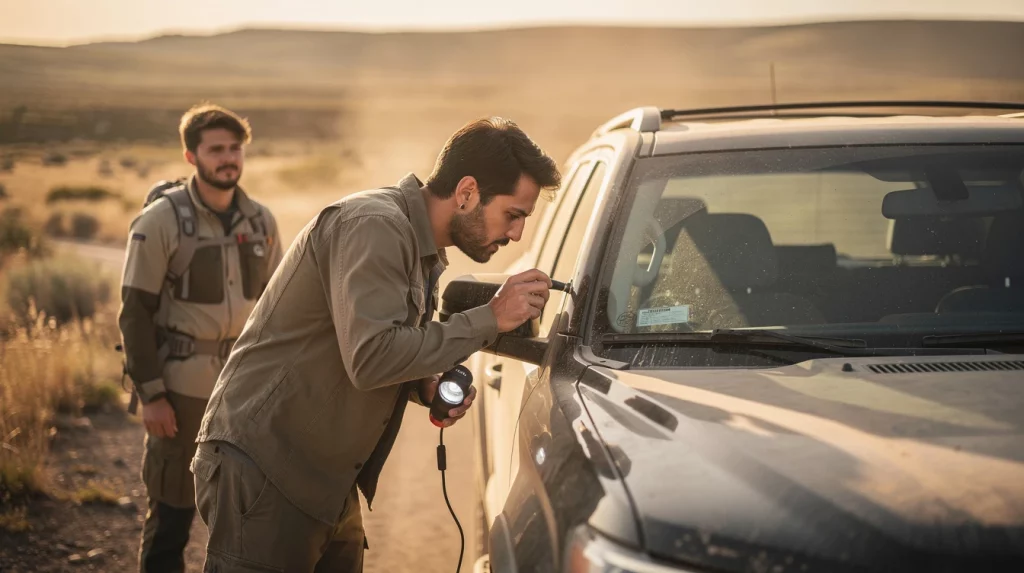
Most owners know the dashboard VIN plate, visible through the lower-left corner of the windshield. But a thorough vehicle VIN inspection goes further. Common locations include the driver’s door jamb sticker, the firewall under the hood, the frame rail, and sometimes the engine block. On motorcycles, the VIN is typically stamped into the frame near the steering head.
Inspectors may check several of these locations, especially on older vehicles or anything with a questionable title history. If even one location shows a discrepancy, that’s a problem worth addressing before you go any further in the registration process.
Who Performs VIN Inspections?
Depending on your state, VIN inspections may be carried out by a state trooper, a licensed DMV agent, a county sheriff’s deputy, or an authorized third-party inspector. Some states allow licensed dealers to perform them. Requirements vary widely, so check your specific state’s motor vehicle division before scheduling anything.
Montana, for instance, routes vehicle registration through the county treasurer’s office. You can find location-specific details through the Montana County Treasurers office for in-person registration services.
When Are VIN Inspections Required?
Not every registration requires a physical inspection. A lot of routine renewals skip it entirely. But certain situations almost always trigger the requirement, and knowing them in advance saves you a wasted trip.
Ready to register your vehicle?
Join thousands of vehicle owners who use Dirt Legal to handle their registration quickly.
Register Your Vehicle Today → →Out-of-State Title Transfers
Bringing a vehicle from another state into your home state for the first time? Expect a VIN inspection. States want to confirm the vehicle hasn’t been reported stolen and that the title history is clean. This is one of the most common scenarios where people get caught off guard, especially if they bought the vehicle privately and received a simple bill of sale without a clean title.
If you’re working through a DMV title transfer from another state, having the VIN confirmed early in the process prevents delays down the line. A more detailed look at what can go wrong is available in untangling title nightmares: how to fix lost paperwork, surety bonds, and ownership issues, which covers exactly how tangled these situations can get.
Salvage and Rebuilt Title Vehicles
Vehicles with salvage or rebuilt titles face stricter scrutiny. Before a state will issue a clean or rebuilt title, an inspector usually verifies the VIN, confirms the vehicle’s identity, and cross-references the repair documentation. Skipping or rushing this step is one of the top reasons rebuilt title applications get rejected.
If you’re dealing with a vehicle that has a complicated ownership or title history, it’s worth reading about title isn’t always ownership: the reality most people miss before you assume a clean VIN means you’re in the clear.
Vehicles Without Titles (Bill of Sale Only)
Bought something at auction or from a private seller with no title? You’ll almost certainly need a VIN inspection before you can pursue a bonded title or any other path to formal ownership. States need physical confirmation that the vehicle exists, is where you say it is, and matches whatever documentation you do have.
What Happens During a VIN Inspection
The process itself is usually faster than people expect. An inspector physically examines the vehicle, locates the primary VIN plate, checks secondary locations if needed, and records the number. They compare it against your title or registration documents. The whole thing can take ten minutes when everything lines up.
Common Reasons VIN Inspections Fail
Most failures come down to a handful of recurring issues:
- Altered or tampered VIN plates. This is a serious red flag. Altered VINs can indicate a stolen vehicle or fraud. Even minor damage to a VIN plate can cause problems if it looks like tampering.
- Mismatched numbers across locations. Replacement panels, frames, or engine blocks sometimes carry different numbers. This is common on older vehicles and restorations.
- Typos or transpositions on paperwork. A single wrong digit on a title or bill of sale can halt everything. The vehicle VIN and the paperwork VIN must be identical.
- Missing or obscured VIN. If the number isn’t legible, the inspector can’t complete the check. Rust, repaints, and physical damage all cause this.
- Stolen vehicle hit on records. NHTSA and national databases flag known stolen vehicles. You can do a preliminary check through the NHTSA VIN decoder before your inspection appointment.
Running a quick VIN history check before you schedule your inspection is always a smart move. Our VIN Check and Instant Vehicle History tool lets you pull a full vehicle report before anything becomes official.
What to Bring to a VIN Inspection
Show up prepared and you’ll get through it fast. At minimum, bring your current title or the paperwork you’re titling from (bill of sale, MSO, or previous registration), a valid government-issued photo ID, and the vehicle itself. Some states also want proof of insurance. Call ahead and confirm requirements with your local office, because missing one document means a return trip.
VIN Inspections by State: What Varies
There is no single federal standard for VIN inspections. Each state sets its own rules about when they’re required, who can perform them, and what the fee is. Here’s a general overview of how requirements break down across common registration situations.
| Scenario | Inspection Required? | Who Performs It | Typical Fee |
|---|---|---|---|
| Out-of-state title transfer | Yes, in most states | State trooper, DMV agent, or authorized inspector | $5, $50 |
| Salvage/rebuilt title application | Yes, almost universally | State inspection station or highway patrol | $15, $75 |
| No-title vehicle (bill of sale only) | Yes, required for bonded title process | DMV inspector or licensed dealer (varies) | $10, $50 |
| New vehicle from dealer | Rarely required | Dealer handles at point of sale | Usually included in dealer fees |
| Annual registration renewal | No, in most states | N/A | N/A |
| Montana LLC registration | Not required by Montana | N/A, no inspection required | No inspection fee |
One reason Montana LLC registration appeals to so many vehicle owners is exactly what that last row says. Montana doesn’t require a physical VIN inspection to register a vehicle through a properly formed LLC. No emissions tests, no inspection appointments, no waiting in line. You can find a complete breakdown at the Montana Motor Vehicle Division.
If you’re weighing your options for registration costs across states, the difference in vehicle registration costs can be significant. Learn more about what state you can register your vehicle in without living there to understand the full picture.
Tired of chasing down inspectors and waiting weeks for your paperwork to clear? See how our process works, and let us handle the DMV on your behalf.
See How We Can Help With Your Vehicle Registration →Montana LLC Registration: The VIN Inspection Alternative
Registering your vehicle through a Montana LLC is one of the most talked-about options in the vehicle ownership space, and part of its appeal is the absence of requirements that other states impose. No sales tax. No emissions testing. No mandatory VIN inspection appointment.
Montana is one of five states with no sales tax, and its registration process is significantly simpler than most. For high-value vehicles, exotic cars, RVs, and motorcycles, the savings can be substantial. Montana also doesn’t require you to live there to form an LLC.
Who Uses Montana LLC Registration?
The range is wider than most people assume. Exotic car collectors use it to avoid six-figure sales tax bills. RV owners use it to cut registration costs. Motorcycle enthusiasts use it when their home state imposes strict inspection requirements. People buying vehicles from private sellers with incomplete paperwork sometimes use it as a cleaner path to proper registration.
For a deeper look at why people go this route, should you put your car in an LLC? covers the practical considerations honestly. And if you’re specifically looking at RVs, the Montana recreational vehicle registration guide breaks down the process in detail.
Does Montana Registration Eliminate All VIN Requirements?
Montana doesn’t require a VIN inspection as part of its registration process. That said, your home state may still want to see a valid VIN if you’re ever pulled over or if you go to re-register the vehicle locally later. A Montana title is a legitimate legal document, but you should always keep your VIN records clean and consistent across all paperwork. Any discrepancy between your title and the physical number on your vehicle can create complications regardless of which state issued the title.
Frequently Asked Questions About VIN Inspections
How long does a VIN inspection take?
A straightforward VIN inspection typically takes 10 to 30 minutes when everything is in order. The inspector locates the VIN on the vehicle, compares it to your paperwork, and records the result. Complications, like mismatched numbers or unclear plates, can extend the process significantly. Coming prepared with complete documentation is the single best way to keep it short.
Can I fail a VIN inspection for something I didn’t do?
Yes. If you bought a vehicle with a damaged VIN plate, tampered numbers, or title errors made by a previous owner, you’ll still run into problems during the inspection. That’s why a VIN history check before purchase is so important. Running a report through our VIN Check and Instant Vehicle History tool before you buy gives you a clear picture of what you’re walking into.
Does every state require a VIN inspection for out-of-state vehicles?
Most states do require some form of VIN verification when a vehicle is first titled or registered from out of state. The specifics vary: some require a certified law enforcement inspection, others accept a notarized statement or dealer verification. A handful of states have minimal requirements. Montana, as covered above, doesn’t require an inspection for LLC registrations, which is one of its major practical advantages for owners who want a simpler path.
What happens if my VIN is damaged or unreadable?
A damaged or unreadable VIN is a real problem, but it’s not always a dead end. You’ll typically need to contact your state’s DMV or motor vehicle division to request an assigned VIN. This involves a formal inspection, documentation of the damage or absence, and an application for a replacement number. The process varies by state but generally takes several weeks. Starting early is important, because you can’t legally register or sell a vehicle with an unreadable VIN.
Is a VIN inspection the same as a vehicle inspection?
No. A vehicle inspection (sometimes called a safety inspection or emissions test) checks whether the car is roadworthy and meets environmental standards. A VIN inspection only confirms the vehicle’s identity by verifying the number matches official records. Some states combine them into a single appointment, but they are separate processes with separate purposes. Many states that require safety or emissions testing do not require a standalone VIN inspection for renewals.
Can I register a vehicle in Montana without a VIN inspection?
Yes. Montana does not require a physical VIN inspection as part of its standard registration process. This applies to vehicles registered through a Montana LLC, which is a common path for owners of high-value vehicles, RVs, and motorcycles. You still need accurate VIN documentation on your title paperwork, but there is no inspection appointment required by the state. Check the official Montana Motor Vehicle Division for current requirements.
What if the VIN on my title doesn’t match my car?
This is one of the more stressful situations to be in, and it happens more often than you’d think, usually due to a clerical error somewhere in the title chain. Your first step is determining whether the error is on the paperwork or on the vehicle itself. A paperwork typo can often be corrected through an affidavit or title correction request with your DMV. A discrepancy on the physical vehicle requires more investigation. Either way, don’t wait: driving a vehicle with mismatched VIN documentation creates liability.
Do motorcycles and powersports vehicles need VIN inspections?
Yes, and in some states the requirements for motorcycles are actually stricter than for cars, because motorcycle titles are historically easier to manipulate. Dirt bikes and off-road vehicles that owners want to convert to street use typically require VIN inspections as part of the street-legal conversion process. If you’re working through that process, do you need a license for a dirt bike covers related requirements that often come up in the same conversation.
For motorcycles and powersports registered in Montana, the process through a properly formed LLC still skips the state-level inspection requirement. Ride Legal covers the specifics of how to make your dirt bike street legal for owners navigating that path.
VIN inspections, title transfers, registration paperwork, Montana LLC formation. We’ve handled it all for thousands of vehicle owners across the country. Don’t spend another afternoon at the DMV.
Start Your Vehicle Registration Today, No Hidden Fees →The Bottom Line on VIN Inspections
VIN inspections are a standard part of the registration process for out-of-state transfers, salvage titles, and vehicles purchased without complete documentation. They’re not complicated when everything lines up, but a single discrepancy can stall your title transfer for weeks.
Knowing what inspectors look for, preparing your paperwork in advance, and running a vehicle VIN inspection history check before you buy are the three habits that prevent most problems. And if you want to skip the inspection requirement entirely, Montana LLC registration remains one of the cleanest, most cost-effective paths available for eligible vehicles. Dirt Legal handles the paperwork so you don’t have to.