Required documentation when operating your registered vessel covers more ground than most owners expect. A current registration card is just the start. Depending on your state, your vessel type, and whether it’s titled separately from its registration, you may need several documents accessible at all times.
This guide walks you through what those documents are, why they matter, and what happens if you’re missing one during a routine inspection or traffic stop on the water. You’ll also find out how vehicle registration principles apply broadly, including for trailered vessels and the tow vehicles that haul them.
Honest heads up: Dirt Legal focuses on land-vehicle registration, title transfers, and Montana LLC vehicle registration. We don’t handle watercraft paperwork directly, but the document rules that apply to vessels share a lot of overlap with what we do every day for cars, trucks, RVs, motorcycles, and powersport vehicles. So if you’re also sorting out registration for your tow vehicle or trailer, we’ve got that covered.
What Required Documentation When Operating Your Registered Vessel Actually Means
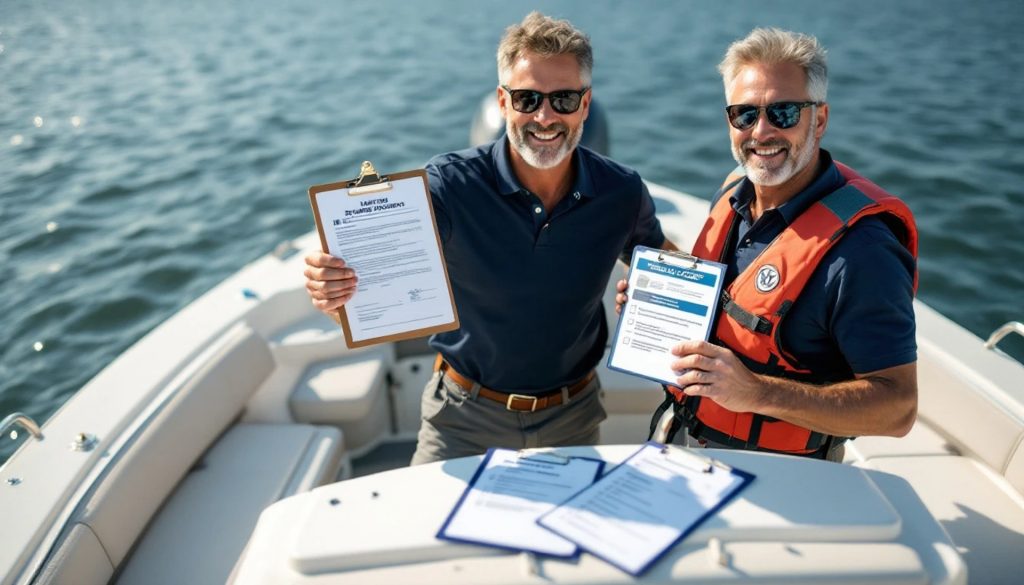
Most states require vessel operators to carry the boat’s registration certificate aboard at all times while underway. This document proves the vessel is registered with the state and lists the owner of record. It’s the watercraft equivalent of a vehicle registration card, the first thing an officer asks to see during a boarding inspection.
Registration requirements vary by state, but the U.S. Coast Guard and most state agencies agree on a short list of documents that must be present. Missing even one can result in a citation, a fine, or being ordered off the water until the paperwork is sorted.
The Vessel Registration Certificate
The registration certificate is typically a paper document issued by your state’s motor vehicle division or boating authority. It includes the registered vessel number (the alphanumeric code displayed on the bow), the owner’s name and address, and the registration expiration date.
Keep the original aboard, not a photocopy. Most states won’t accept a copy during an inspection. Store it in a waterproof bag or document pouch, inspectors want to see a legible, intact document, not a water-damaged sheet of paper.
Proof of Ownership: Title vs. Registration
Many states issue both a title and a registration for vessels above a certain length or horsepower. The title proves ownership. The registration proves the vessel is currently authorized to operate in that state. These are separate documents, and confusing them is one of the most common mistakes new boat owners make.
For a deeper look at how ownership documentation works across vehicle types, check out What Is the Best Proof of Vehicle Ownership? A Complete Document Guide. The same principles around title validity and chain of ownership apply whether you’re dealing with a watercraft, a truck, or a trailer.
Hull Identification Number (HIN) Verification
Every vessel manufactured after 1972 has a Hull Identification Number (HIN), which functions like a VIN on a car. During inspections, officers may cross-reference the HIN against registration records to confirm the vessel hasn’t been reported stolen or had its identifying information altered.
VIN inspections for land vehicles work the same way. If you’re registering a car or powersport vehicle with a contested or hard-to-read identification number, VIN Inspections: What They Are, When You Need One, and How to Pass covers what to expect during that process.
Safety and Compliance Documents Required Alongside Registration
Registration paperwork is only part of what you need on the water. Federal and state law also requires certain safety equipment to be present and functional, and some jurisdictions require documentation proving that equipment meets current standards. A boarding officer isn’t just checking your registration card. They’re doing a full safety inspection.
Ready to register your vehicle?
Join thousands of vehicle owners who use Dirt Legal to handle their registration quickly and hassle-free.
Register Your Vehicle Today → →Insurance Documentation
While boat insurance isn’t federally mandated, several states require proof of liability coverage to register a vessel or operate it in certain waters. Even where it’s not required, an officer may ask for proof of insurance if there’s been an incident. Keep a current insurance card or policy summary aboard.
Insurance coverage tied to proper registration is especially important for high-value vehicles and vessels. The sister brand article on why exotic car insurance is only as strong as its registration explains how registration gaps can undermine your coverage when you need it most, a principle that applies equally to any vehicle or vessel.
State-Specific Safety Cards and Float Plans
Some states require a completed float plan to be filed with a responsible person ashore before certain offshore trips. Others require a boater education card for operators under a certain age. These aren’t universal, but checking your state’s boating authority before heading out is the right move.
Requirements change year to year. The Montana Vehicle Title & Registration Fees page and the South Dakota Division of Motor Vehicles are good references for state-specific registration standards, including for trailers and trailered vehicles in those states.
Operator Identification
Always carry a government-issued photo ID when operating a vessel. A boater education card, if required in your state, should accompany it. In many states, you must present both if stopped by marine patrol. There’s no equivalent to a driver’s license specifically for boats in most states, but your standard ID paired with your boater certification (where applicable) serves the same function.
How Trailering Your Vessel Adds Vehicle Registration Requirements
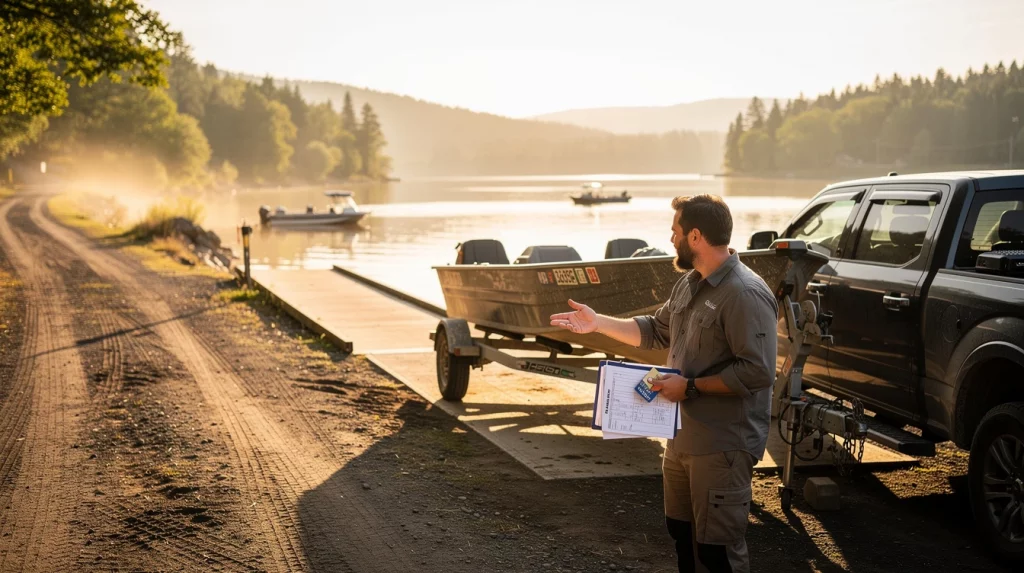
Here’s where Dirt Legal’s expertise becomes directly relevant. If you trailer your boat to the water, the tow vehicle and trailer both need to be properly registered and documented. This is often where boat owners run into unexpected problems, especially if the trailer has a lapsed registration, a missing title, or was purchased with only a bill of sale.
Trailer Registration and Title Requirements
Most states require boat trailers to carry a current registration, just like any other trailer. The registration certificate should be in the tow vehicle during transport. If the trailer was purchased privately and came without a title, you may need to pursue a bonded title or other alternative title process before the state will register it.
Understanding what makes a title document valid, and what disqualifies it, is the first step. What Makes a Vehicle Title Invalid? Warning Signs Every Owner Should Know covers the common issues that come up during title transfers and registration applications.
Bill of Sale Documentation for Trailered Equipment
A bill of sale for your trailer or tow vehicle isn’t just a purchase receipt. In many states, it’s a required supporting document when applying for registration, especially if the title is absent or the vehicle was purchased from a private party. A proper bill of sale for automotive purchases should include the full purchase price, vehicle description, VIN or HIN, date of sale, and signatures from both parties.
Montana LLC Registration for Tow Vehicles and Trailers
One option that many vehicle owners, especially those with high-value trucks, RVs, and trailers, use is forming a Montana LLC for vehicle registration. Montana has no sales tax on vehicle purchases, no emissions testing, and registration fees that are often significantly lower than other states. For expensive tow vehicles or motorhomes, the savings can be substantial.
Dirt Legal has helped 80,000+ vehicle orders to date, and a significant portion of those involve trailered powersport vehicles, RVs, and trucks that owners also use for hauling. The most frequent reason documents come back for correction in our process is odometer compliance, so making sure your odometer disclosure is accurate and complete before submitting is worth extra attention (internal data, rolling last 90 days, n=115).
For a full breakdown of how the Montana LLC registration process works, see How to Register a Car in Montana Without Living There (The Complete Montana LLC Method).
| Document | Required For Vessel | Required For Trailer/Tow Vehicle | Where to Keep It |
|---|---|---|---|
| Registration Certificate | Yes, aboard at all times | Yes, in tow vehicle | Waterproof pouch / glove box |
| Title / Proof of Ownership | Required in many states | Required for transfer/registration | Secure location at home or aboard |
| Insurance Card | Required in some states | Required in most states | Glove box / waterproof pouch |
| Boater Education Card | Required by some states/age groups | N/A | On person of operator |
| Bill of Sale | Useful for ownership disputes | Required during registration without title | Secure location at home |
| HIN / VIN Verification | May be requested during inspection | Required for title transfer in many states | Physical on hull / dashboard |
What Happens If Your Documentation Is Incomplete
Operating with incomplete or expired documentation puts you at real risk. On the water, marine patrol officers have broad authority to board and inspect any vessel. On the road, DOT officers and state troopers can pull over tow vehicles and inspect trailer registration on the spot. The consequences range from a warning to a citation, a fine, or in serious cases, the vehicle or vessel being impounded until documentation is produced.
Expired Registration: The Most Common Problem
Registration expiration is the most common documentation issue officers encounter. Most states mail renewal notices, but it’s your responsibility to renew on time regardless of whether you receive one. Set a calendar reminder well before your registration expires for both your vessel and your tow vehicle.
For land vehicles, Simple Process, No Extra Steps: Your Vehicle Registration Handled Without Delays walks through how to stay ahead of registration deadlines without the usual paperwork headaches.
Missing or Damaged Title Documents
A lost or damaged title isn’t a dead end, but it does require action. Most states offer a replacement title process through the motor vehicle division. For land vehicles, Dirt Legal provides auto title replacement support as part of our registration assistance services. The process for a replacement vessel title typically mirrors the process for a car title, with the same requirements for owner identification and notarized applications in many states.
The Manufacturer’s Statement of Origin (MSO): What It Is and Why It Matters for Your Vehicle Title article explains how original ownership documents feed into the title chain, which matters any time you’re replacing or transferring a title.
Newly Purchased Vehicles and Vessels Without Titles
Private party purchases sometimes come with incomplete paperwork. A bill of sale alone usually isn’t enough to register a vehicle or vessel. If you bought something with only a bill of sale and no title, the path forward typically involves a bonded title or a court-ordered title, depending on your state’s rules. For land vehicles specifically, Dirt Legal’s team works through these situations regularly.

Keeping Your Land Vehicle and Trailer Documentation Current
If you trailer your vessel, the land-vehicle side of your documentation needs just as much attention as the vessel side. A registration lapse on your tow vehicle or trailer can strand your whole trip before you ever reach the water. This section is squarely in Dirt Legal’s wheelhouse.
Montana Plates and Registration for Tow Vehicles
Many owners with high-value trucks and RVs choose to register through a Montana LLC because Montana has no sales tax, no emissions testing, and straightforward annual fees. The Montana Plates: Your Complete Guide to Options, Costs, and Registration article breaks down exactly what Montana plates look like, what they cost, and how the registration process works for out-of-state owners.
For motorhome owners who also tow a vessel or additional vehicle, Register Your Motorhome in Montana: The Complete Guide covers the Montana registration process specifically for large recreational vehicles, including how the LLC structure works and what documents you’ll need.
Vehicle Costs and Registration Fees
Vehicle registration costs vary significantly by state. Montana’s fee structure is based on the age of the vehicle rather than its value, which means an older high-value truck may cost far less to register in Montana than in a state that uses purchase price to calculate fees. The Montana Vehicle Title & Registration Fees page has the current fee schedule.
South Dakota is another low-cost option for vehicle registration, particularly for full-time RVers and travelers who want to establish domicile in a registration-friendly state. The South Dakota Division of Motor Vehicles site covers their current registration requirements and fees.
How Dirt Legal Fits Into Your Registration Picture
We provide registration assistance for cars, trucks, motorcycles, ATVs, UTVs, RVs, trailers, and other land vehicles. We manage the out-of-state paperwork with our registration assistance team so you don’t have to spend hours at a counter or wait in lines. If you’re also sorting out a tow vehicle, trailer, or powersport vehicle alongside your vessel documentation, that’s exactly what we do. See how the process works and what it costs before you start.
Frequently Asked Questions
Do I need to carry the original vessel registration certificate or is a copy acceptable?
Most states require the original registration certificate aboard the vessel while it’s underway. A photocopy is generally not accepted during a boarding inspection. Keep the original in a waterproof pouch or document holder on the vessel, and store any backups at home. Check your specific state’s boating authority for its exact requirements, as a small number of states have moved to digital registration verification.
What is the difference between a vessel title and a vessel registration?
A title proves ownership of the vessel. A registration proves the vessel is currently authorized to operate in a given state and has a current registration number. Some states issue both; others only require registration for smaller vessels. You typically need the title to sell the boat, transfer ownership, or apply for a loan. Registration is what an officer checks when you’re on the water.
Does my boat trailer need its own separate registration?
Yes. In nearly all states, a boat trailer is treated as a separate vehicle and must carry its own registration, just like a car or truck. The registration certificate should be kept in the tow vehicle during transport. If the trailer was purchased without a title, you’ll need to resolve the title situation before the state will issue a registration. Dirt Legal provides registration assistance for trailers in this situation.
What happens if I’m stopped and my vessel registration is expired?
An expired registration during a water patrol stop can result in a citation and a fine. In some states, the officer may require you to return to shore until the registration is renewed. On the road, an expired trailer registration can result in a citation for the driver of the tow vehicle. Renewing early, typically 30 to 60 days before expiration, avoids most of these problems.
Can I register my tow vehicle or trailer in Montana even if I don’t live there?
Yes. Many owners register their vehicles through a Montana LLC, which is a compliant method of registration that doesn’t require Montana residency. Montana has no sales tax on vehicle purchases, no emissions testing, and age-based registration fees that are often lower than in other states. For a complete explanation of this process, see How to Register a Car in Montana Without Living There (The Complete Montana LLC Method).
What is a bill of sale and when do I need one for vehicle or vessel documentation?
A bill of sale for automotive or vessel transactions is a written record of the sale that includes the buyer and seller’s names, the vehicle or vessel description, the purchase price, the date of sale, and both parties’ signatures. You need it when registering a vehicle or vessel that was purchased privately without a title, or as a supporting document during title transfers. A properly written bill of sale can protect both parties in an ownership dispute.
Is a VIN or HIN inspection required when I register a used vessel or vehicle?
Many states require a physical VIN inspection for used vehicles and a HIN check for used vessels, particularly when the vehicle or vessel is being registered for the first time in that state or when the title history is unclear. The inspection confirms that the identification number on the vehicle matches the one on the title. For land vehicles, VIN Inspections: What They Are, When You Need One, and How to Pass covers exactly what to expect during that process.
Keeping required documentation when operating your registered vessel current and complete protects you from fines, impoundment, and coverage gaps. The same discipline applies to your tow vehicle and trailer. If your land vehicle registration is lagging behind, Dirt Legal’s remote paperwork support makes it straightforward to get current. Check out The Complete Guide to Forming a Montana LLC for Vehicle Registration or head straight to our site to see your options, no DMV counter required.