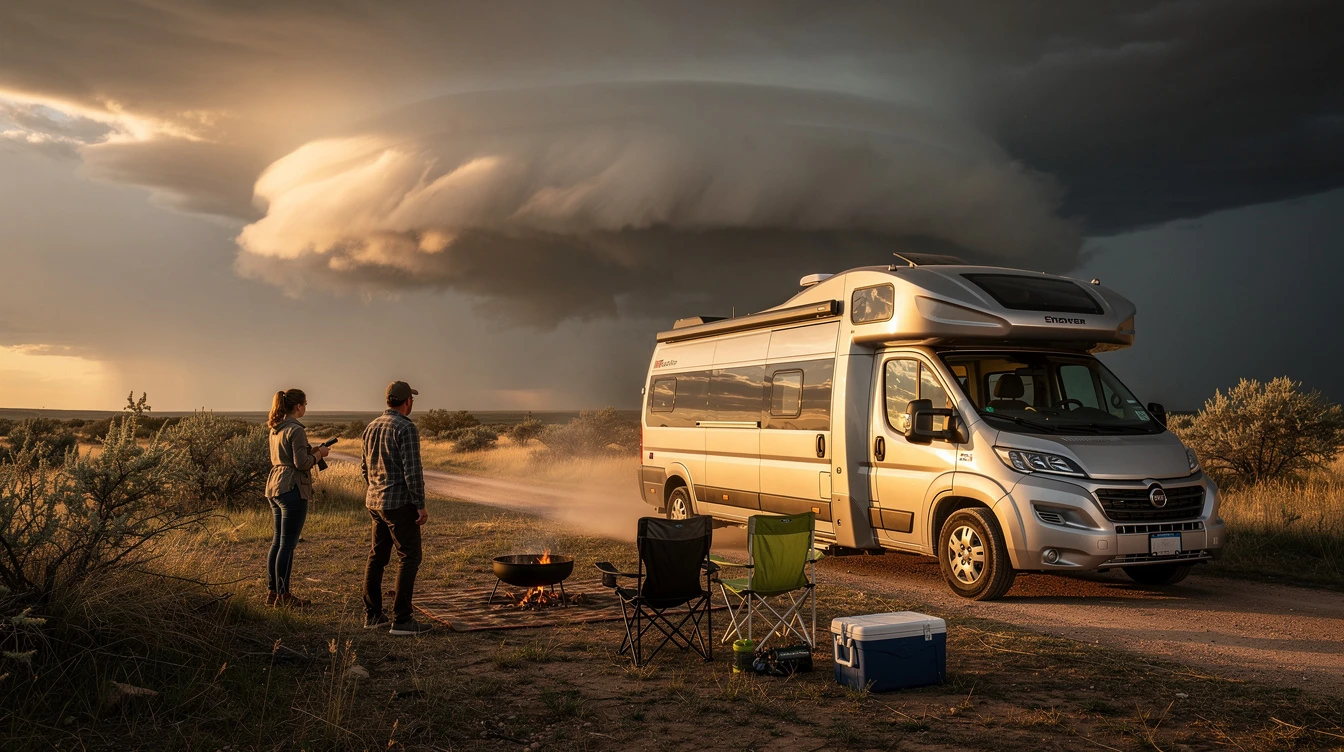
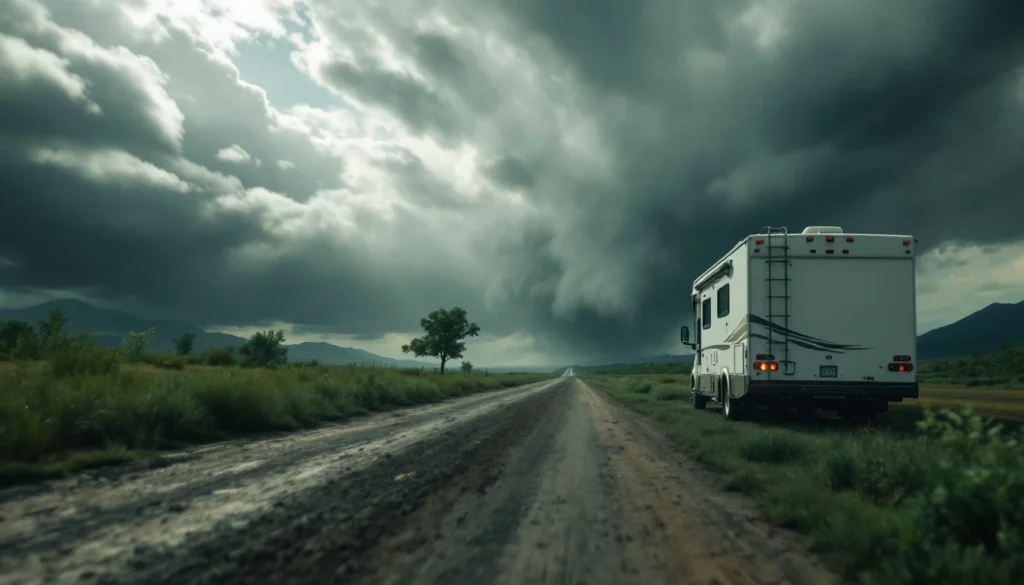
Traveling by RV in tornado country is genuinely risky, and the risk spikes every spring and early summer across the Great Plains. An RV, also known as a recreational vehicle, offers zero structural protection against tornado-force winds, which can exceed 200 mph in a violent EF4 or EF5 event. Knowing your evacuation options, your route risks, and how to keep your rig road-ready before storm season hits could save your life.
Which States Make Up “Tornado Country” and When Is the Danger Highest?
Tornado Alley, the informal term for the high-risk tornado corridor in the central United States, typically covers Texas, Oklahoma, Kansas, Nebraska, South Dakota, Colorado, and parts of Iowa and Missouri. The peak season runs from March through June, with the highest activity concentrated in April and May. Secondary tornado season in the Southeast runs November through January.
Here’s a quick breakdown of risk by state so you can plan your route accordingly:
| State | Avg. Annual Tornadoes | Peak Month(s) | RV Risk Level |
|---|---|---|---|
| Texas | ~155 | April, May | Very High |
| Kansas | ~96 | May, June | Very High |
| Oklahoma | ~68 | April, May | Very High |
| Nebraska | ~57 | June | High |
| South Dakota | ~30 | June, July | Moderate |
| Iowa | ~48 | May, June | High |
South Dakota sits on the northern edge of tornado country. That moderate risk profile is part of why many RV owners register their motorhome in Montana or South Dakota, two states with low vehicle registration costs and minimal bureaucratic friction for full-time travelers.
Why Is an RV So Dangerous in a Tornado?
An RV provides almost no protection in a tornado. FEMA classifies mobile homes and RVs as among the least safe structures during a tornado event because of their light construction and high surface area. Even an EF1 tornado, which produces winds of just 86 to 110 mph, can roll a Class A motorhome weighing over 30,000 pounds.
Ready to register your vehicle?
Join thousands of vehicle owners who use Dirt Legal to handle their registration quickly and hassle-free.
Register Your Vehicle Today → →The core problem is physics. RVs have a high center of gravity and large sidewall panels that catch wind like a sail. A tornado producing 100 mph winds generates roughly 4 times the lateral force of a 50 mph gust. That’s enough to flip most RVs completely.
- Class A motorhomes (the large bus-style rigs): highest wind exposure due to flat, tall sidewalls
- Class C motorhomes: slightly lower profile but still extremely vulnerable
- Travel trailers and 5th wheels: can detach from the tow vehicle and become airborne debris
- Pop-up campers and teardrops: lowest wind resistance, but zero structural protection
Bottom line, your RV is a vehicle, not a shelter. Treat it that way.
What Should You Do if a Tornado Warning Is Issued While You’re in an RV?
A tornado warning, which is an alert issued by the National Weather Service (NWS) when a tornado has been detected by radar or spotted by a trained spotter, means you need to act immediately. Don’t wait for visual confirmation. Here’s the priority order:
- Leave your RV immediately. Get out and get into a permanent structure. A gas station, restaurant, or even a highway overpass ditch is safer than staying inside your rig.
- Find a sturdy building. Look for interior rooms with no windows on the lowest floor, like a bathroom, closet, or hallway.
- If no building is available, abandon the RV and lie flat in a low ditch or depression, covering your head with your hands. Stay well away from the vehicle itself.
- Never shelter under an overpass. Wind tunneling under bridges actually increases velocity and debris risk.
- Do not try to outrun a tornado in your RV. Tornadoes can travel at 30 to 70 mph and change direction without warning.
After the storm passes, your first concern is safety. Your second concern is your paperwork. A damaged or totaled RV still has title and registration obligations. If you need a replacement title or need to understand what makes a vehicle title invalid, that process starts the moment you file an insurance claim.
How Do You Plan an RV Route That Reduces Tornado Exposure?
Smart routing cuts your risk significantly. The goal is to avoid the highest-risk zones during peak tornado season months, roughly April 15 through June 15 each year.
Here are practical routing strategies:
- Travel north-south outside peak season. Cross the Plains in March or July rather than May, when EF3+ tornadoes peak statistically.
- Use western corridors. I-25 through New Mexico and Colorado puts you west of the highest-risk Tornado Alley corridor.
- Monitor NOAA’s Storm Prediction Center (SPC) outlooks. SPC issues convective outlooks (forecasts of severe weather potential, categorized as Marginal, Slight, Enhanced, Moderate, or High) up to 8 days in advance.
- Stay flexible with bookings. Non-refundable campsite reservations pressure you to drive into bad weather. Book refundable or pay a small cancellation fee, not with your safety.
- Download weather apps with polygon alerts. Apps like RadarScope show NWS warning polygons so you can see exactly which counties are under a tornado warning.
If your RV travels take you regularly through Montana or South Dakota, you’ll want your registration sorted before the trip. Vehicle registration costs vary widely by state, and Montana has no sales tax on vehicles, which matters a lot on high-value motorhomes. A Montana LLC vehicle registration is a legitimate structure many full-time RVers use to reduce costs.
What RV Gear and Preparations Actually Help Before Storm Season?
Preparation before you roll out is the most effective risk management tool you have. Gear won’t protect you inside the RV during a tornado, but it will help you get out safely and recover faster afterward.
- NOAA Weather Radio (battery-powered): Receives NWS alerts even without cell service. A reliable all-hazard radio costs $30 to $60 and is worth every cent in rural areas with spotty coverage.
- Bike helmet or construction hard hat: Flying debris causes the majority of tornado fatalities. If you’re sheltering outside your RV, head protection matters.
- Physical document packet: Keep your RV title, registration card, insurance declarations page, and a best proof of vehicle ownership document in a waterproof bag you can grab in under 60 seconds.
- Emergency go-bag: Include water, medications, phone charger, flashlight, and copies of your ID.
- RV tie-down anchors: For extended campsite stays, 4 to 8 helical anchors torqued into the ground reduce rollover risk in straight-line winds, though they won’t stop a direct tornado hit.
Across our recent order reviews, the most frequent reason documents came back for correction was odometer compliance issues, which is a reminder that keeping your registration paperwork accurate and current matters long before an emergency situation arises (internal data, rolling last 90 days, n=104).
A quick note on titles, if your RV is damaged beyond repair, your insurer will issue a salvage title. Understanding the difference between a standard title and a salvage designation matters for future resale. See our guide on forming a Montana LLC for vehicle registration if you’re purchasing a replacement rig and want to structure it efficiently from day one.
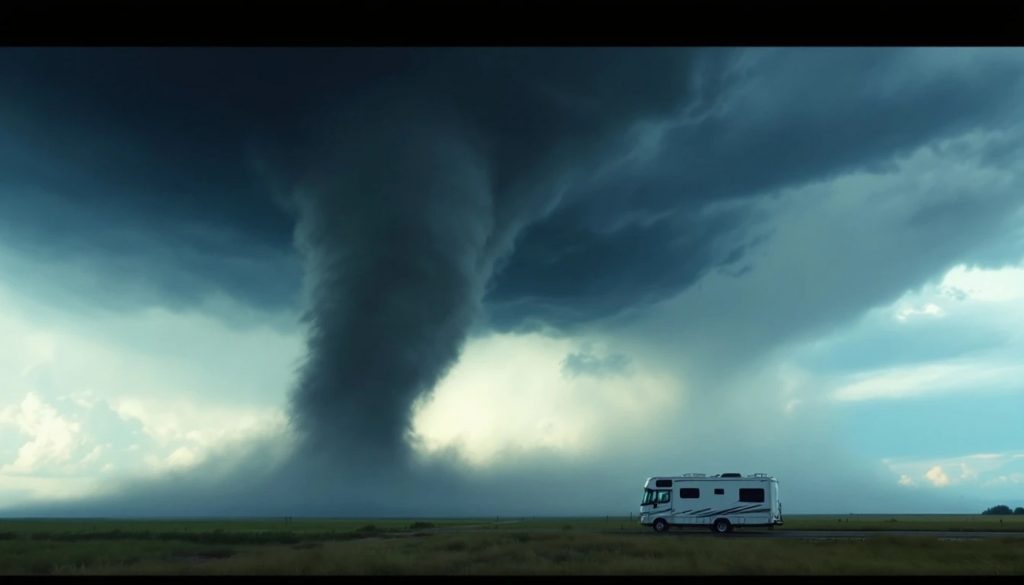
Does RV Registration State Affect How You Handle a Total Loss Claim?
Yes, it can. Your registration state determines which state’s title laws govern a total loss claim and subsequent title transfer. Montana and South Dakota both have efficient title processes with no emissions testing requirements, which speeds up the replacement process considerably.
If your RV is registered through a Montana LLC, the LLC is the titled owner. Your insurer will issue the salvage title or total loss paperwork to the LLC, not to you personally. That distinction matters for how quickly you can retitle a replacement vehicle. Montana processes most title transactions within 4 to 6 weeks by mail, and our team can assist with the paperwork remotely.
For a side-by-side look at how Montana and South Dakota registration compare for RV owners, the Montana RV registration guide from our sister brand Ride Legal breaks down costs and timelines clearly. If you’re towing a 5th wheel or trailer, their South Dakota trailer registration page is worth bookmarking too.
Honestly, the paperwork side of RV ownership is the last thing you want to be figuring out after a storm. Getting your registration sorted before tornado season means one fewer thing to worry about if the worst happens. See how the process works and get set up well before you hit the road.
Frequently Asked Questions About RV Travel in Tornado Country
Is it safe to travel by RV through tornado country in the spring?
Traveling by RV through tornado country in spring carries real risk, particularly from April through early June. You can reduce that risk significantly by monitoring NOAA Storm Prediction Center outlooks daily, routing west of core Tornado Alley, and always identifying the nearest permanent shelter before you park for the night.
What is the safest thing to do if a tornado warning is issued while you’re in an RV?
Leave your RV immediately and get into a permanent structure. A tornado warning means a tornado has been confirmed. Lie flat in a low ditch if no building is available, covering your head. Never shelter inside your RV, under an overpass, or attempt to outrun the storm in your vehicle.
Can a tornado flip a motorhome?
Yes. Even an EF1 tornado, producing winds between 86 and 110 mph, generates enough lateral force to roll a fully loaded Class A motorhome. Class A rigs weigh 20,000 to 40,000 pounds but have large, flat sidewalls that act like wind sails. Stronger tornadoes can throw RVs hundreds of feet.
Does registering my RV in Montana or South Dakota affect my insurance claim after a storm?
Your registration state determines which state’s title laws govern a total loss claim. Montana LLCs, also known as Montana LLC vehicle registrations, are the titled owner on record, so insurance payouts and salvage titles go to the LLC entity. Both Montana and South Dakota have efficient title transfer processes that work well for out-of-state RV owners.
What documents should I keep accessible in my RV during storm season?
Keep your RV title, current registration card, insurance declarations page, and a photo ID in a waterproof grab bag near the door. If your RV is registered through a Montana LLC, include the LLC formation documents. Digital copies stored in cloud storage add a second layer of protection if physical documents are lost or destroyed.
What states have the most tornadoes per year?
Texas averages approximately 155 tornadoes per year, the highest of any state. Kansas averages about 96, Oklahoma about 68, and Nebraska about 57 annually. These four states form the core of Tornado Alley and represent the highest risk zone for RV travelers during spring and early summer months.