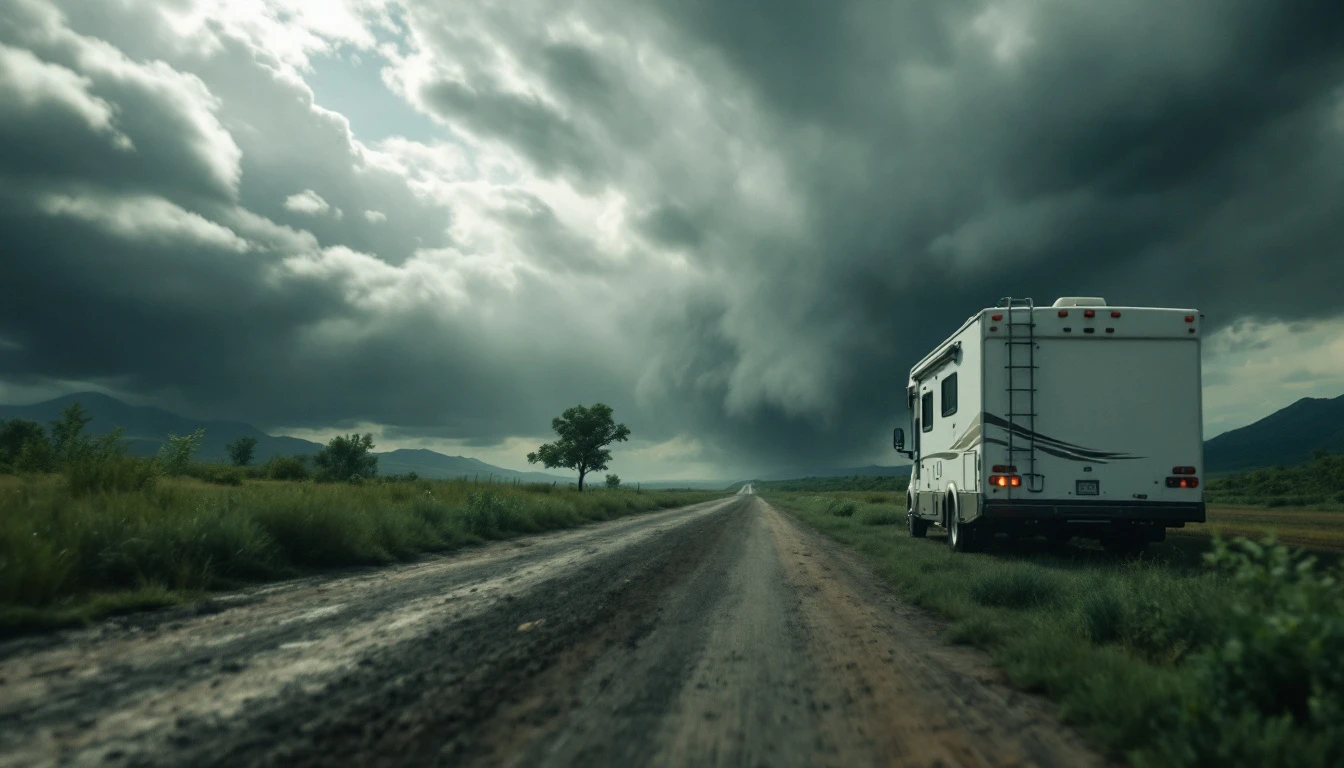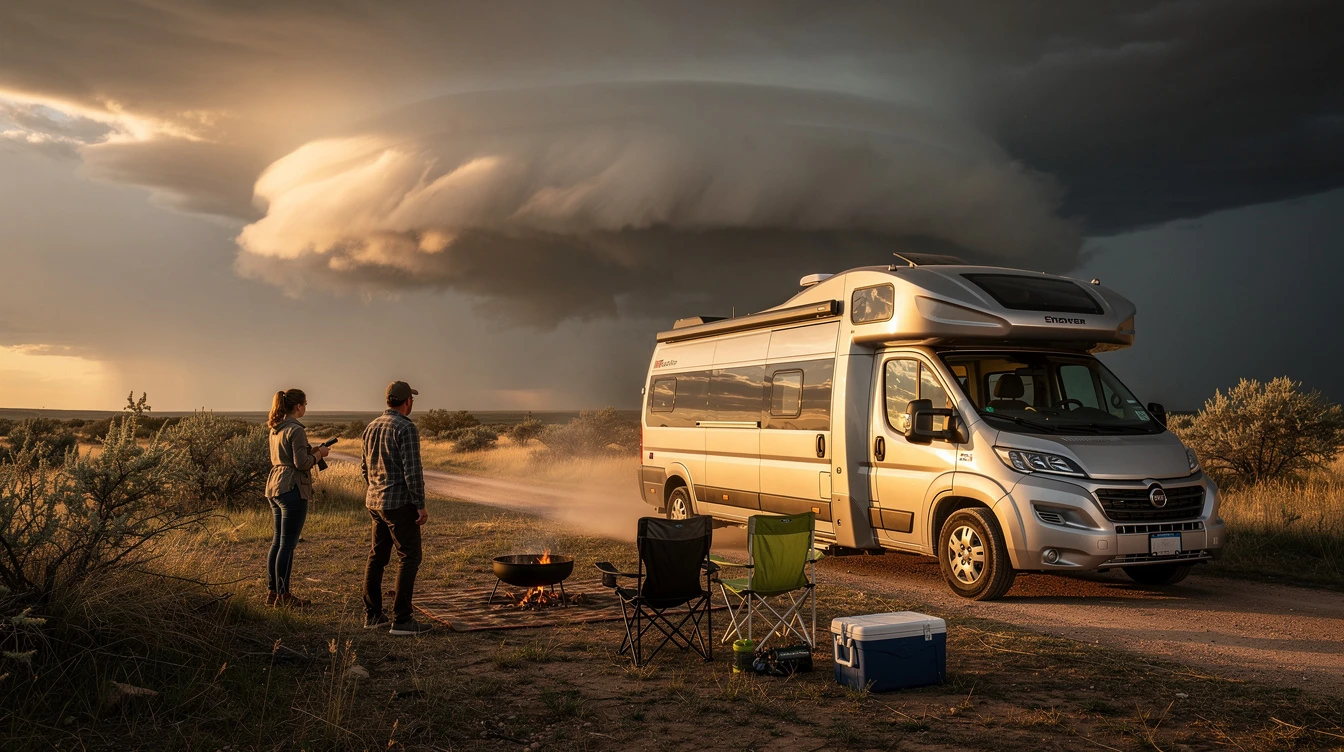
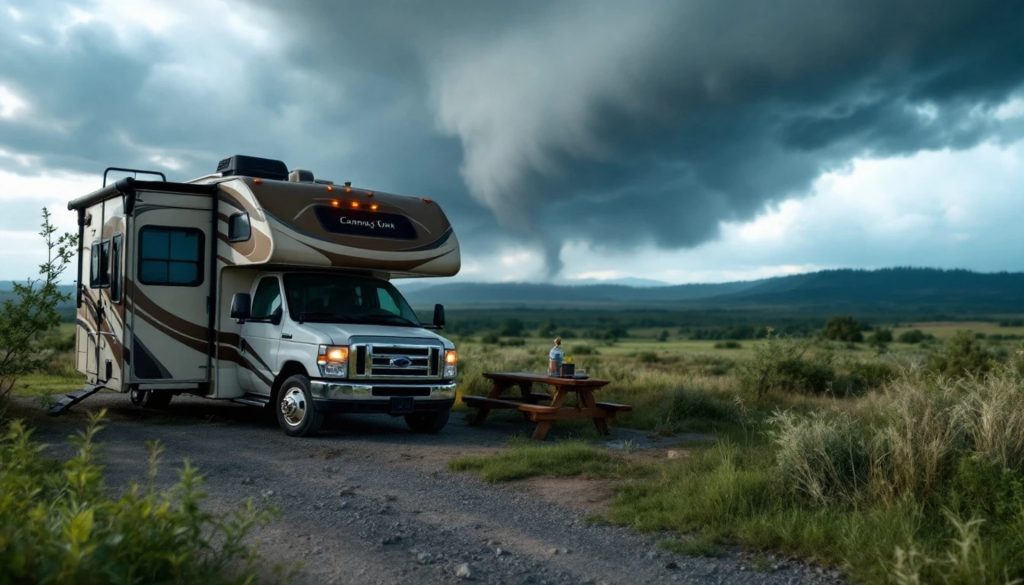
RV camping during a tornado watch means you need to act immediately, because your RV is one of the most dangerous places to be when a tornado is near. Leave the RV, find a solid structure or low-lying ditch, and stay there until the watch is lifted.
Why Your RV Is Dangerous During a Tornado Watch
RVs, even large Class A motorhomes, offer almost no protection against tornado-force winds. They’re lightweight, tall, and aerodynamic in exactly the wrong way. A tornado can flip a 40-foot coach like it weighs nothing.
- No structural reinforcement: RV walls are fiberglass or thin aluminum, not load-bearing.
- High wind profile: The boxy shape catches wind and tips easily.
- Slide-outs and awnings: These are the first things to shred in high winds.
- Propane tanks: Damaged propane lines during a storm are a serious fire and explosion risk.
A tornado watch means conditions are favorable for tornadoes. That’s not a drill. Treat it like the real thing every time, because the gap between a watch and a warning can be minutes.
Thinking about how to protect your Montana recreational vehicle investment over the long term? Check out our guide on how to register your motorhome in Montana to understand your ownership and registration options.
Where Should You Shelter If a Tornado Watch Is Issued at a Campground?
Get into the most solid structure you can find. Campground bathhouses, ranger stations, and concrete block restrooms are built to hold. If nothing permanent is nearby, a low ditch or culvert away from trees is your next best option.
Ready to register your vehicle?
Join thousands of vehicle owners who use Dirt Legal to handle their registration quickly and hassle-free.
Register Your Vehicle Today → →Best Shelter Options, Ranked
- Designated tornado shelter at the campground (some modern parks have them, ask at check-in)
- Concrete or brick building, such as a bathhouse, camp store, or ranger station
- Interior room of any permanent building, away from windows
- Highway underpass (last resort, and only if you’re already there when the tornado hits)
- Roadside ditch or culvert, lying flat, arms covering your head
Never shelter under a tree. Flying branches and lightning make tree cover more dangerous than open ground in most severe weather scenarios.
| Shelter Type | Protection Level | Notes |
|---|---|---|
| Designated tornado shelter | Excellent | Ask at check-in if campground has one |
| Concrete bathhouse / ranger station | Good | Most campgrounds have at least one |
| Interior room of any building | Moderate | Get away from windows, cover your head |
| Low ditch / culvert | Low, but better than RV | Lie flat, protect head and neck |
| Inside your RV | Dangerous | Do not shelter here |
What Steps Should You Take Before the Storm Arrives?
If you have any lead time before severe weather hits, a few minutes of preparation can protect your rig and your family. Don’t wait for a warning, start these steps at the watch stage.
- Retract all slide-outs and bring in the awning immediately.
- Disconnect from shore power to reduce electrical surge and fire risk.
- Turn off the propane at the tank.
- Gather go-bag essentials: medications, ID, phone charger, emergency cash, and your vehicle registration documents.
- Check your weather app or NOAA radio for updated warnings, specifically watch vs. warning status.
- Identify your shelter location now, before you need to run to it in the dark.
- Move your pets into a secure carrier so they’re ready to go with you.
Honestly, the go-bag step trips up most RVers because documents are scattered. Keeping your vehicle registration documents, title, and proof of ownership in one place in your RV saves critical minutes. For help understanding what qualifies as proper proof of ownership, read What Is the Best Proof of Vehicle Ownership?
What’s the Difference Between a Tornado Watch and a Tornado Warning?
A tornado watch means conditions exist that could produce a tornado. A tornado warning means a tornado has been spotted or detected on radar. The warning requires immediate action with zero delay.
- Watch: Prepare now. Secure the RV, find your shelter, monitor weather updates.
- Warning: Move immediately. Don’t wait to see the funnel cloud. Go to your shelter right now.
Most deaths occur because people wait for visual confirmation. A tornado can be wrapped in rain and invisible until it’s on top of you. When the warning sounds, move.
How Should You Prepare Your RV Before a Camping Trip in Tornado-Prone Areas?
If you’re camping in the Great Plains, Midwest, or anywhere in Tornado Alley, pre-trip prep matters as much as storm-day response. A few smart habits cut your risk significantly.
- Check campground amenities: Call ahead to confirm if a tornado shelter or permanent structure is on site.
- Download a weather alert app: NOAA Weather, Weather Underground, or MyRadar all give polygon-specific alerts.
- Know your campground layout at night: Walk it in daylight. Shelters you can’t find in darkness are useless.
- Review your RV insurance policy: Confirm tornado damage is covered and know your deductible.
- Keep your registration current: An up-to-date title and registration on a montana recreational vehicle matters for insurance claims after storm damage.
RV owners who travel across state lines frequently should also confirm their registration is solid before hitting Tornado Alley. Dirt Legal has helped 80,000+ vehicle orders to date, and many of those customers are full-time RVers who want their paperwork airtight before long trips. Learn more about The Complete Guide to Forming a Montana LLC for Vehicle Registration if you’re looking at ways to structure your RV ownership.
The most frequent reason documents come back for correction in our system is odometer compliance issues, so getting your paperwork right from the start saves real time (internal data, rolling last 90 days, n=104).
For RVers who want to look at South Dakota trailer or fifth-wheel registration options, the team at Ride Legal also handles South Dakota trailer and 5th wheel registration, which is worth considering if you full-time or travel frequently through the region.
Frequently Asked Questions About RV Camping During a Tornado Watch
Can I stay in my RV during a tornado watch?
You can monitor the situation from inside your RV during a watch, but you should be ready to leave immediately. The moment a warning is issued, leave the RV. RVs provide no meaningful tornado protection, and a Class A motorhome can be flipped by winds well below tornado strength. Always have your shelter destination identified before the storm develops.
What should I do if I’m in a campground and a tornado warning is issued?
Leave your RV immediately and go to the nearest solid structure. If no building is available, find the lowest ground nearby, lie flat in a ditch away from trees, and cover your head and neck with your hands. Do not attempt to outrun a tornado in your RV.
Is a truck cab safer than an RV during a tornado?
A truck cab with a seatbelt on and parked in a low area is marginally better than an RV, since it sits lower to the ground and has a steel frame. But neither is a real shelter. Both should be abandoned in favor of a permanent structure. Use the truck only as an absolute last resort.
How do I know if my RV campground has a tornado shelter?
Call the campground before you arrive and ask directly. Many modern campgrounds in tornado-prone states mark shelters on the site map given at check-in. If no shelter exists, identify the most solid permanent building on site as your backup. Knowing this before dark is important.
What documents should I grab if I have to flee my RV during a storm?
Grab your ID, phone, medications, and vehicle registration documents. Your title, registration card, and proof of insurance are important for insurance claims if your RV is damaged or destroyed. Keeping these in one waterproof pouch makes them simplified to grab in seconds. Digital copies on your phone are a smart backup.
Can my RV registration affect an insurance claim after tornado damage?
Yes. An expired or incorrect registration can complicate insurance claims, especially if the vehicle is titled in a way that doesn’t match the policyholder. Keeping your registration current and correctly titled matters for smooth claim processing. Owners who register their vehicle through a Montana LLC should confirm their insurance policy reflects that ownership structure.
Your RV is a big investment. Make sure the paperwork is as solid as your storm prep.
Register Your Vehicle Today →