
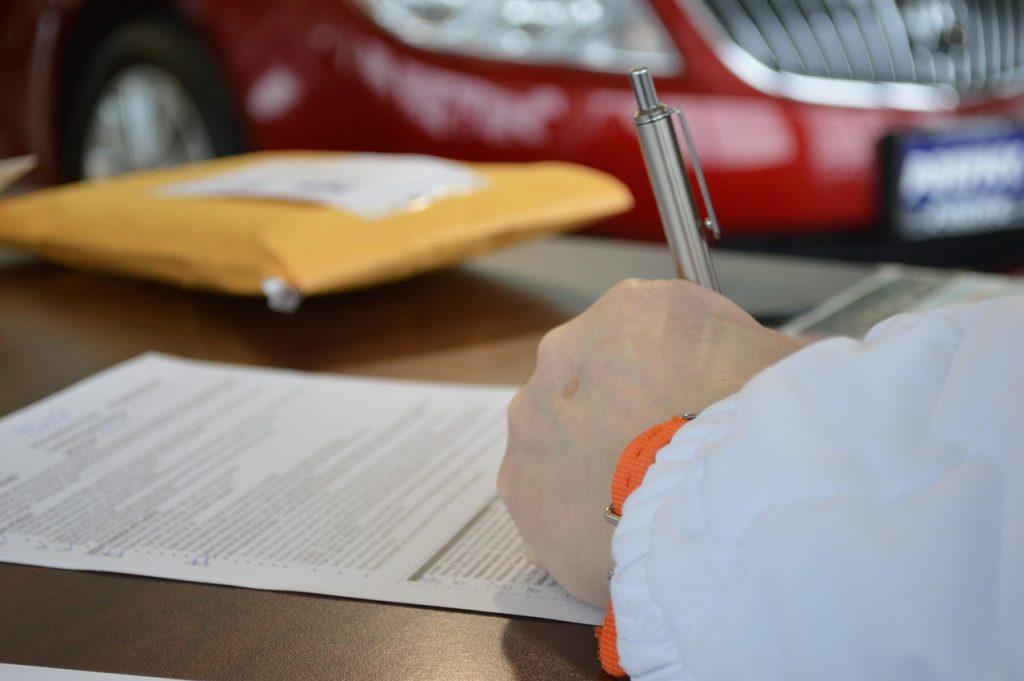
An MSO certificate is one of the most important documents in vehicle ownership, yet most buyers never hear about it until something goes wrong. If you just purchased a new vehicle, boat, trailer, or powersport unit, this document is the foundation of ownership. Without it, you cannot get a title, and without a title, you cannot register your vehicle.
This guide explains exactly what an MSO is, how it compares to other ownership documents, and what steps to take when the process hits a snag. Whether you are buying new from a dealer, purchasing an off-road unit, or working through a title problem, understanding the MSO certificate puts you ahead of the process.
Keep reading to get clear, factual answers before you head to the DMV or call your dealer.
What Is an MSO Certificate?
MSO stands for Manufacturer’s Statement of Origin. It is a document issued by the vehicle manufacturer that certifies the vehicle or unit has never been titled before. Think of it as the birth certificate for your vehicle. It proves where the vehicle came from and transfers ownership from the manufacturer to the first buyer.
Every new vehicle, motorcycle, trailer, boat, ATV, or piece of equipment that gets titled for the first time starts with an MSO certificate. The document includes key information: the vehicle identification number (VIN), year, make, model, and a chain of ownership from manufacturer to dealer to final buyer.
What Information Does an MSO Contain?
A standard MSO certificate typically includes:
- Manufacturer name and address
- VIN (Vehicle Identification Number)
- Year, make, model, and body type
- Engine or motor details
- GVWR (Gross Vehicle Weight Rating) for trucks and trailers
- Dealer name and address
- Purchaser name and address
- Certification signature from the manufacturer
- Any lien or security interest (if applicable)
For a deeper look at what vehicle identification details look like on ownership documents, check out what information is included in a VIN check report for a side-by-side comparison of VIN data across document types.
MSO vs. MCO: Is There a Difference?
The terms MSO and MCO (Manufacturer’s Certificate of Origin) are used interchangeably in most states. Some manufacturers and states prefer one term over the other, but both documents serve the exact same function. If a dealer or DMV uses either term, they are talking about the same thing.
A full breakdown of how the manufacturer certificate of origin fits into the titling process is available in our manufacturer certificate of origin complete guide, which covers how dealers handle these documents and what to do if yours has errors.
How the MSO Certificate Works in the Title Process
When a manufacturer builds a vehicle, it issues an MSO and sends it to the franchised dealer. The dealer holds the MSO until the vehicle is sold. Once you buy the vehicle, the dealer signs over the MSO to you, and you (or the dealer, on your behalf) submit it to the state DMV to apply for a title.
Ready to register your vehicle?
Join thousands of vehicle owners who use Dirt Legal to handle their registration quickly and hassle-free.
Register Your Vehicle Today → →
The state DMV reviews the MSO, confirms the information, and issues a Certificate of Title in your name. At that point, the MSO is retired. You will never see it again once a title is issued. From that moment forward, the title is the governing document for ownership.
Who Holds the MSO at Each Stage?
| Stage | Who Holds the MSO | What Happens Next |
|---|---|---|
| Vehicle manufactured | Manufacturer | MSO issued and sent to dealer with vehicle |
| Vehicle on dealer lot | Dealership (or floor plan lender) | MSO held until retail sale is complete |
| Vehicle sold to buyer | Buyer (briefly) | MSO submitted to DMV for title application |
| Title issued | State DMV (title issued to buyer) | MSO retired; title becomes ownership document |
| Financed vehicle | Lienholder until loan paid off | Title issued with lien noted; clean title after payoff |
What Happens If the MSO Has an Error?
Errors on an MSO certificate can delay or block the title process entirely. Common mistakes include a misspelled name, incorrect VIN, or a missing dealer signature. If you catch an error, contact the issuing dealer immediately. Manufacturers can issue corrected MSOs, but the process takes time.
Do not submit an MSO with known errors to the DMV. The application will typically be rejected, and correcting it after submission creates additional paperwork and delays.
MSO Certificates for Specialty and Off-Road Vehicles
Not every vehicle follows the standard car dealer path. ATVs, UTVs, dirt bikes, trailers, boats, and powersport units often come with MSOs that owners receive directly in the box or with the purchase paperwork. Many buyers do not realize they have an MSO until they try to title the vehicle.
This is especially common with:
- Side-by-sides and UTVs bought from a powersport dealer
- Trailers purchased from a manufacturer or small lot dealer
- Boats and personal watercraft
- Imported vehicles that receive a domestic MSO from the U.S. importer
- Kit cars and custom-built vehicles with NHTSA-issued documentation
Can You Register an ATV or UTV With Just an MSO?
In most states, yes. If you have the MSO and the vehicle has never been titled, you can apply directly for a title and registration using the MSO as your proof of ownership. The process is similar to titling a new car. You submit the signed MSO, pay the applicable fees, and receive a title and registration.
For off-road units that you want to make street-eligible, a Montana registration approach is worth knowing about. Registering your vehicle through a Montana LLC gives owners a path to plates without the sales tax burden that most states impose. Montana has no sales tax, no emissions testing, and no annual inspections.
What If the MSO Was Lost or Destroyed?
A lost MSO certificate is a real problem. Because the MSO can only be issued once, you cannot simply request a duplicate the same way you can with a duplicate title. Your options depend on the situation:
- Contact the original dealer: Many dealers keep copies on file
- Contact the manufacturer: Some manufacturers can reissue with a corrected or replacement document
- Apply for a bonded title: If no MSO can be recovered, a bonded title may be your only path to ownership
- Work with a title recovery service: Specialists can help work through the documentation gap
If you are dealing with a title problem on a classic or specialty vehicle, our guide on classic vehicle title solutions covers several paths to resolving ownership documentation issues.
MSO Certificates and Montana LLC Registration
Montana is one of the most vehicle-registration-friendly states in the country. There is no sales tax, no emissions testing, and no vehicle inspections required for registration. When a new vehicle comes with an MSO, the owner can use it to title the vehicle in Montana through an LLC rather than titling in their home state.
This approach is popular with buyers of high-value vehicles, RVs, exotic cars, and specialty equipment where sales tax in the home state would be substantial. Using the MSO to first establish title through a Montana LLC is a well-established strategy when done correctly.
How Does an MSO Factor Into Montana LLC Registration?
The process works like this: You form a Montana LLC, which becomes the owner of the vehicle. The MSO is signed over to the LLC instead of to you personally. The LLC then applies for a Montana title and registration. The vehicle is titled in the LLC’s name with Montana plates, with no sales tax due at the time of titling.
You can learn more about how the Montana LLC registration process works and whether it fits your situation. Montana registration is valid nationwide for street use, which is one reason it remains a popular option for buyers across all 50 states.
What Vehicles Benefit Most From This Approach?
The greatest financial benefit typically applies to:
- High-value cars, trucks, and SUVs where 5-10% sales tax adds up fast
- RVs and motorhomes (often six-figure purchases)
- Exotic and collector vehicles
- Trailers, boats, and powersport units
For RV owners specifically, our guide to Montana RV registration covers how the MSO and title process works for motorhomes and travel trailers.

Common Questions About the MSO Certificate
FAQ: MSO Certificate Answered
Is an MSO the same as a title?
No. An MSO certificate is the document used to apply for a title. It is a manufacturer-issued document that proves a vehicle has never been titled before. Once you submit the MSO to the DMV and pay the applicable fees, the state issues a Certificate of Title. The MSO is then retired. After that point, only the title represents ownership of the vehicle. You will never use the MSO again after the first title is issued.
Can I sell a vehicle using just an MSO instead of a title?
Technically, yes, but only if the vehicle has never been titled. If you purchased a vehicle and received an MSO but never applied for a title, you can sign the MSO over to the next buyer the same way a dealer would sign it over to you. However, this creates a risk for buyers, since they will need to work through the title process themselves. In most cases, it is better to title the vehicle first before selling it.
How long does it take to get a title using an MSO?
Processing times vary by state, but most states issue a title within two to six weeks of receiving a complete MSO application. Some states offer expedited processing for an additional fee. If there are any errors on the MSO or missing signatures, the process will take longer. Working with a registration service can help catch issues before submission and speed up the overall timeline.
What do I do if the dealer keeps the MSO?
If a dealer retains the MSO after a cash purchase without your consent, that is a problem. Dealers are required to either transfer the MSO to you or submit it to the DMV on your behalf when you buy the vehicle. If the vehicle is financed, the lienholder typically holds the MSO until the loan is paid. Contact the dealer directly and request the MSO in writing. If they do not respond, escalate to your state’s DMV or attorney general’s office.
Can I register a vehicle with an MSO in any state?
The MSO certificate is the document that initiates the title process in any U.S. state. Each state has its own forms and fees, but all states recognize the MSO as valid proof of origin for a new vehicle. The key is that the MSO must be properly signed by the dealer and must acly reflect the buyer’s information. Once a title is issued in one state, that title transfers to any other state using the standard out-of-state title transfer process.
What happens to the MSO after a title is issued?
The MSO is retired once the state issues a title. It is no longer needed and typically stays on file with the state DMV. If you submitted the MSO yourself, the DMV keeps the original. You will not get it back. From that point forward, the Certificate of Title is your proof of ownership, and that is the document you will need for any future transfers, registrations, or lien activity.
Do boats and trailers use MSO certificates too?
Yes. Boats, trailers, motorcycles, ATVs, UTVs, and most other titled vehicles use an MSO certificate for the first title application. The format and specific information may differ slightly by vehicle type, but the function is the same. For boats, the MSO is sometimes called a Manufacturer’s Certificate of Origin for Watercraft. Some states have separate forms for watercraft titling, but the MSO from the manufacturer is always the starting point.
What is a bonded title and when do I need one?
A bonded title is a type of title issued when the standard documentation, like an MSO or clean title, is missing or cannot be recovered. You purchase a surety bond, typically equal to one and a half times the vehicle’s value, and submit it along with your application. The state then issues a title marked as “bonded.” After a set period, usually three to five years, the bond notation is removed and you receive a clean title. A bonded title is one of the most practical options when an MSO is lost and cannot be replaced.
Putting It All Together: Your Next Move
The MSO certificate is not complicated once you understand its role. It is a one-time document that starts the title chain for a brand-new vehicle. Get it signed correctly, submit it promptly, and you will have a clean title with no issues. Lose it, and you will spend considerably more time and money working through alternatives.
If you are registering a new vehicle and want to avoid sales tax, skip emissions testing, or simply work with a team that handles the paperwork for you, the simple registration process at Dirt Legal is worth a look. We handle Montana LLC formation, title applications, registration renewals, and more so you do not have to figure out the DMV on your own.
For those interested in registering collector vehicles, the Ride Legal blog has a useful article on why classic car collectors protect value with proper titling, which touches on how ownership documents like the MSO factor into long-term value preservation.
An MSO certificate is the starting point for every new vehicle title. Whether you are buying a car, ATV, trailer, or boat, knowing how the MSO works puts you in control of the process from day one. If you have questions or need help getting your registration done right, Dirt Legal is ready to help.