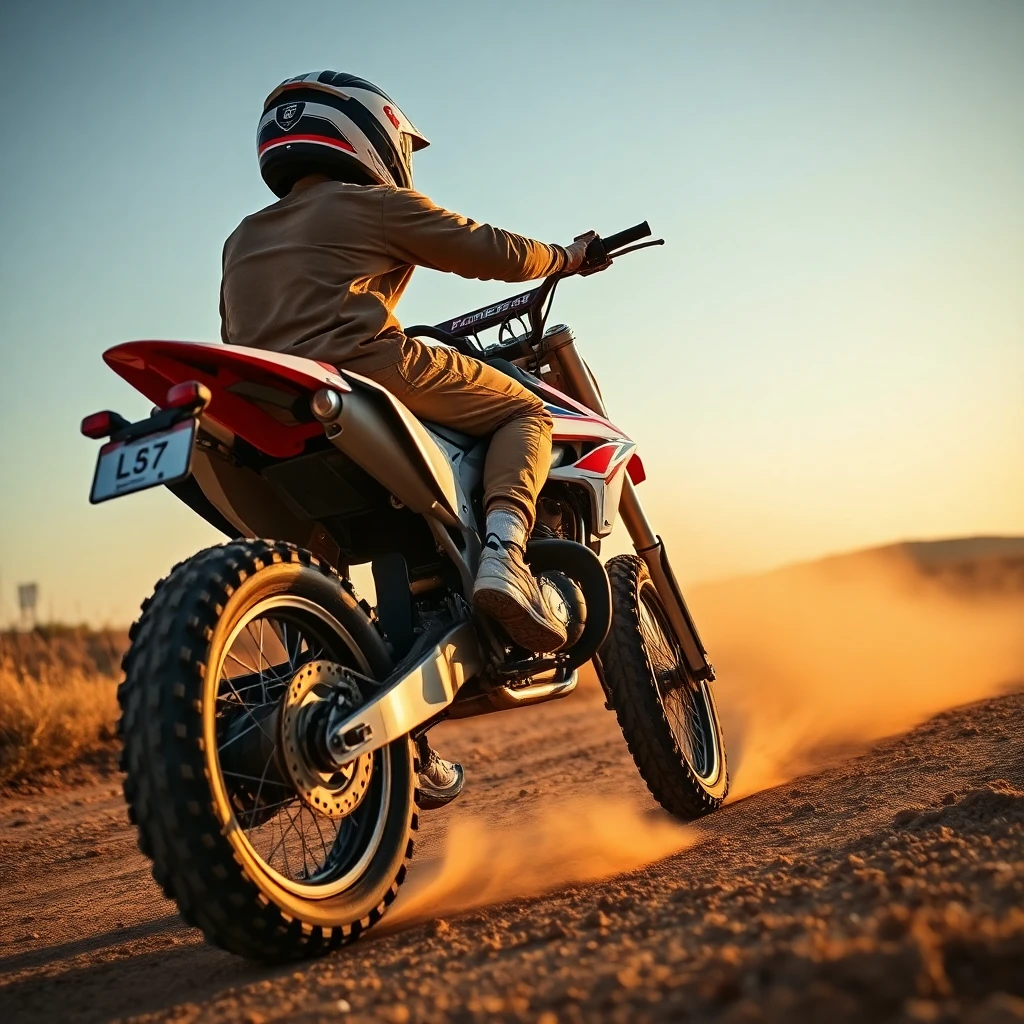
Are pit bikes legal? That depends on where you want to ride them and how they’re set up. A pit bike that’s perfectly fine on private property or a closed track may be completely off-limits on public roads, and the rules vary more than most riders expect.
This guide breaks down the legal status of pit bikes across different riding environments, what it actually takes to make one street-legal, and your best options if you want to ride one beyond your backyard. Whether you have a stock mini-moto or a built-up 140cc pit bike, here’s what you need to know before you ride.
If you’re already ready to get your pit bike registered and titled, Dirt Legal has helped thousands of riders do exactly that.
Are Pit Bikes Legal on Public Roads?
The short answer: in most cases, no, stock pit bikes are not street-legal. They’re designed for closed tracks and private land use. Most come without the equipment required by federal and state law for road use, and their engines typically don’t meet the emissions standards required for on-road operation.
Why pit bikes are usually off-road only from the factory
Pit bikes leave the factory without several items that are required for street use in every U.S. state. The missing components typically include:
- DOT-approved headlight and taillight
- Turn signals (front and rear)
- Rearview mirror
- Horn
- DOT-rated tires
- Speedometer
- License plate bracket and light
Beyond equipment, the engine may not carry an EPA-compliant emissions certification for on-road use. That distinction alone disqualifies many pit bike engines from street registration in states with strict emissions rules.
What counts as a pit bike legally?
There’s no single federal definition of “pit bike.” From a registration standpoint, most DMVs classify them as motorcycles or off-highway vehicles (OHVs) based on engine displacement, frame style, and intended use. A 50cc pit bike may be treated differently than a 125cc or 140cc model, even in the same state.
If your bike came with a Manufacturer Certificate of Origin (MCO), that document is your starting point for titling. Learn more in our guide to the manufacturer certificate of origin, which explains how to use it to title a new vehicle.
Are pit bikes legal on private property?
Generally yes. Riding a pit bike on private land you own or have permission to use is legal in most states without any registration or special equipment. You’ll want to check local ordinances, since some counties and municipalities restrict off-road vehicle noise or use even on private property. But in most rural settings, a stock pit bike is perfectly fine to ride on your own land.
What Does It Take to Make a Pit Bike Street Legal?
Making a pit bike street-legal is possible, but the path varies by state. Some states make it relatively straightforward with an inspection and a parts list. Others have strict emissions requirements that can make it effectively impossible for certain engines. The good news: a solid process exists if you’re willing to do the work.
Ready to register your vehicle?
Join thousands of vehicle owners who use Dirt Legal to handle their registration quickly and hassle-free.
Register Your Vehicle Today → →Required modifications in most states
To pass a street-legal inspection in the majority of states, you’ll typically need to add:
- DOT-approved headlight with high and low beam
- DOT-approved taillight and brake light
- Turn signals, front and rear (required in most states)
- Rearview mirror (one or two, depending on the state)
- Horn that meets minimum decibel requirements
- DOT-rated tires
- Speedometer
- License plate bracket and light
All of these items need to be properly wired and functional, not just physically installed. An inspector will test them.

Emissions requirements and EPA certification
This is the hardest barrier. Many pit bike engines sold in the U.S. are “green sticker” or off-road only engines, meaning they were never certified by the EPA for on-road use. In states with strict smog laws, such as California, those engines can’t be registered for street use regardless of what equipment you bolt on. In states without emissions testing, you have more flexibility.
For a detailed walkthrough of the full process, the sister brand Ride Legal has published a guide on how to make your dirt bike street legal in 2026 that covers modifications, inspections, and state-by-state nuances worth reading before you start wrenching.
What states are most pit-bike friendly for street registration?
States without emissions testing or with simpler motorcycle inspection requirements tend to be the most accessible for street-legalizing a pit bike. Montana and South Dakota are two of the most commonly used states for registration of non-standard powersports vehicles precisely because they don’t require emissions testing and have clear, achievable title and registration pathways.
| State Factor | Pit Bike Impact |
|---|---|
| No emissions testing required | Removes the biggest barrier to street registration |
| No mandatory safety inspection | Simplifies the registration process significantly |
| Motorcycle classification by displacement | Some states classify small-displacement bikes differently |
| Title required for registration | MCO or existing title must be present or obtainable |
| OHV registration available | Alternative to street registration for trail/off-road use |
Registering a Pit Bike: Your Options Explained
If you want to ride your pit bike legally, you have a few paths depending on your goal. Each comes with different requirements, costs, and outcomes.
Option 1: Street registration in your home state
If your pit bike can meet your state’s equipment and emissions requirements, this is the most direct route. You’ll need the title or MCO, proof of insurance, and passing inspection results. The challenge is that many pit bike engines won’t pass emissions in stricter states, which closes this door before it opens.
Option 2: Montana or South Dakota registration
For riders who want a real title and plates without navigating complex emissions rules, Montana and South Dakota registration are proven options. Montana has no sales tax, no emissions testing, and no annual inspections. South Dakota has low fees and a simple process. Both states allow you to register vehicles that would be difficult or impossible to title in many other states.
Registering your vehicle through a Montana LLC is a popular approach for powersports vehicles, including pit bikes, because it can also offer asset protection benefits. Dirt Legal handles the entire process, from LLC formation to getting plates in your hands. You can see how the process works on our site.
Option 3: OHV or off-highway registration
Most states offer an OHV or off-highway vehicle (OHV) registration that lets you ride on designated off-road trails and public lands legally, without making the bike street-legal. This is a great middle ground if you want to ride legally off private property but don’t need road access. OHV registration is typically inexpensive and doesn’t require the same equipment as a street registration.
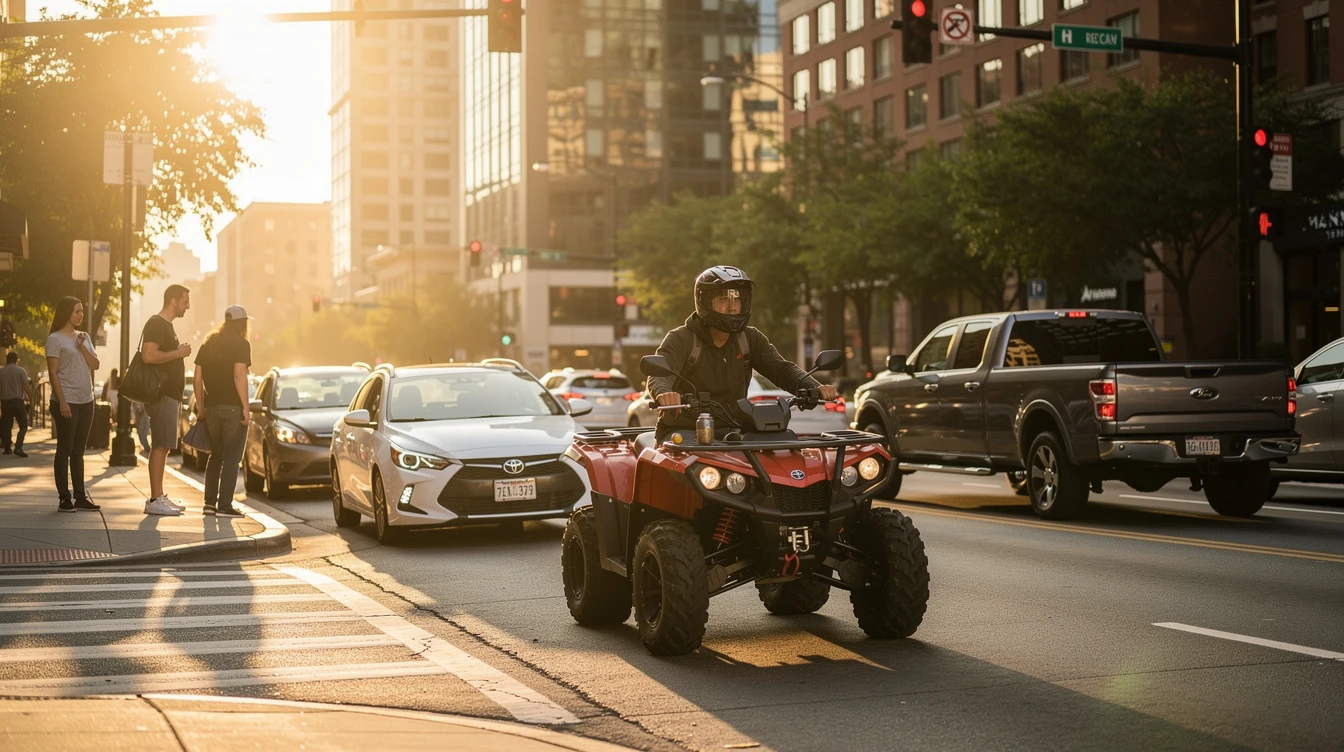
If you’re considering how pit bikes compare to other off-road vehicles in the street-legal conversation, our guide on street-legal quads covers a similar topic for four-wheelers and is worth reviewing alongside this one.
Pit Bike Laws by Riding Location
The question of whether pit bikes are legal often comes down to where specifically you’re riding. The same bike can be completely legal in one context and a violation in another.
Public roads and highways
Without street-legal certification and proper registration, riding a pit bike on a public road is illegal in every state. Law enforcement can issue citations, impound the bike, and in some jurisdictions, charge the rider for operating an unregistered or uninsured vehicle. The fines vary by state but can be significant.
Designated OHV trails and public lands
Most states allow OHV-registered bikes, including pit bikes, on designated off-highway vehicle trails. The Bureau of Land Management (BLM) and U.S. Forest Service manage large trail networks open to registered OHVs. State parks often have their own trail systems with their own permit requirements. Always verify the specific permit or registration required before riding any public trail.
Dirt tracks and private motocross facilities
This is where pit bikes are entirely at home. Private tracks, motocross facilities, and closed racing circuits don’t require any road registration. Pit bikes are designed for exactly this environment and can be ridden freely on private property with permission. Many tracks do require liability waivers and may have their own rules about minimum protective gear.
How Dirt Legal Helps Riders Get Pit Bikes Registered
Getting a pit bike properly titled and registered can feel like running into a wall, especially if your home state has strict emissions requirements or complicated inspection rules. Dirt Legal specializes in exactly these situations.
We help riders across all 50 states register their pit bikes, dirt bikes, ATVs, and other powersports vehicles using Montana and South Dakota registration pathways. The process is handled entirely by our team, and nearly all customers receive their registration documents without issue.
You can also check out our off-road vehicle registration service page for more detail on how we handle pit bikes and similar vehicles, or visit our motorcycle registration service if your pit bike is classified as a motorcycle in your state.
For vehicles with title issues, whether a lost title, bill of sale only, or no paperwork at all, our classic vehicle title solutions page explains the bonded title and title recovery process, which can apply to pit bikes and off-road vehicles in many cases.
Frequently Asked Questions About Pit Bike Legality
Can you ride a pit bike on the street legally?
In most cases, no, not without significant modifications and proper registration. A stock pit bike lacks the required lighting, signals, mirrors, horn, and DOT-rated tires required for street use in every U.S. state. Some states also require EPA-certified engines. If your bike can be modified to meet those requirements and your state allows it, street registration is possible. Montana and South Dakota offer accessible registration pathways for riders who want plates and a title.
Do you need a license to ride a pit bike?
On private property, typically no license is required. On public roads or designated OHV trails, requirements vary by state. For street-legal operation, a standard motorcycle license or endorsement is required in most states. For OHV trail riding, some states require a safety certification or permit but not a full motorcycle license. Always check your specific state’s rules before riding on any public land or road.
Can a pit bike be titled?
Yes. If your pit bike has a Manufacturer Certificate of Origin or an existing title from a prior owner, it can be titled in most states. Montana is particularly accessible for titling non-standard or off-road vehicles. Dirt Legal handles the titling process and can work through situations where paperwork is incomplete or missing.
What is the difference between a pit bike and a dirt bike legally?
From a registration standpoint, most DMVs don’t distinguish between a pit bike and a dirt bike by name. Both are typically classified as motorcycles or OHVs based on engine displacement and design. A 50cc pit bike may fall into a moped or mini-cycle classification in some states, while a 125cc or larger model is typically treated as a motorcycle. The legal treatment depends more on specs than the “pit bike” label.
Are pit bikes legal in California?
California has some of the strictest vehicle emissions rules in the country. Most pit bike engines are not CARB-certified for street use, which means they can’t be registered for road use in California regardless of equipment modifications. California does offer an OHV registration (“green sticker” or “red sticker”) that allows riding on designated OHV areas, but street registration for most pit bikes is not an available path in California.
Can you register a pit bike without a title?
Yes, in many cases. Options include bonded titles, court-ordered titles, or registration through states with more accessible processes like Montana. The specific path depends on what documentation you do have, such as a bill of sale, prior registration, or manufacturer paperwork. Dirt Legal can help assess your situation and identify the best path to a clean title.
What is a green sticker vs. red sticker for pit bikes?
These classifications are used in California to categorize OHV emissions compliance. Green sticker bikes meet California’s off-road emissions standards and can be ridden year-round on open OHV areas. Red sticker bikes are older or higher-emitting models restricted to riding during certain seasons. Neither classification is street-legal. Other states have their own OHV permit and registration systems that don’t use this color-coded system.
What happens if you get caught riding a pit bike on the road illegally?
Consequences vary by state and local law but typically include fines for operating an unregistered or uninsured vehicle, a possible citation for equipment violations, and in some cases, impoundment of the bike. Repeat violations can escalate penalties. Getting your pit bike properly registered before riding on public land or roads eliminates this risk entirely.
The Bottom Line on Pit Bike Legality
Are pit bikes legal? On private property and closed tracks, yes. On public roads without street-legal modifications and proper registration, no. The path to legal riding on public roads or trails depends on your state’s rules, your bike’s specs, and what documentation you have available.
For riders who want a real title and plates without fighting their home state’s emissions or inspection requirements, Montana and South Dakota registration through Dirt Legal is the most straightforward option. We handle the paperwork, the LLC formation if needed, and the registration, so you can focus on riding instead of bureaucracy.
Whether your pit bike is brand new from a dealer or a used bike with missing paperwork, Dirt Legal has a path to get it registered. Reach out today and let’s get your bike squared away.