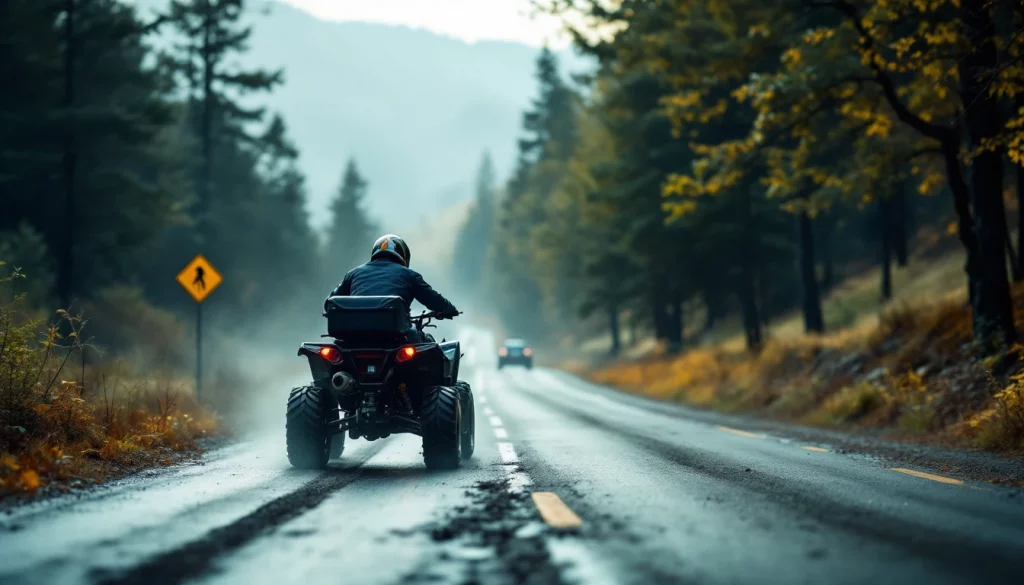
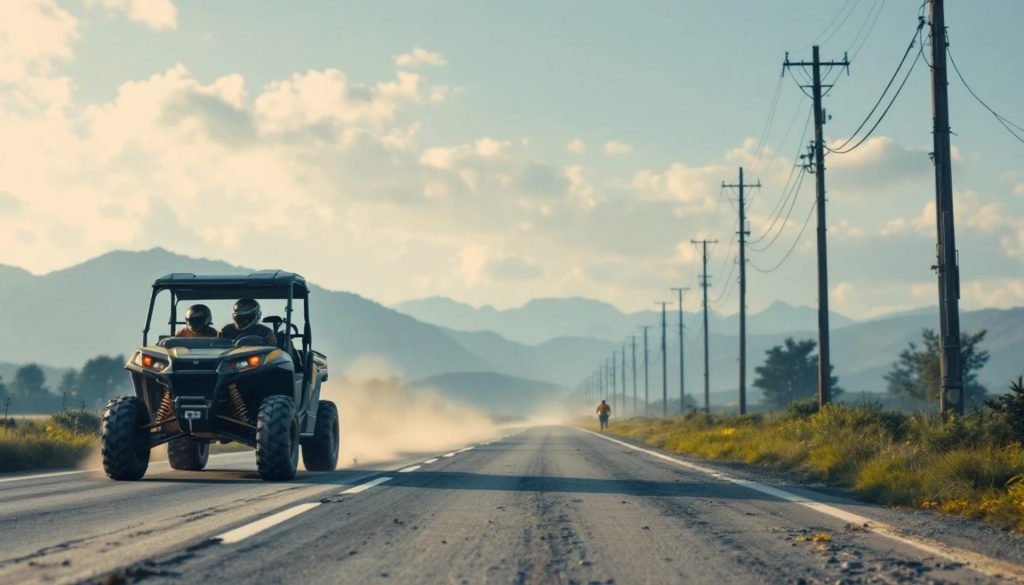
Riding ATVs (All-Terrain Vehicles), UTVs (Utility Task Vehicles), or dirt bikes on public roadways is not as simple as pointing your machine at the nearest highway. State laws vary wildly, the equipment requirements are real, and getting caught without proper registration or safety gear can cost you far more than the paperwork would have. This guide breaks down what you actually need to know, from equipment requirements to registration options, so you can ride confidently and compliantly.
Whether you own a side-by-side, a quad, or a two-stroke trail bike, the path to riding on public roads runs through proper titling, registration, and in many cases a few equipment upgrades. Some states make it relatively straightforward. Others make it nearly impossible. Knowing where your state falls, and what your options are, is step one.
Read on for a complete breakdown of street-legal requirements, a state-by-state snapshot, registration options, and answers to the most common questions riders ask.
What Does “Street-Legal” Actually Mean for ATVs, UTVs, and Dirt Bikes?
A vehicle is street-legal when it meets the minimum safety and equipment standards required by a state to operate on public roads. For off-road machines, that bar is higher than most riders expect. These vehicles weren’t built with turn signals, mirrors, or DOT-rated tires in mind, so making them road-compliant means adding hardware.
What Equipment Is Typically Required to Ride on Public Roads?
Requirements differ by state, but most states that allow off-road vehicles on public roads expect a similar core list. Here’s what you’ll commonly need:
- Headlights and taillights (DOT-compliant)
- Turn signals (front and rear)
- Mirrors (at least one, usually two)
- Horn
- DOT-rated tires
- Speedometer
- Windshield or eye protection (varies by state)
- Muffler and spark arrestor
- Brakes on all four wheels (for ATVs and UTVs)
Some states also require liability insurance before they’ll issue a title or registration for a street-legal ATV or UTV. Dirt bikes have a shorter list, but the motorcycle license requirement is almost universal where street-legal dirt bike riding is allowed.
Do You Need a Motorcycle License to Ride a Dirt Bike on the Road?
In nearly every state that permits dirt bikes on public roadways, yes, you need a motorcycle endorsement or license. Riding without one is a moving violation on top of any registration issues you might already have. The rules around this are covered in detail at Montana Vehicle Title & Registration for Montana riders, and you can also find a more thorough breakdown in Do You Need a License for a Dirt Bike? Here’s What Riders Need to Know, which covers the license question across multiple states.
Are Pit Bikes or Mini Bikes Included?
Pit bikes occupy a gray area. Most are not factory-equipped to meet DOT standards, but some owners do convert them. For a direct answer on whether these smaller bikes Eligible, check out Are Pit Bikes Street-Legal? The Complete Answer for Riders. Short answer: it depends on your state and whether the bike can pass a VIN inspection after the conversion work is done.
State-by-State Rules: Which States Allow Off-Road Vehicles on Public Roads?
This is where things get complicated fast. There’s no federal standard for riding ATVs, UTVs, or dirt bikes on public roadways. Every state sets its own rules, and those rules range from “fully permitted with proper equipment” to “banned entirely on public roads.”
Ready to register your vehicle?
Join thousands of vehicle owners who use Dirt Legal to handle their registration quickly and hassle-free.
Register Your Vehicle Today → →States That Generally Permit Street-Legal UTVs
Several states have passed legislation or have established administrative processes for titling side-by-sides and ATVs for road use. States like Utah, Arizona, Colorado, and Montana tend to be more permissive, especially on rural and county roads. For a full breakdown, the UTV Street Legal States: Which States Allow Side-by-Sides on Public Roads post covers all 50 states and what each one actually requires.
State-Specific Spotlights: Oklahoma and Florida
Oklahoma has specific equipment requirements and a defined titling path for UTVs that riders want to ride on public roads. Oklahoma Street-Legal UTV Requirements: What You Need to Know Before You Ride lays out the exact steps. Florida is a different story, where the rules are stricter and the process less straightforward. If you’re a Florida rider, Can You Make a Side by Side Street-Legal in Florida? Here’s the Real Answer explains your real options.
What About Dirt Bikes Specifically?
Dirt bike laws often follow motorcycle statutes, which means a street-legal conversion involves more than just bolting on mirrors. States like Connecticut and California have published specific rules. You can find those in Connecticut Dirt Bike Laws: Street-Legal Conversion & Rules and California Dirt Bike Laws: What You Need to Know. Delaware riders should check Delaware Dirt Bike Laws: Street-Legal, OHV Regs & Helmet Rules for state-specific guidance.
Registration and Titling: How to Make Your Off-Road Vehicle Road-Ready
Equipment upgrades are only half the battle. You also need a title and registration that reflects your vehicle’s street-legal status. That process varies by state, but it typically involves a VIN inspection, a title application, and proof that your machine meets local safety standards.
What Is a VIN Inspection and Do You Need One?
A VIN inspection verifies that the vehicle identification number on your machine matches the documentation you’re submitting. Most states require one before they’ll issue a title for an off-road vehicle being converted for road use. VIN Inspections: What They Are, When You Need One, and How to Pass walks through the entire process, including who can perform the inspection and what to bring. You can also cross-check VIN details using the VIN Lookup tool before heading to any inspection appointment.
The Montana LLC Registration Option
Montana is one of the most vehicle-owner-friendly states in the country. There’s no sales tax, no emissions testing, and a clear path to titling and registering vehicles, including powersports and off-road machines. Owners who don’t live in Montana can still register through a Montana LLC Vehicle Registration, a fully recognized method that has helped thousands of owners skip sales tax on high-dollar purchases. The complete process is documented in The Complete Guide to Forming a Montana LLC for Vehicle Registration.
Montana also has no requirement for emissions testing on recreational vehicles, which makes it a popular choice for ATV and UTV owners. For more on how Montana handles these vehicles specifically, see Register a Car in Montana: What You Need to Know Before You Start.
What Documents Do You Need to Title an Off-Road Vehicle?
At minimum, you’ll typically need the Manufacturer’s Statement of Origin (MSO) if the vehicle is new, or the existing title if it’s used. A bill of sale is also standard. Understanding what counts as valid proof of ownership matters a lot here, especially for used machines that may have changed hands informally. What Is the Best Proof of Vehicle Ownership? A Complete Document Guide covers exactly that. For brand new machines, the Manufacturer’s Statement of Origin (MSO): What It Is and Why It Matters for Your Vehicle Title post explains what that document is and why it matters.
The most frequent reason documents come back for correction in our processing queue is odometer compliance, which often surprises off-road vehicle owners who assume mileage documentation doesn’t matter for machines rarely driven on pavement (internal data, rolling last 90 days, n=115). Don’t skip this step, even if your ATV has never touched asphalt.
Equipment Comparison: What Each Vehicle Type Typically Needs to Be Street-Legal
| Vehicle Type | Typical Equipment Requirements | License Required? | Insurance Required? |
|---|---|---|---|
| ATV (Quad) | Headlights, taillights, turn signals, mirrors, horn, DOT tires, speedometer | Varies by state (often yes) | Varies by state |
| UTV / Side-by-Side | Headlights, taillights, turn signals, mirrors, horn, DOT tires, seatbelts, roll cage (often required), speedometer | Standard driver’s license (most states) | Usually required |
| Dirt Bike | Headlight, taillight, turn signals, mirrors, horn, DOT tires, muffler | Motorcycle endorsement (most states) | Usually required |
| Pit Bike | Same as dirt bike, but most don’t meet DOT standards factory-stock | Motorcycle endorsement if converted | Varies |
Registration Costs and What to Expect
Vehicle registration costs for ATVs, UTVs, and dirt bikes vary significantly depending on the state, vehicle value, and whether you’re doing a first-time title or a transfer. Montana is consistently one of the lowest-cost states for registration, which is a big reason owners across the country choose it.
How Much Does Montana Registration Cost for Powersports?
Montana charges a relatively modest flat fee for motorcycle and powersports registration, with no sales tax added to the purchase price. That last part is significant if your UTV or ATV was a $20,000, $30,000, or higher purchase. Saving 5, 10% in sales tax on a high-value machine is real money. For a deeper look at what Montana charges and how plates work, Montana Plates: Your Complete Guide to Options, Costs, and Registration is worth reading. You can also verify current fees directly through Montana Vehicle Title & Registration Fees.
Does Montana Have Sales Tax on Off-Road Vehicles?
No. Montana has no state sales tax, full stop. That applies to ATVs, UTVs, dirt bikes, and every other vehicle registered in the state. Does Montana Have Sales Tax on Vehicles? Here’s the Full Story explains this in full, including how it applies to out-of-state residents who register through a Montana LLC.
What If You’re Registering a Used Machine With No Title?
This happens more often than you’d think with off-road vehicles that were purchased informally or used strictly on private land for years. A bonded title or a bill of sale may be your path forward. Understanding what documents you actually have, and what they prove, is critical. What Makes a Vehicle Title Invalid? Warning Signs Every Owner Should Know is a good starting point for sorting out any title issues before you try to register for road use. For more on how ownership documents work outside of a traditional title, see Title Isn’t Always Ownership: The Reality Most People Miss.
The team at Ride Legal also specializes in Montana registration for motorcycles, ATVs, UTVs, and powersports, and is a strong resource if your situation involves a more complex titling scenario.
Frequently Asked Questions
What equipment does a UTV need to be street-legal?
Most states that allow UTVs on public roads require: DOT-rated headlights and taillights, front and rear turn signals, at least one mirror, a horn, a speedometer, DOT-approved tires, functioning brakes on all four wheels, and often a windshield. Some states additionally require seatbelts on all occupants and a roll cage or ROPS (Roll-Over Protection Structure). Equipment requirements are set at the state level, so always verify against your specific state’s statute. A proper title and registration reflecting street-legal status is required before any road use.
Do you need a motorcycle license to ride a dirt bike on a public road?
In the vast majority of states, yes. A standard driver’s license is not sufficient for operating a motorcycle or street-legal dirt bike on public roadways. You’ll need a motorcycle endorsement (Class M in most states) or a standalone motorcycle license. The requirement applies regardless of engine size in most jurisdictions. Some states have limited exceptions for low-displacement bikes on certain road types, but these are rare. The Do You Need a License for a Dirt Bike? post covers this in detail with state-specific information.
Can you register a dirt bike or ATV in Montana if you don’t live there?
Yes. Non-residents can register vehicles, including ATVs, UTVs, and dirt bikes, in Montana by forming a Montana LLC and titling the vehicle through that entity. The LLC is a recognized business entity under Montana law, and the vehicle is owned by the LLC rather than by you as an individual. This is a widely used strategy for avoiding sales tax on high-value purchases. You can start the process through Montana LLC Vehicle Registration or read the full breakdown in How to Register a Car in Montana Without Living There (The Complete Montana LLC Method).
What happens if you ride an off-road vehicle on a public road without proper registration?
Consequences vary by state, but riding an unregistered ATV, UTV, or dirt bike on a public road typically results in fines, possible impoundment of the vehicle, and in some cases points on your driver’s license. If you’re involved in an accident on a public road while riding an unregistered off-road vehicle, your personal liability exposure increases significantly since standard auto insurance policies usually don’t cover unregistered vehicles in road use scenarios. Getting the title and registration right before hitting the pavement is always the better path.
How do VIN inspections work for off-road vehicles being converted for road use?
A VIN inspection is a physical verification that the vehicle identification number on your machine matches your paperwork. For off-road vehicles being titled for street use, an inspector confirms the VIN on the frame or engine and checks it against your title or MSO. In some states, this is done by a law enforcement officer or designated DMV inspector. In others, a licensed dealer can perform it. Failing to have a clean VIN inspection is one of the most common reasons registrations stall. VIN Inspections: What They Are, When You Need One, and How to Pass covers the full process, and the VIN Inspections Explained guide from Ride Legal is also worth bookmarking.
Is it possible to make any ATV or UTV street-legal, or are some excluded?
Not every off-road machine can be made street-legal, even with extensive modifications. Some states explicitly exclude certain vehicle classes from road registration regardless of equipment. Others have engine displacement limits or weight restrictions. Beyond eligibility, some machines simply can’t meet DOT standards for tires or lighting without a full custom build. Your best starting point is confirming whether your specific vehicle’s make, model, and year is eligible in your target state, then working through the equipment checklist from there.
What is a bill of sale, and do I need one for my ATV or UTV?
A bill of sale is a written record of a vehicle transaction between a buyer and seller. For off-road vehicles, it documents the transfer of ownership and often includes the purchase price, VIN, make, model, year, and signatures from both parties. When a formal title isn’t available, a bill of sale may be your primary ownership document, though it doesn’t replace a title for registration purposes. Many states require it as supporting documentation even when a title exists. It’s one of the most searched topics in vehicle transactions, with “bill of sale automotive” driving significant search volume, so understanding its role is worth your time before any purchase or registration attempt.
Riding ATVs (All-Terrain Vehicles), UTVs (Utility Task Vehicles), or dirt bikes on public roadways is entirely possible in many states, but it requires the right equipment, a clean title, and proper registration. The rules are state-specific, the paperwork is real, and the cost of skipping steps is higher than the cost of doing it right. Dirt Legal has helped 80,000+ vehicle orders to date, and our team provides paperwork support so you can spend less time dealing with forms and more time riding. Whether you’re starting a Montana LLC for your side-by-side or sorting out a title for a converted dirt bike, the process starts at Dirt Legal.