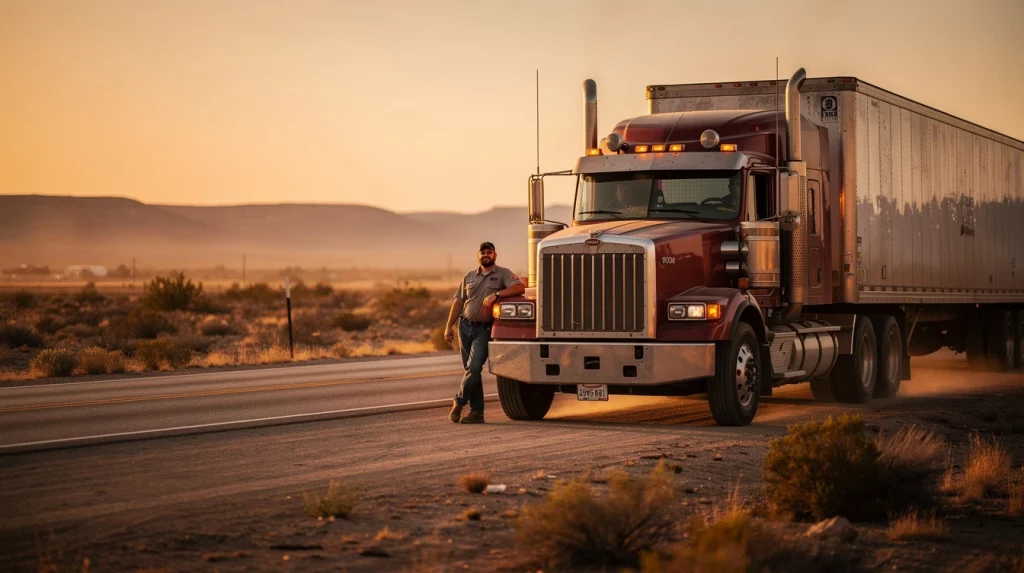
Semi-truck drivers leave their trucks running for long periods primarily to maintain cab temperature, protect the engine, power onboard systems, and comply with regulations around idle warm-up and cool-down cycles. It’s a practical necessity tied to how diesel engines and long-haul trucking actually work.
What Are the Main Reasons Semi-Truck Drivers Idle Their Engines?
Diesel truck engines aren’t like passenger car engines. Shutting them down and restarting them repeatedly creates wear, wastes fuel on restarts, and can leave drivers in dangerous temperature conditions. Here are the core reasons drivers keep them running:
- Cab climate control: Most sleeper cabs rely on the engine to run heating or air conditioning. Without idle, the cab can reach dangerous temperatures in minutes, especially in extreme weather.
- Engine protection: Diesel engines, especially older models, benefit from idle cool-down periods after heavy loads. Shutting off a hot engine abruptly can damage turbochargers and other heat-sensitive components.
- Powering appliances: Refrigerators, microwaves, TVs, and CPAP machines in sleeper cabs need power. Idling the engine is often the cheapest way to supply it.
- Fuel system and battery maintenance: Extended cold-weather shutdowns can cause diesel fuel to gel, making restarts difficult or impossible.
- Regulatory compliance: Some states and trucking companies require specific idle periods before and after long hauls.
Is It Bad for a Diesel Engine to Idle for Long Periods?
Short answer: excessive idling does have trade-offs, but the risks of not idling in certain conditions are often worse. Drivers balance engine wear against comfort and safety every day on the road.
Ready to register your vehicle?
Join thousands of vehicle owners who use Dirt Legal to handle their registration quickly and hassle-free.
Register Your Vehicle Today → →Extended idling can cause:
- Incomplete combustion and carbon buildup in cylinders
- Diluted engine oil over time
- Increased fuel costs (a typical diesel burns roughly 0.8 gallons per hour at idle)
But the alternative risks are real too. Restarting a cold diesel in sub-zero temperatures without a block heater puts serious strain on starter motors, batteries, and fuel injectors. For drivers sleeping in their cab, it’s not optional comfort, it’s a safety requirement.
Many fleets now use auxiliary power units (APUs) to reduce main engine idle while still powering the cab. However, APUs have their own maintenance costs, and not every truck is equipped with one.
Do Idling Laws Affect How Long Truck Drivers Can Leave Their Engines Running?
Yes, and they vary significantly by state. Many states cap idling at 5 minutes for non-commercial vehicles, but commercial trucks often have exemptions. Drivers have to know the rules for every state they pass through.
| State | General Idle Limit | Commercial Truck Exemption? |
|---|---|---|
| California | 5 minutes | Limited; strict enforcement near ports |
| Texas | No statewide limit | N/A (local rules may apply) |
| New York | 3 minutes (5 minutes in traffic) | Partial exemptions for temperatures below 25°F |
| Montana | No statewide idle limit | N/A |
| Florida | No statewide limit | N/A (county rules vary) |
| Illinois | 5 minutes (Chicago: 3 minutes) | Temperature-based exemptions apply |
Drivers crossing multiple states need to track idling rules just like they track weight limits and hours-of-service regulations. Non-compliance can mean fines and failed DOT inspections.
Proper vehicle documentation matters in trucking just as much as in personal vehicle ownership. If you’re managing a fleet or commercial vehicle, understanding The Complete Guide to Forming a Montana LLC for Vehicle Registration can help with registration strategy across state lines.
Why Do Truck Drivers Sleep With Their Engines Running?
Federal Hours of Service (HOS) rules require drivers to take mandatory rest breaks. During those breaks, drivers sleep in their sleeper berths, and the engine runs to keep the cab livable. There’s no other option in many older trucks.
Temperatures inside an unventilated semi cab can hit 130°F in summer or drop to below freezing in winter within an hour of shutdown. That’s not a comfort issue. That’s a survival issue.
- Summer: Engine powers the A/C compressor to prevent heat stroke
- Winter: Engine runs the heater to prevent hypothermia
- Year-round: Engine charges the battery bank that powers lights, phone chargers, and medical devices
Truck stops with shore power hookups (sometimes called “electrified parking”) are growing, but still not universal. Until they are, idling stays the default for millions of truck drivers every night.
How Does Commercial Vehicle Registration Differ From Regular Vehicle Registration?
Commercial trucks face a different registration landscape than personal vehicles. Weight classes, apportioned plates, and multi-state operation all add complexity that personal car owners never deal with.
Key differences include:
- IRP plates (International Registration Plan): Most semi-trucks operating across state lines use apportioned registration, splitting fees among the states they drive in.
- Higher vehicle registration costs: A Class 8 semi can cost thousands per year in registration fees, compared to a few hundred for a passenger car.
- IFTA fuel tax reporting: Carriers track fuel purchases and miles per state to calculate quarterly fuel tax obligations.
- Title complexity: Liens, fleet ownership, and leased units create title situations that require careful DMV title transfer work.
If you own commercial vehicles or a fleet and want to simplify vehicle registration costs, a Montana LLC vehicle registration structure is worth understanding. Montana has no sales tax on vehicles and no emissions testing requirements, which can create significant savings at scale.
For a broader look at how Montana’s registration rules work, the Does Montana Have Sales Tax on Vehicles? Here’s the Full Story post explains the tax treatment in detail.
Dirt Legal has helped 80,000+ vehicle orders to date, including commercial vehicles, RVs, and powersports registered through Montana LLCs.
What Are the Best Alternatives to Long Engine Idling for Truck Drivers?
The trucking industry is pushing hard to reduce idle hours for fuel savings and emissions compliance. Several technologies are replacing the old “just leave it running” approach.
- Auxiliary Power Units (APUs): A small diesel generator mounted on the truck that runs the HVAC and electrical systems without spinning the main engine. Can save up to 1,000 gallons of fuel per year.
- Battery-powered systems: Lithium battery banks charged while driving, then used overnight for climate control. Increasingly common in newer trucks.
- Truck stop electrification (TSE): Shore power hookups at major truck stops, similar to a campground hookup for an RV. Costs a few dollars per hour but far less than burning diesel.
- Thermal blankets and insulation upgrades: Low-tech but effective, especially in mild climates.
The economics are shifting. With diesel around $3.50-$4.00 per gallon, an 8-hour overnight idle burns $22-$26 in fuel. APUs and battery systems pay for themselves in 18-24 months on most routes.
If you own an RV, motorhome, or recreational vehicle that faces similar idle-vs-shore-power decisions, Register Your Motorhome in Montana: The Complete Guide covers registration options that can also reduce your ownership costs.
Frequently Asked Questions
How much fuel does a semi-truck use while idling?
A typical Class 8 diesel engine burns roughly 0.8 gallons per hour at idle. Over a 10-hour rest period, that’s about 8 gallons, or $28-$32 at current diesel prices. Nationwide, commercial truck idling consumes an estimated 6 billion gallons of diesel annually.
Can truck drivers get fined for idling too long?
Yes. In states with idle limits, fines for commercial trucks typically range from $100 to $1,000 per violation. California is the most aggressive enforcer, with fines that can compound per day. Temperature exemptions and APU certifications can protect drivers from penalties in most jurisdictions.
Do newer semi-trucks have anti-idle systems?
Most new Class 8 trucks built after 2010 include automatic engine shutdown (AES) systems that cut the engine after a set idle period, typically 5 minutes. Drivers can override these for temperature-based needs, but the default helps fleets reduce fuel costs and comply with idle laws.
How does this relate to vehicle registration and ownership?
Commercial truck registration involves complex multi-state rules, apportioned plates, and high vehicle registration costs. Owners and fleet operators who structure ownership through a Montana LLC can reduce registration fees and eliminate sales tax exposure. Register your vehicle to see your options.
Where can I learn more about registering commercial or specialty vehicles?
Dirt Legal covers registration for everything from motorcycles to RVs to commercial vehicles. For a solid starting point, How to Register a Car in Montana Without Living There explains how the Montana LLC method works for out-of-state owners.
Own a vehicle that needs registration sorted? Dirt Legal provides paperwork support for cars, trucks, RVs, motorcycles, and more, with remote processing so you don’t have to sit in line.
Start Your Registration Today →