

Why the DMV Doesn’t Control Every Step of Vehicle Titling and Registration
Most drivers assume the Department of Motor Vehicles (DMV) is the only place where vehicle titling and registration can happen. The typical image is long lines, stacks of paperwork, and a state employee stamping forms behind a counter.
In reality, the process is more flexible than many people realize.
While state motor vehicle agencies manage records and oversee the system, many states already allow other organizations—such as dealerships, county offices, and authorized third-party agents—to assist with parts of the titling and registration process.
Understanding how the system works helps drivers see that the DMV is not always the only point of access.
What the DMV Actually Does
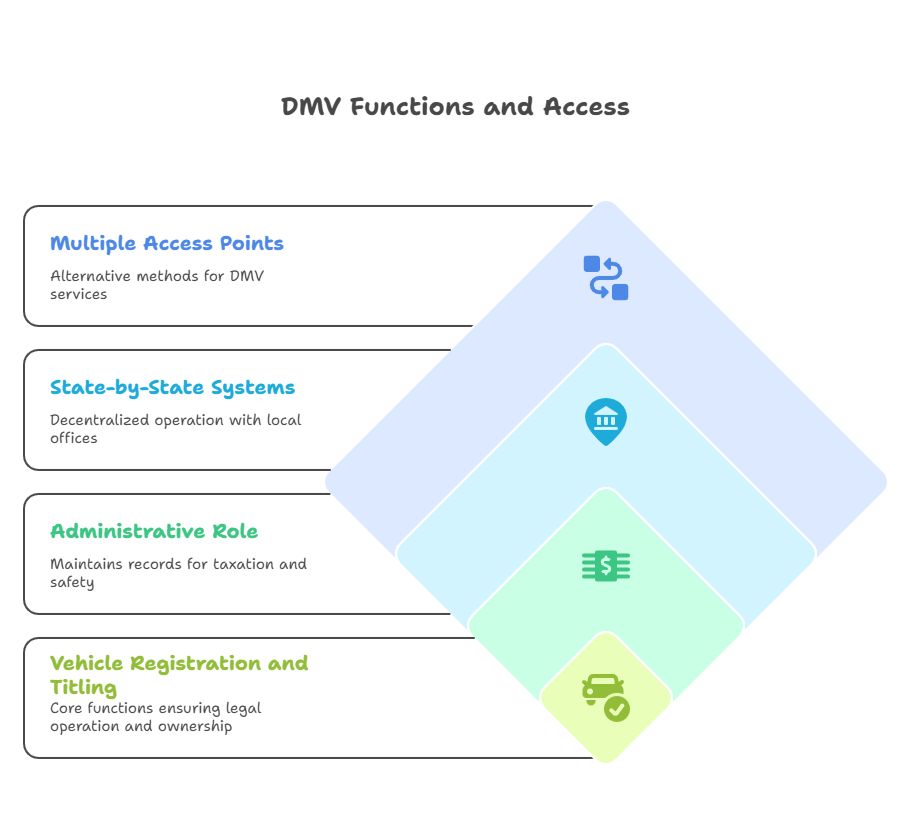
State motor vehicle agencies primarily serve as recordkeeping and administrative systems for vehicle ownership and registration.
Vehicle Titling
Vehicle titles establish ownership of a car and create an official record that tracks transfers, liens, and other ownership information.
The National Highway Traffic Safety Administration explains that vehicle titles are essential for documenting ownership and preventing fraud in vehicle transactions.
Vehicle Registration
Registration connects a vehicle to its owner and allows the vehicle to operate on public roads.
Registration systems also support:
law enforcement identification
taxation and fees
emissions and safety programs
Vehicle registration requirements are typically established at the state level, which is why procedures can differ across the country.
You can review federal vehicle safety standards on the National Highway Traffic Safety Administration website.

The DMV Is Not a Single National Agency
Another common misconception is that there is one national DMV.
In reality, every state operates its own motor vehicle agency. Some examples include:
Departments of Motor Vehicles (DMV)
Departments of Transportation (DOT)
Motor Vehicle Administrations (MVA)
Because these agencies are state-run, procedures and access points can vary widely.
Many states allow local governments or private partners to assist with processing paperwork while the state maintains the official records.
Alternatives That Already Exist
Several systems already demonstrate that registration and titling tasks can happen outside of a traditional DMV office.
Dealership Processing
In many states, dealerships handle the paperwork when you purchase a vehicle.
Dealers often submit registration and title documentation directly to the state on behalf of the buyer. Temporary tags are issued while the paperwork is processed.
County or Regional Offices
Some states allow county clerks or regional offices to process vehicle registration.
For example, many registration services in Texas and Tennessee are handled through county offices rather than a central DMV location.
Online Portals
Many states now offer digital services that allow drivers to complete tasks without visiting a government office.
These services may include:
registration renewals
title transfers
license plate replacements
For example, the U.S. government’s official portal provides links to state motor vehicle agencies and services.
Frequently Asked Questions
Is a vehicle title important?
Yes. A vehicle title is one of the most important documents connected to a car. It establishes ownership and creates an official record identifying who is responsible for the vehicle. Without a title, selling, transferring ownership, or registering a vehicle for public-road use can become difficult in many states.
For drivers dealing with missing titles or complicated ownership situations, services like Dirt Legal help guide customers through available options and paperwork required to resolve title issues.
Am I responsible for a car if my name is on the title?
Yes. If your name appears on the title, you are recognized as the vehicle’s owner. This means you are responsible for matters related to the vehicle, including taxes, insurance, and maintaining proper registration.
If ownership records are unclear or documentation is missing, Dirt Legal provides assistance with title recovery and other registration-related paperwork so vehicle owners can address these situations more efficiently.
How do you transfer a vehicle title?
To transfer a vehicle title, the buyer and seller must complete the title document. This typically includes signatures from both parties, the sale price, and the odometer reading when required by state law. The completed title is then submitted to the appropriate state motor vehicle agency or processed through a dealership or authorized agent.
For situations involving older vehicles, incomplete paperwork, or title complications, Dirt Legal offers services designed to help vehicle owners navigate the process and complete the required documentation.
Do I always need to visit the DMV to complete paperwork?
Not necessarily. While motor vehicle agencies oversee registration and title records, many states allow dealerships, county offices, and authorized third-party agents to assist with paperwork processing.
Companies such as Dirt Legal help customers organize documentation, navigate complex paperwork, and handle certain registration and titling steps depending on the situation. These services can provide additional support when traditional processes become difficult or time-consuming.
Why This Matters for Drivers
Recognizing that the DMV functions primarily as an administrative recordkeeper helps explain why alternative service models can work.
When dealerships, county offices, or online portals assist with paperwork, the state still maintains the official records while making services easier for drivers to access.
These alternative access points can reduce wait times and simplify processes that would otherwise require multiple visits to a government office.
Understanding Your Options
Vehicle titling and registration often involve complex paperwork and state-specific procedures.
For drivers dealing with unusual situations—such as missing titles, specialty vehicles, or out-of-state documentation—services like Dirt Legal provide guidance designed to help navigate the process and organize required paperwork more efficiently.
Understanding how the system works helps vehicle owners explore available options and avoid unnecessary delays.