California has no official grace period for expired vehicle registration. The moment your registration expires, you can be cited, and fines start accruing. Here’s everything you need to know about penalties, renewal steps, and your options.
Does California Give Any Grace Period for Expired Registration?
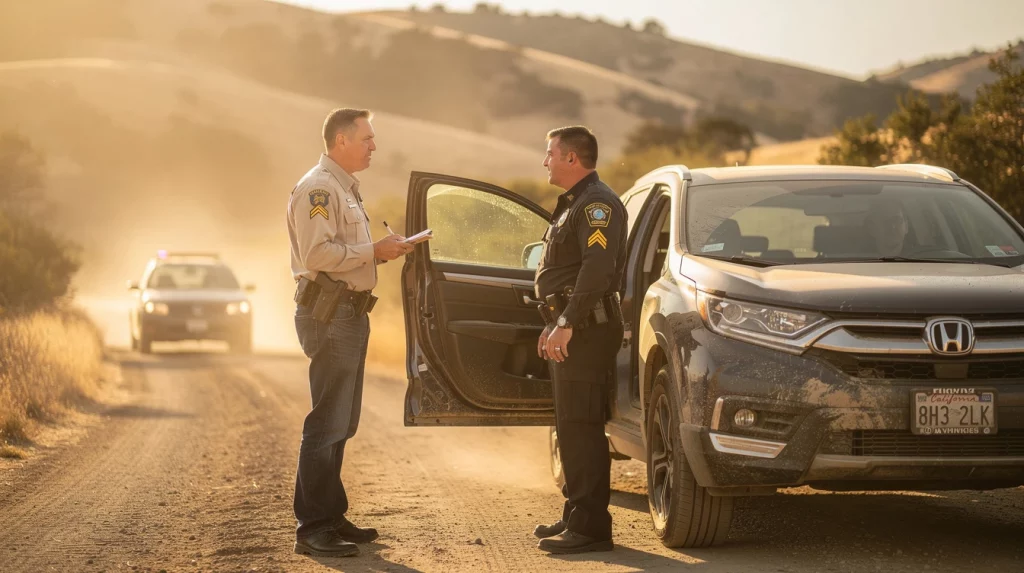
No. California law does not grant any grace period once a registration expiration date passes. Law enforcement can issue a fix-it ticket or a fine the day after your sticker expires. Officers have discretion, but the law gives them full authority from day one.
A few things to understand right away:
- No 30-day buffer. Some states give 30 days, California does not.
- Fix-it tickets can be dismissed if you renew quickly, but court fees still apply.
- Penalty fees compound the longer you wait, making early renewal critical.
How Much Are the Fines for Driving With Expired Registration in California?
Fines for driving with expired registration in California vary based on how overdue you are and whether a citation is issued. Generally, the base fine starts around $25, but with court assessments it typically runs $100, $200+ per citation. That’s separate from the registration penalty fees you’ll owe the DMV.
Ready to register your vehicle?
Join thousands of vehicle owners who use Dirt Legal to handle their registration quickly and hassle-free.
| Situation | Estimated Cost |
|---|---|
| DMV late penalty (1-10 days) | $10 flat fee |
| DMV late penalty (11 days to 1 year) | 60% of the registration fee |
| DMV late penalty (over 1 year) | 80% of the registration fee |
| Fix-it ticket (base fine + assessments) | $100, $200+ typical total |
| Failure to appear or fix | Up to $1,000 or more |
The DMV late penalties alone can add hundreds of dollars to your vehicle registration costs, especially on high-value vehicles where fees are tied to the vehicle’s value.
How Do You Renew an Expired Registration in California?
Renewing expired registration in California (registration car CA) is straightforward, but you’ll pay the back fees plus penalties. Here’s the process step by step:
- Gather your documents: Current vehicle title or registration card, proof of insurance, and your vehicle’s license plate number.
- Check smog requirements: Most vehicles need a smog check before renewal if the registration is more than two years old or has lapsed.
- Pay outstanding fees: This includes the base registration fee plus any DMV penalty fees that have accrued.
- Renew online, by mail, or in person: The California DMV allows online renewal at dmv.ca.gov if no smog check is required. Otherwise, visit a DMV office or kiosk.
- Display your new sticker: Affix the new registration sticker to your plate immediately.
A VIN inspection may also be required in certain situations, such as if the vehicle title is unclear or the vehicle was recently purchased from a private party.
Why Are California Vehicle Registration Costs So High to Begin With?
California vehicle registration costs are among the highest in the nation. The state ties registration fees to a vehicle’s market value, adding charges like the Vehicle License Fee (VLF), county fees, and various state surcharges. On a newer vehicle worth $50,000+, annual registration can easily exceed $600, $800 per year.
This is one reason some owners, especially those with high-value vehicles or multiple vehicles, look into alternative registration strategies. One popular option is forming a Montana LLC for vehicle registration, which offers no sales tax and predictable, low flat-rate fees regardless of vehicle value. A full breakdown is available in our guide on How to Register a Car in Montana Without Living There (The Complete Montana LLC Method).
Montana has no emissions testing requirements either, which removes another friction point that California owners deal with regularly. For more on what Montana charges versus what other states charge, see our breakdown of Does Montana Have Sales Tax on Vehicles?
Can You Get a Fix-It Ticket Dismissed for Expired Registration in California?
Yes, in most cases you can get a fix-it ticket dismissed, but it’s not free. Once you renew your registration, you bring proof to the court or mail it in. The court will typically dismiss the underlying violation, but you’ll still owe a court dismissal fee of around $25. Some counties vary slightly.
Key points on fix-it ticket dismissal:
- You must renew the registration before the court deadline on your ticket.
- Proof of correction is required, typically the renewed registration card or DMV receipt.
- Failure to appear or resolve the ticket can convert it to a misdemeanor.
- Insurance companies typically do not raise rates for a corrected fix-it ticket.
Honest take: don’t sit on it. The longer a fix-it ticket goes unresolved, the more it costs and the worse the outcome. Renew efficient, dismiss efficient.
Is There a Better Long-Term Option Than Renewing in California Every Year?
For some vehicle owners, yes. If you own a high-value car, RV, or powersport vehicle, the annual cost of renewing in California can add up efficient. A Montana LLC vehicle registration is a widely used strategy that lets eligible owners register assets through a Montana LLC. Montana has no sales tax, no emissions testing, and Montana plates with flat-rate fees that don’t scale with vehicle value.
Dirt Legal has helped 80,000+ vehicle orders to date, and high-value vehicle owners from high-cost states like California are among the most common customers we work with.
This isn’t a fit for every owner, but if you’re paying $700/year in registration fees on a vehicle you drive a few months a year, the math often works out. Our team provides the paperwork support to get this done correctly. See Register a Car in Montana: What You Need to Know Before You Start for a complete walkthrough.
Also worth reading: the Ride Legal breakdown on LLC vehicle ownership and what collectors need to know covers the asset protection angle in detail.
Montana LLC vehicle registration alternative to California high registration fees’ width=’1200′ height=’675′>
Frequently Asked Questions
Is there a grace period for expired registration in California?
No. California provides no grace period for expired vehicle registration. Your registration is considered expired on the date shown on your sticker, and officers can issue a citation starting the next day. Renewing before the expiration date is the only way to avoid penalties and fines entirely.
How long can you drive with expired tags in California before being pulled over?
There is no guaranteed window. Officers can pull you over the day your registration expires. In practice, enforcement varies, but there is no defined period where expired tags are tolerated. Driving with expired registration is a citable offense from day one in California with no exceptions written into law.
What happens if you get caught with expired registration in California?
You’ll typically receive a fix-it ticket, which requires you to renew and show proof of correction to the court. Base fines run around $25, but with court fees and assessments, total costs are usually $100, $200+. If ignored, the ticket can escalate to a misdemeanor with much higher consequences.
Can expired registration affect my car insurance in California?
A fix-it ticket that gets corrected and dismissed typically does not affect your insurance rates. However, if expired registration leads to a vehicle impound or an unresolved court issue, that can have indirect effects on your driving record and coverage. Renew promptly and resolve any citations quickly.
How do I check if my California vehicle registration is expired?
Check the sticker on your license plate for the expiration month and year. You can also log in to the California DMV website using your license plate number and last five digits of your VIN to verify current registration status. The DMV also mails renewal notices about 60 days before expiration.
What is title jumping and does it cause registration problems in California?
Title jumping means a vehicle was sold without the title being properly transferred to each owner, leaving the chain of ownership broken. This can cause serious registration problems, including an inability to renew until the title issue is resolved. Learn more in our guide on What Makes a Vehicle Title Invalid?
Don’t let registration fees and expired tags stress you out. Whether you need paperwork support for a renewal, a title issue, or want to look at Montana LLC options, Dirt Legal is ready to help.