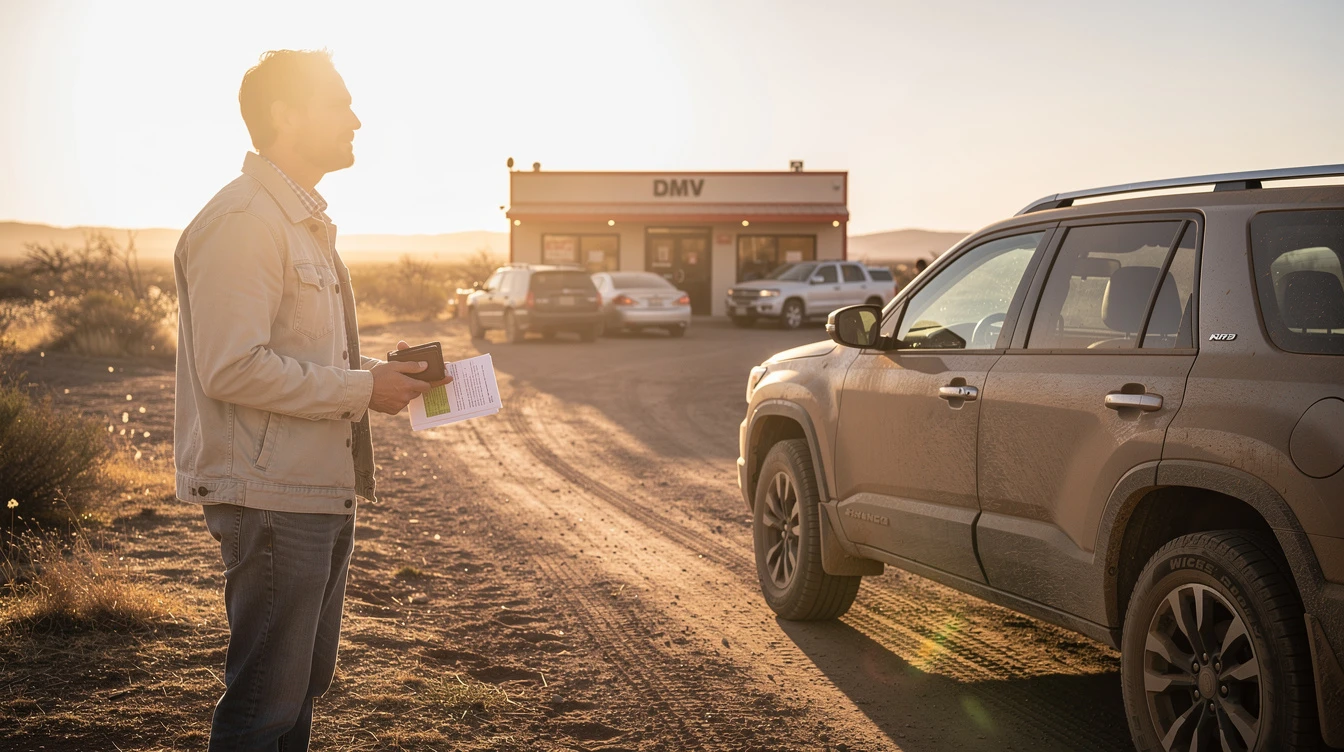

Yes, you can do an in-person vehicle registration renewal for someone else in Texas, and you don’t need a notarized letter or power of to do it. Texas allows any person to bring the required documents to a county tax assessor-collector’s office and renew a vehicle registration on behalf of the owner.
What Documents Do You Need to Renew Someone Else’s Registration in Texas?
Bringing the right paperwork is everything. Without the renewal notice or proof of insurance in hand, the county clerk may turn you away, even with the best intentions.
Here’s what you’ll typically need to bring:
- The renewal notice (mailed by the Texas DMV, or a printout if the owner has the digital version)
- Proof of valid Texas auto insurance for the vehicle being renewed
- Payment for vehicle registration costs (cash, check, or card depending on the county)
- Passing vehicle inspection report (Texas requires an annual safety and emissions inspection before renewal)
You do not need a signed letter from the owner in most Texas counties. The system is largely document-based, not identity-based. That said, some counties may have their own counter policies, so it’s worth calling ahead.
For a broader look at what counts as proof during any title or registration process, see What Is the Best Proof of Vehicle Ownership? A Complete Document Guide, which breaks down every document type that carries weight.
What Are the Vehicle Registration Costs for Texas Renewal?
Texas registration renewal fees vary by county and vehicle type, but most passenger vehicles fall in a predictable range. Budget for these core fees plus any add-ons your county charges.
Ready to register your vehicle?
Join thousands of vehicle owners who use Dirt Legal to handle their registration quickly and hassle-free.
Register Your Vehicle Today → →| Fee Type | Typical Amount | Notes |
|---|---|---|
| Base Registration Fee | $50.75 | Standard passenger vehicle |
| Local County Road/Bridge Fee | $10, $22 | Varies by county |
| State Inspection Fee (if not pre-paid) | $7, $25.50 | Inspection must be completed first |
| Processing/Handling Fee | $1, $5 | Online or in-person surcharge |
| Total Estimated | $68, $103+ | Depending on county and vehicle |
Owners with specialty plates, trucks over a certain weight, or vehicles with outstanding tolls may pay more. Always confirm the total with your county office before heading in.
Can You Renew a Texas Vehicle Registration Online Instead?
Yes, and honestly, online renewal is usually faster than making the trip to a tax office. Texas offers online renewal through the Texas Department of Motor Vehicles portal, and in most cases a proxy can handle it from home.
You’ll need:
- The vehicle’s license plate number
- The last four digits of the owner’s Vehicle Identification Number (VIN)
- Proof that a passing inspection is on file
- A valid payment method
Once submitted, the new registration sticker ships to the address on record, typically within 7, 10 business days. This is the most common path for renewing on someone else’s behalf, since you never have to present ID at a counter.
A remote paperwork support process handled without delays starts with having all the right information lined up before you begin, whether in person or online.
What Happens If the Vehicle Fails Inspection Before Renewal?
Texas requires a passing inspection before registration renewal is processed. If the vehicle is out of state, has a mechanical issue, or hasn’t been inspected yet, you’ll hit a wall at the county office.
Options in that situation:
- Get the vehicle inspected at a licensed station and obtain the report number
- Request a waiver if the vehicle has a documented mechanical issue preventing inspection
- For vehicles registered out of state or through a Montana LLC, different rules may apply entirely
Owners who have registered their vehicles through a Montana LLC for vehicle registration typically avoid Texas emissions and inspection requirements altogether, since the vehicle is registered in Montana, not Texas. That’s a route worth understanding if you own a high-value vehicle or one that struggles to pass emissions.
For a deeper look at the Montana approach, see How to Register a Car in Montana Without Living There.
Is Renewing Texas Registration the Same as Doing a Title Transfer?
No, these are two completely different transactions. Registration renewal just extends your authority to drive the vehicle on public roads for another year. A title transfer changes ownership of the vehicle.
Key differences:
- Registration renewal: Annual process, handled at the county tax office or online, no ownership change
- Title transfer: Required when a vehicle is bought, sold, or gifted; involves signing the title and paying transfer fees
- Proxy rules differ: Renewing for someone else is straightforward; transferring a title for someone else typically requires notarized authorization
If you’re handling a title transfer rather than a renewal, the process is more involved. Understanding what makes a vehicle title invalid can save you a wasted trip to the county office.
Is There a Better Long-Term Option Than Annual Texas Registration?
For owners who drive high-value vehicles, collectors, or enthusiasts who want to reduce ongoing costs, Montana LLC registration is worth a serious look. Montana has no sales tax on vehicles, no emissions testing, and no annual inspection requirement.
Dirt Legal has helped 80,000+ vehicle orders to date, and a large portion of those are owners who chose Montana registration to simplify their annual process (internal data, lifetime through current month, n=5,373).
The Montana LLC route means your vehicle is titled and registered in Montana, not Texas. You won’t be doing annual Texas renewals or inspection runs. Instead, Montana offers permanent registration options for many vehicle types, meaning you register once and you’re done.
You can see how the process works at Ride Legal’s Montana LLC registration page or get started directly through Dirt Legal’s Montana LLC vehicle registration.
Montana car registration fees are also significantly lower than most states. For a full breakdown, read Register a Car in Montana: What You Need to Know Before You Start.
Frequently Asked Questions
Do I need a power of to renew someone’s vehicle registration in Texas?
No. Texas does not require a power of or a written authorization letter for a proxy to renew a vehicle registration in person. You just need the renewal notice, proof of insurance, a valid inspection report, and payment. Some counties may ask questions, so calling ahead is smart.
Can I renew Texas registration if the car is not in my name?
Yes. The registration system in Texas is document-based. Anyone who brings the required renewal paperwork and payment can complete the renewal at the county tax assessor-collector’s office. The vehicle title and ownership records are not changed during a renewal, so the car staying in someone else’s name is not an issue.
What is the deadline to renew Texas vehicle registration?
Texas registration expires on the last day of the month shown on your registration sticker. You can renew up to 90 days early without penalty. Driving with expired registration risks a fine. Renewals completed within 5 days after expiration typically avoid late fees, but this varies by county.
Can I renew Texas vehicle registration if there are unpaid tolls?
Texas may block registration renewal if the vehicle has unpaid toll violations linked to the license plate. The state’s system flags plates with outstanding balances, and the county tax office will require the tolls to be paid before processing your renewal. Contact TxTag or TollTexas.org to resolve balances first.
How does Montana LLC registration compare to Texas annual registration?
Montana LLC registration is a one-time setup that puts your vehicle title and registration under a Montana LLC. Montana has no sales tax on vehicles, no emissions testing, and offers permanent registration for many vehicle types. Texas requires annual renewal, a passing inspection, and charges sales tax on purchases. The Montana route reduces ongoing renewal burdens significantly.
What if the vehicle needs a VIN inspection before renewal?
Texas may require a VIN inspection in certain situations, such as when a vehicle has been rebuilt, brought in from another state, or flagged in the system. A licensed peace officer or inspector completes this check to verify the vehicle identification number matches state records. It’s separate from the annual safety inspection.