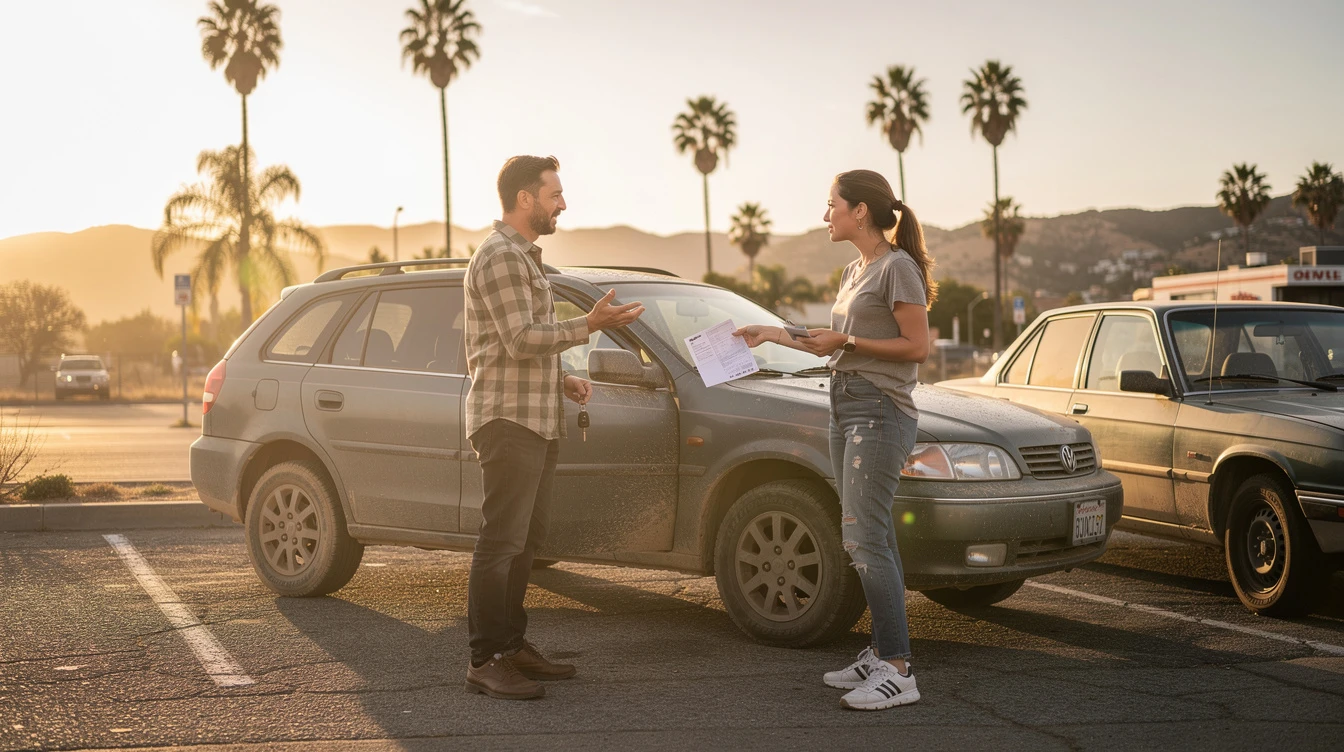
In California, registration does not automatically transfer to the new owner when you buy a used car, even if the seller renewed it days ago. You will still need to complete a title transfer and pay a transfer fee, though you typically will not owe a full year of registration fees again if the current registration period has not expired.
Does Registration Transfer When You Buy a Used Car in California?
No, California vehicle registration is tied to the owner, not just the vehicle. When a title changes hands, the DMV requires a new registration in the buyer’s name, regardless of when the seller last renewed.
- The current registration sticker is tied to the previous owner’s account.
- You must file a title transfer within 10 days of purchase to avoid late penalties.
- You will pay a transfer fee (currently $15 in most counties) plus any applicable use tax.
- The existing registration period typically carries over, so you won’t owe a brand-new annual fee until that period expires.
Think of it this way: the registration year stays intact, but it needs to be reissued in your name. The DMV issues you new documents reflecting your ownership for the remainder of that registration year.
For a broader look at what documents prove you actually own a vehicle after a purchase, the guide on What Is the Best Proof of Vehicle Ownership? breaks down exactly which records matter and why the title is the controlling document, not the registration sticker.
What Fees Do You Actually Owe After Buying a Used Car in California?
The fees you owe depend on several factors: the vehicle’s value, your county, and whether there are any outstanding penalties on the vehicle. Here’s a breakdown of the most common charges.
Ready to register your vehicle?
Join thousands of vehicle owners who use Dirt Legal to handle their registration quickly and hassle-free.
Register Your Vehicle Today → →| Fee Type | Typical Amount | When It Applies |
|---|---|---|
| Title Transfer Fee | $15 | Every private-party sale in California |
| Use Tax (Sales Tax Equivalent) | 7.25%, 10.25% of purchase price | Private sales and dealer sales statewide |
| Registration Transfer (if mid-year) | Prorated or included | Remaining months on current registration |
| Vehicle License Fee (VLF) | 0.65% of vehicle value | Assessed annually, prorated on transfer |
| Late Penalty | Up to 60% of fees owed | If transfer filed after 10-day window |
| County/District Fees | Varies by county | Air quality, transportation, local surcharges |
The big takeaway: you won’t pay a duplicate annual registration, but use tax can add up efficiently, especially on higher-value vehicles. California’s use tax rate varies by county, ranging from 7.25% to 10.25%.
If you’re also curious about how vehicle registration costs compare across states, especially if you own multiple vehicles or high-value assets, it’s worth looking at options like The Complete Guide to Forming a Montana LLC for Vehicle Registration, which covers how owners structure registrations to manage costs across state lines.
How Do You Transfer a Used Car Title in California After Buying?
The process is straightforward, but the 10-day deadline is strict. Missing it costs you money in late fees, so move quickly after purchase.
- Get the signed title from the seller. The seller must sign the title and complete the odometer disclosure section. Odometer compliance is one of the most frequent reasons documents are sent back for correction, so double-check this field before you leave.
- Complete a REG 343 (Application for Title or Registration). This is the buyer’s portion of the transfer paperwork.
- Gather supporting documents: smog certificate (if required), proof of insurance, and bill of sale.
- Calculate and pay use tax. This is separate from registration and goes to the California Department of Tax and Fee Administration.
- Submit to the DMV, either in person, by mail, or through an authorized private registration service.
- Receive new registration documents in your name reflecting the remaining registration period.
One important note on odometer disclosures: the most frequent reason documents come back for correction is odometer compliance issues, so make sure the mileage section is filled out completely and accurately before submitting (internal data, rolling last 90 days, n=101).
If there’s any question about the vehicle’s history or title status before you finalize the transfer, running a VIN check is a smart move. You can use our VIN check tool to pull the vehicle history before committing to the paperwork.
What If the Car Has Existing Fees or Penalties on the Registration?
This is where buyers get surprised. If the seller had unpaid fees, penalties, or a registration that lapsed before they renewed, those balances can follow the vehicle. California DMV attaches fees to the VIN, not just the person.
- Run a vehicle history check before purchasing to spot any registration gaps or flags.
- Ask the seller for proof of the most recent registration renewal, including the receipt showing fees paid.
- If there are outstanding penalties, negotiate with the seller to resolve them before the transfer, or factor the cost into your purchase price.
- Check for any title issues such as liens not yet released. A lien on the title means the lender must sign off before transfer completes. More on title red flags is covered in What Makes a Vehicle Title Invalid?
A clean title and a recent renewal receipt from the seller are your two best protections going into a private-party transaction.
Could a Montana LLC Registration Be a Better Fit for High-Value Vehicles?
California’s use tax on private vehicle sales hits hard on high-value vehicles. Buyers of elevated cars, exotic sports cars, or elevated-value trucks often look at how to register a car in Montana without living there as an alternative structure.
Montana has no sales tax on vehicles and no emissions testing requirements. Owners who form a Montana LLC vehicle registration structure hold the vehicle through a Montana LLC, which means the LLC, not the individual, is the registered owner.
- Montana LLCs are not subject to sales tax in most states at the point of registration.
- Montana car registration fees are significantly lower than California’s vehicle license fee structure for newer vehicles.
- Montana offers permanent registration options for older vehicles, eliminating annual renewal costs entirely.
- The structure applies to cars, trucks, RVs, and other vehicles, not just powersports.
For a deeper look at what this costs, see Does Montana Have Sales Tax on Vehicles?, which explains exactly how the Montana registration structure differs from California’s and what vehicle owners typically save. You can also look at car and truck registration options through our sister brand Ride Legal if you want to compare structures side by side.
Frequently Asked Questions
Do I have to pay registration fees again if the previous owner just renewed the California registration?
You won’t pay a duplicate annual registration fee. However, you will owe a title transfer fee ($15), use tax on the purchase price, and any applicable vehicle license fees. The remaining registration period carries over to your name once the title transfer is processed.
How long do I have to transfer the title after buying a used car in California?
California requires title transfer within 10 days of the sale date. Missing this window triggers late penalties of up to 60% of the fees owed. File quickly, especially if you bought near a weekend or holiday when DMV processing may be slower.
Can I drive the car before the title transfer is complete?
Yes, but you need a signed title and a bill of sale in the vehicle as proof of purchase. California allows a short window for driving while the transfer is pending. Confirm your insurance covers the vehicle in your name from the date of purchase, not the seller’s name.
What if the seller lost the title before I could complete the transfer?
The seller must apply for a duplicate title from the California DMV before the transfer can proceed. This adds time to the process. If the title situation is complicated, bonded title options or other title recovery routes may apply. For more on this, see What Makes a Vehicle Title Invalid?
Are California vehicle registration costs higher than other states?
Yes, California’s vehicle registration costs rank among the highest in the country due to the vehicle license fee (0.65% of value), county surcharges, and use tax. Some owners of high-value vehicles look at alternative registration states like Montana, which has no sales tax and lower annual fees, through structures like a Montana LLC.
Does a recent registration renewal protect me from smog check requirements as a buyer?
Not automatically. California requires a smog certification at the time of transfer for most vehicles over 4 model years old, regardless of when the seller last renewed. Exemptions apply to diesel vehicles 1997 and older, electric vehicles, and some hybrids. Confirm eligibility before assuming you’re exempt.
Dealing with California’s registration process after a used car purchase doesn’t have to be complicated. Whether you need title transfer support, want to understand your vehicle registration costs, or are exploring whether a Montana LLC registration structure makes sense for your situation, Dirt Legal’s team of registration specialists can walk you through the process. See how the process works and get your paperwork moving.