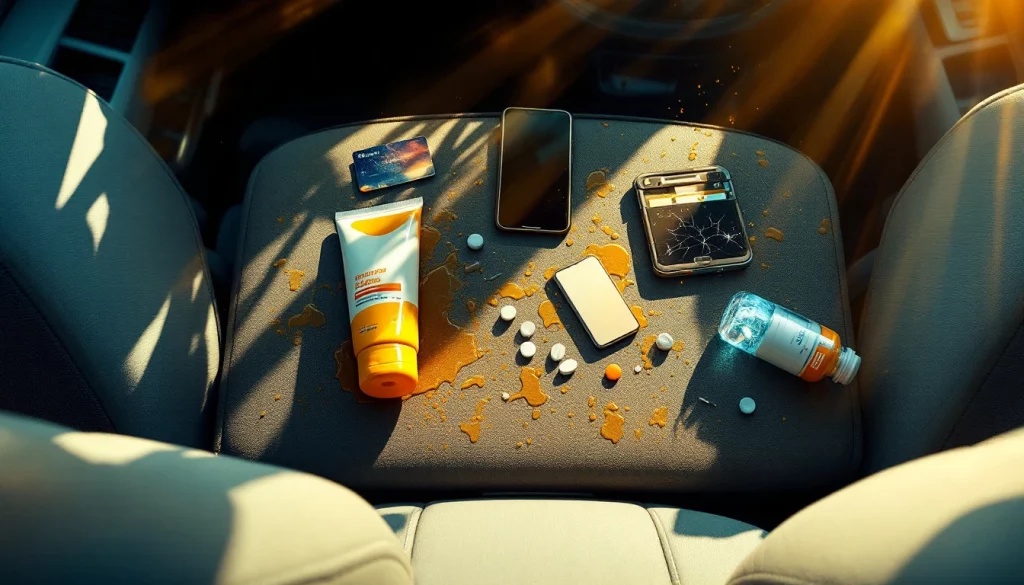
The 10 things you should never leave in a hot car include medications, electronics, vehicle documents, sunscreen, lighters, pets, children, water bottles, food, and credit cards. Car interiors can hit 130°F, 170°F on a summer day in under 30 minutes, turning a routine errand into a costly, or dangerous, mistake.
Why Do Hot Cars Reach Dangerous Temperatures So efficient?
A parked car acts like a greenhouse. Sunlight passes through glass, heats the interior surfaces, and the heat has nowhere to escape. On an 80°F day, your car interior can exceed 130°F within 30 minutes and push past 160°F within an hour.
- Dark-colored interiors absorb more heat than light ones
- Cracking a window makes minimal difference, studies show
- Direct sunlight dramatically accelerates interior temperature rise
- The dashboard and steering wheel can hit 195°F+ in full sun
That temperature range destroys electronics, warps plastics, degrades medications, and puts lives at risk. None of the 10 items below belong in that environment.
Which Items Become Dangerous in a Hot Car?
Heat does not just ruin things, it can turn ordinary items into hazards. Several common items become fire risks or toxic when exposed to extreme heat inside a sealed vehicle.
Ready to register your vehicle?
Join thousands of vehicle owners who use Dirt Legal to handle their registration quickly and hassle-free.
Register Your Vehicle Today → →1. Medications and Prescriptions
Most medications are rated for storage at 59°F, 77°F. Heat degrades active ingredients, making drugs less effective or chemically altered. Insulin, EpiPens, and nitroglycerin are especially vulnerable. Never leave a prescription bag in the car.
2. Lighters and Aerosol Cans
Butane lighters and aerosol cans (hairspray, sunscreen, spray paint) can explode under sustained high heat. This is a direct fire and shrapnel hazard. Leave them at home.
3. Sunscreen
Sunscreen stored above 77°F breaks down chemically and loses its SPF rating. An expired, heat-damaged sunscreen gives you false confidence and zero protection.
4. Plastic Water Bottles
Single-use plastic bottles leach BPA and antimony into water at high temperatures. The water itself becomes warm and potentially contaminated. Use a stainless steel bottle instead.
5. Food
The USDA’s “danger zone” for bacterial growth is 40°F, 140°F. A hot car sits well above that. Takeout left for even 30 minutes can become unsafe to eat.
Which Documents and Electronics Are at Risk?
Heat warps, melts, and corrupts anything with a circuit board or ink. The items below are not just expensive to replace, they can leave you stranded or create serious paperwork headaches.
6. Electronics, Phones, Laptops, and Cameras
Most electronics are rated for safe storage below 113°F. Heat causes battery swelling, screen damage, and permanent data loss. Lithium-ion batteries can enter thermal runaway in extreme heat, which is a fire risk.
7. Vehicle Documents, Title, Registration, and Bill of Sale
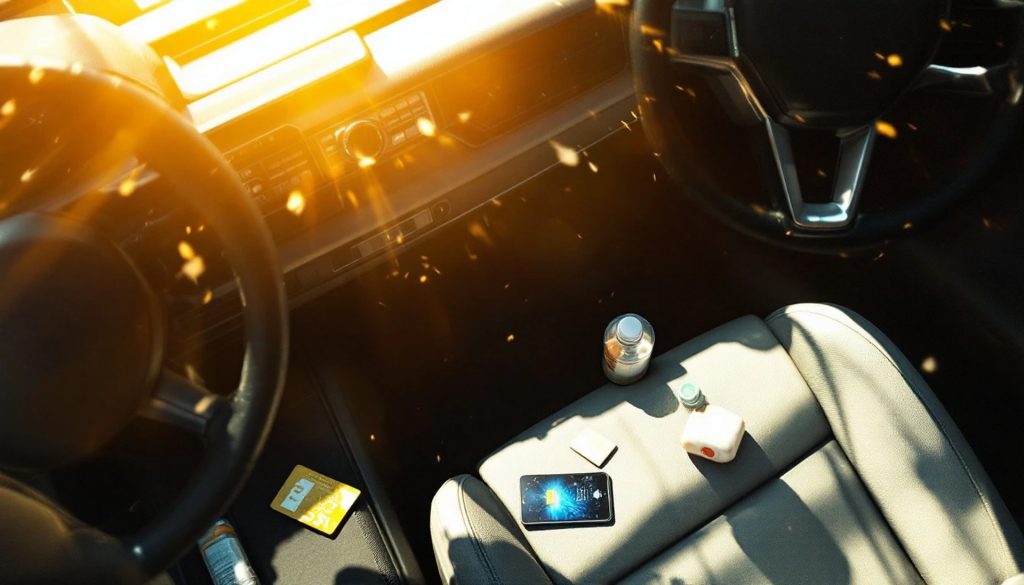
Your vehicle title and registration card are irreplaceable originals. Heat and UV exposure fade ink, warp paper, and can render documents unreadable. A damaged or missing title means going through a DMV title transfer or replacing your proof of vehicle ownership from scratch, which costs time and money.
Keep your title at home. Your registration card and Manufacturer’s Statement of Origin (MSO) should be stored in a cool, dry place, not your glove box.
If you’ve lost or damaged your title, understanding what makes a vehicle title invalid is a good starting point for recovery. Dirt Legal has helped with 80,000+ vehicle orders to date, many of them involving title issues that started with mishandled paperwork.
8. Credit Cards and Gift Cards
Magnetic stripes and EMV chips delaminate above 135°F. The card physically warps and stops working. Gift cards with stored balances can become completely unusable.
What Living Things Should Never Stay in a Hot Car?
This one is not about property. It is about survival. Heat kills efficient, and cracking a window does almost nothing to lower interior temperatures.
9. Children
A child’s body temperature rises 3 to 5 times faster than an adult’s. Heatstroke begins at 104°F and becomes fatal at 107°F. Children have died in cars in as little as 15 minutes. There is no safe “quick errand” window.
10. Pets
Dogs and cats cannot sweat the way humans do. A dog left in a 90°F car is in a 109°F environment within 10 minutes. Many states have laws allowing bystanders to break windows to rescue distressed animals. Don’t risk it.
How Does Heat Damage Compare Across Common Items?
Here’s a quick reference for the temperature thresholds that matter most.
| Item | Safe Storage Temp | Risk at Car Temps |
|---|---|---|
| Medications | Below 77°F | Chemical degradation, loss of efficacy |
| Electronics | Below 113°F | Battery swelling, data loss, screen failure |
| Vehicle Title / Documents | Room temperature | Ink fade, paper warp, illegible records |
| Aerosol / Lighters | Below 120°F | Explosion, fire hazard |
| Credit Cards | Below 135°F | Chip delamination, card warping |
| Children / Pets | Under 80°F ambient | Heatstroke, fatal within minutes |
| Food (perishables) | Below 40°F or above 140°F | Bacterial growth, food poisoning |
| Sunscreen | Below 77°F | SPF degradation, false protection |
| Plastic Water Bottles | Below 104°F | BPA leaching, contamination |
| Sunglasses / Eyewear | Below 130°F | Frame warping, lens coating damage |
What Should You Do If Your Vehicle Documents Are Damaged?
Damaged or destroyed vehicle paperwork is more common than people think. A faded title is not just an inconvenience, it can block a future sale, registration renewal, or loan. Here’s what to do.
- Check the damage level. A slightly faded title may still be accepted. A torn or fully illegible one typically won’t.
- Contact your state DMV for a duplicate title application. Most states charge $15, $35 for a replacement. Montana has its own process through the Montana Motor Vehicle Division.
- Gather supporting documents. You’ll likely need a bill of sale, your ID, and proof of ownership. Learn more about the best forms of proof of vehicle ownership.
- Consider a Montana LLC registration if you’re dealing with a complex vehicle ownership situation. The Complete Guide to Forming a Montana LLC for Vehicle Registration covers when and why this structure makes sense for vehicle owners.
Dirt Legal’s registration specialists can walk you through the paperwork recovery process. When documents come back with errors or issues, our QC team resolves 54.4% of them without sending the order back to the customer at all (internal data, rolling last 90 days, n=125).
For Montana-specific vehicle registration, see Register a Car in Montana: What You Need to Know Before You Start or check out the cars, trucks, and SUVs registration options from our sister brand Ride Legal.
Frequently Asked Questions
How hot does a car get in summer?
On an 80°F day, a car interior reaches about 130°F within 30 minutes and can exceed 160°F after an hour. The dashboard and steering wheel hit even higher surface temperatures. Shade and cracked windows reduce heat slightly but don’t make the car safe for people, pets, or sensitive items.
Can leaving a lighter in a hot car cause a fire?
Yes. Butane lighters and aerosol cans contain pressurized flammable gas. Sustained temperatures above 120°F can cause these to rupture or. Both should be removed from vehicles before parking in the sun, particularly in summer months or in warm climates.
Is it safe to leave vehicle registration documents in a hot car?
Technically your registration card is meant to stay in the car, but your vehicle title should never be stored there. Heat fades ink and warps paper. Keep originals at home in a fireproof folder. A lost or damaged title requires a formal replacement process through your state DMV.
What happens to a phone left in a hot car?
Smartphones typically shut down above 95°F, 113°F to prevent damage. Sustained heat causes battery swelling, screen separation, and in extreme cases, lithium-ion thermal runaway. Even if it powers back on, repeated heat exposure permanently degrades battery capacity and shortens device lifespan.
Can heat damage vehicle registration or a Montana LLC title?
Yes. Any paper document, including a Montana LLC vehicle title, is vulnerable to heat damage. Faded or illegible titles complicate future registration renewals and sales. If your title is damaged, Dirt Legal’s specialists can help you work through the replacement process. See how to register a car in Montana without living there for more context on Montana title options.
How do I replace a damaged vehicle title?
Contact your state DMV and request a duplicate title. You’ll typically need your VIN, proof of identity, and a completed application. Fees range from $15 to $35 in most states. A VIN inspection may be required to confirm vehicle identity before a new title is issued.