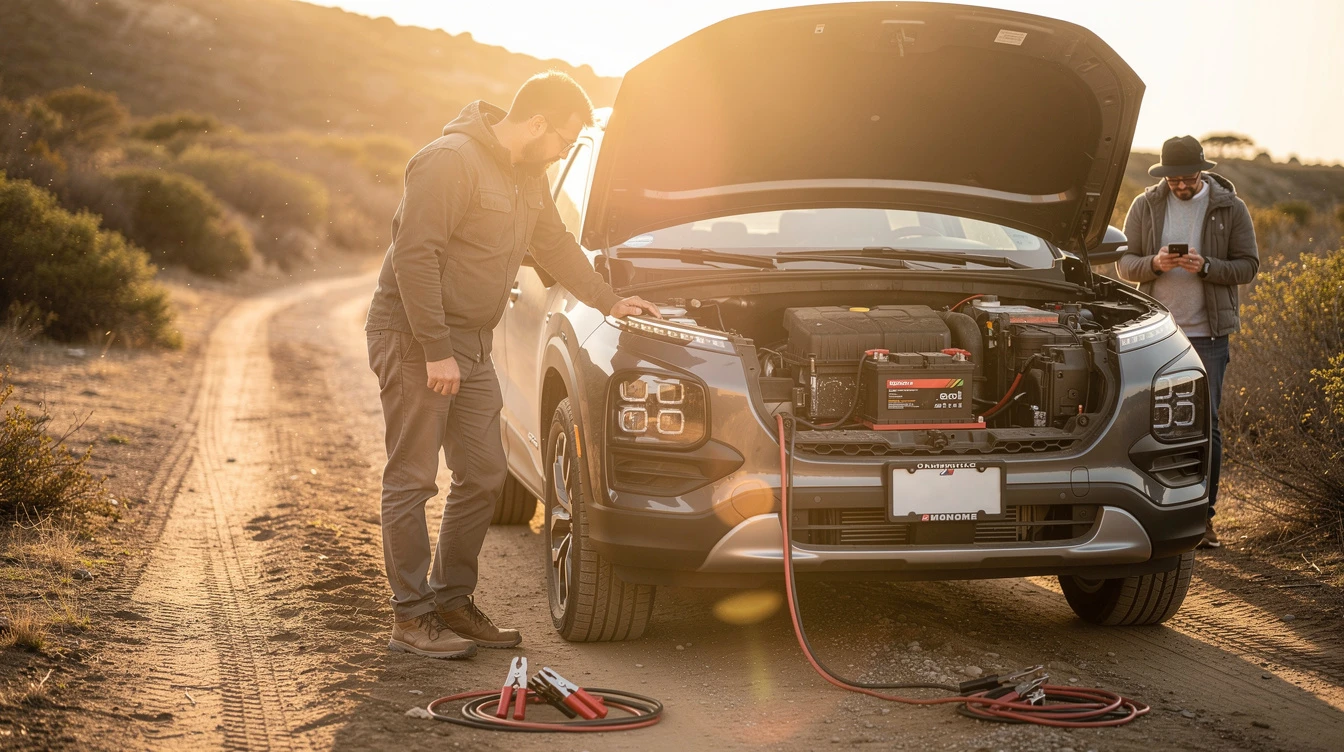
If your car battery keeps draining but it’s new and the alternator is good, a parasitic draw is almost certainly the culprit. Something in your vehicle’s electrical system is pulling power even when the car is off.
What Is a Parasitic Draw and Why Does It Drain a New Battery?
A parasitic draw happens when an electrical component keeps running after the ignition is off. Even a small continuous drain, say 50, 100 milliamps, will flatten a fully charged battery within a few days.
- Normal standby draw: 20, 50 mA (clocks, alarm systems, key fob receivers)
- Problem-level draw: anything consistently above 50 mA after a 10-minute sleep cycle
- A new battery doesn’t fix the underlying drain, it just delays the symptom
The alternator charges the battery while you drive. It won’t compensate for overnight losses, so if your drives are short, a parasitic draw wins every time.
What Are the Most Common Causes of a Battery Draining Overnight?
Most overnight battery drains trace back to a short list of suspects. Start here before pulling the dashboard apart.
Ready to register your vehicle?
Join thousands of vehicle owners who use Dirt Legal to handle their registration quickly and hassle-free.
Register Your Vehicle Today → →- Trunk or glove box light staying on, the switch inside the compartment may be stuck
- Aftermarket accessories, dash cams, stereos, alarm systems wired directly to the battery
- Faulty relay, a relay that won’t close properly keeps a circuit energized
- Bad body control module (BCM), the BCM manages dozens of systems; a glitch keeps modules awake
- Infotainment or telematics module, modern head units can fail to enter sleep mode
- Corroded or loose ground strap, creates resistance that mimics or causes draw
- Failing ignition switch, leaves accessories powered after the key is removed
Honestly, aftermarket wiring is one of the top offenders. If a previous owner added anything, that’s where to look first.
How Do You Test for a Parasitic Draw at Home?
You’ll need a digital multimeter set to DC amps (or milliamps). The test itself takes about 20 minutes and doesn’t require any special equipment beyond that.
- Turn the car completely off and remove the key
- Wait at least 10 minutes for all modules to enter sleep mode
- Connect your multimeter in series between the negative battery terminal and the negative cable
- Read the draw, anything above 50 mA is worth investigating
- Pull fuses one at a time while watching the meter, when the reading drops sharply, you’ve found the circuit
- Work back from that fuse to identify the specific component
Don’t open a car door during the test, interior lights and modules will wake up and spike the reading. Keep the windows closed and work through the fuse box with the doors shut.
A related scenario comes up with powersport vehicles too. If you’ve ever tried to jump-start a low-voltage vehicle, the principles are similar. See Can You Jump Start an ATV Using a Truck Battery Without Damaging It? for a look at how battery drain affects smaller vehicles differently.
Could a Faulty Battery Be Causing This Even Though It’s New?
Yes. New batteries can be defective, undercharged from sitting on a shelf, or simply the wrong specification for your vehicle. A battery that tests fine at rest can still have a low cold-cranking amp (CCA) rating or a dead cell.
| Condition | Likely Cause | Quick Test |
|---|---|---|
| New battery drains in 1-2 days | Parasitic draw or defective battery | Multimeter parasitic draw test |
| Battery dies after short drives only | Alternator not fully recharging (check output: should be 13.5, 14.8V) | Voltage test at idle vs. 2,000 RPM |
| Battery dies after 1-2 weeks of sitting | Normal self-discharge, or low-level parasitic draw | Check draw with multimeter after 10-min sleep |
| Battery dies immediately after installation | Wrong group size, defective cell, or shorted component | Load test at a parts store (usually free) |
| Battery drains in extreme cold | Battery CCA too low for climate | Check manufacturer’s recommended CCA rating |
Most auto parts stores will load-test a battery for free. If the battery fails a load test despite being new, return it under warranty immediately.
Can Short Trips Drain a Car Battery Even With a Good Alternator?
Short trips are a surprisingly common cause of chronic battery drain. If you’re only driving a few miles at a time, the alternator may not have enough runtime to fully recharge what the starter motor used.
- A typical alternator needs 20, 30 minutes of highway driving to replenish a deeply discharged battery
- City driving with lots of stops, high accessory loads (heated seats, AC, lights), and a weak battery is a losing equation
- A battery maintainer or trickle charger overnight solves this without any mechanical repair
Vehicles that sit for extended periods face the same problem. Self-discharge alone can drain a battery over two to three weeks. A smart battery maintainer plugged in when the car is parked is the simplest fix.

Does My Vehicle’s Title or Registration Status Affect Electrical Issues?
Not directly, but here’s where it gets relevant for car owners: if you’re dealing with a recently purchased vehicle, or one that sat on a lot for months, both battery and electrical problems are common. Vehicles with unclear ownership histories can also have unauthorized aftermarket wiring that causes exactly this kind of drain.
Before sinking money into electrical repairs on a used vehicle, check the ownership documents. A clean title confirms there are no hidden lien or salvage history surprises that might affect the car’s overall condition. For a full breakdown of what counts as proof of ownership, see What Is the Best Proof of Vehicle Ownership? A Complete Document Guide.
If you picked up a vehicle and need to sort out the paperwork side, understanding the The Complete Guide to Forming a Montana LLC for Vehicle Registration is a smart move, especially for high-value vehicles where registration costs add up fast. Owners who register through a Montana LLC avoid sales tax and emissions testing requirements that apply in many other states.
Owners who’ve dealt with title paperwork delays know the frustration. Simple Process, No Extra Steps: Your Vehicle Registration Handled Without Delays walks through how to keep the registration process moving without getting stuck.
Frequently Asked Questions
Why does my new car battery keep dying after just a few days?
A new battery dying within days almost always means a parasitic draw is active on the vehicle. Something, often a stuck relay, a faulty module, or an aftermarket accessory, is pulling current continuously. A multimeter test across the negative battery terminal will confirm whether a draw is present and help identify the circuit causing it.
How do I know if my alternator is actually working correctly?
A functioning alternator should output between 13.5 and 14.8 volts at idle. Test it with a multimeter across the battery terminals with the engine running. Below 13.5V suggests the alternator isn’t keeping up. Most auto parts stores also offer free alternator testing if you bring the vehicle in or remove the unit.
Can a bad ground cause a battery to drain?
Yes. A corroded or loose ground strap creates resistance in the circuit, which can cause modules to malfunction, draw excess current, or fail to shut down properly. Check the main negative battery cable connection at both the battery terminal and the chassis grounding point. Clean corrosion with a wire brush and tighten both ends.
How long should a car battery last with normal use?
Most car batteries last 3 to 5 years under normal conditions. Extreme heat accelerates degradation faster than cold. If your battery is approaching 4 years old, consider replacing it proactively even if it still holds a charge. A battery that shows any signs of swelling or corrosion should be replaced immediately.
Will a battery maintainer fix a parasitic draw problem?
A battery maintainer keeps the battery topped off but does not fix the underlying draw. It’s a workaround, not a repair. If a vehicle is driven daily, the draw will eventually overwhelm the maintainer’s ability to compensate. Find and fix the source of the drain for a real solution.
Can I use a VIN check to find out if a used vehicle has wiring or electrical history issues?
A VIN check can reveal accident history, flood damage, and prior salvage status, all of which can point to potential electrical issues from prior repairs. Run a VIN check through our service before purchasing any used vehicle to see what the history shows. It won’t reveal every wiring modification, but it flags major red-flag events.
Disclaimer: The information in this article is for general informational purposes only and does not constitute mechanical or legal advice. Consult a qualified mechanic for diagnosis of your specific vehicle. For registration and title questions, consult a qualified professional or contact your state’s motor vehicle authority.