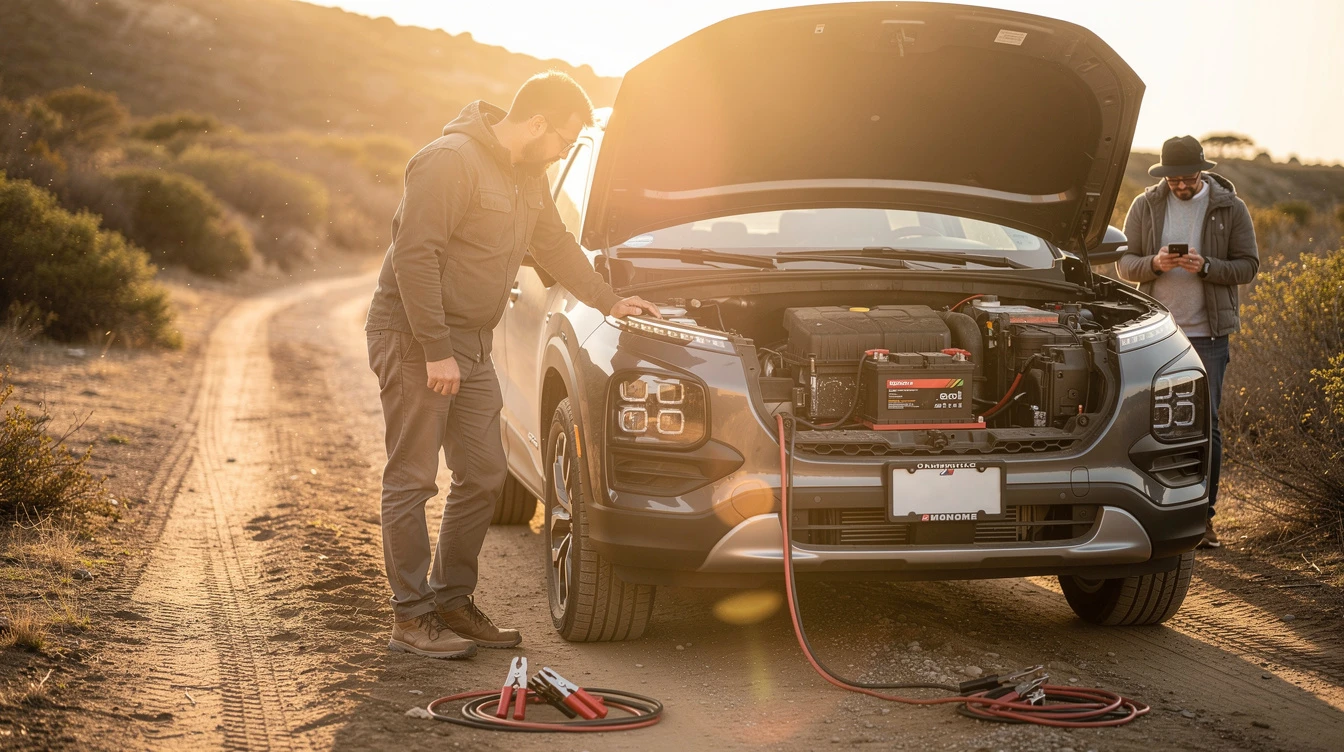
Jump-starting an ATV using a truck battery is one of those things that sounds simple but can go sideways fast if you don’t know what you’re doing. Yes, it can be done safely, but the difference between a quick fix and a fried electrical system comes down to a few critical steps. This guide covers exactly what you need to know before you connect those cables.
We’ll walk through the voltage risks, the right way to do it, common mistakes that damage ATVs, and what alternatives exist if you’d rather not risk it. By the end, you’ll know whether to grab the jumper cables or grab something else.
And if your ATV or off-road rig still needs to get properly registered and titled, we’ve got that covered too.
Why Jump Starting an ATV With a Truck Battery Creates Risk
The core issue is voltage and amperage. A standard ATV battery is 12 volts, same as a truck battery, so the voltage itself isn’t the problem. The problem is cranking amperage. A full-size truck battery can push 600 to 900 cold cranking amps (CCA). Most ATVs only need 150 to 300 CCA to start. When you connect a massive truck battery to a small ATV system, you risk a surge that can damage sensitive electronics, blow fuses, or worse, fry the ATV’s stator or ECU.
The Voltage Is the Same, But the Power Isn’t
Both batteries run on 12V, so technically they’re compatible. But a truck battery is engineered to dump enormous energy fast to turn over a large engine. An ATV’s electrical system, including its regulator/rectifier, wiring use, and onboard computer, isn’t built to absorb that kind of initial surge. Think of it like connecting a garden hose fitting to a fire hydrant. The fitting is rated for water. It’s not rated for that.
What Gets Damaged Most Often
The most common casualties when jump starting an ATV incorrectly from a truck are the stator (which charges the battery while riding), the voltage regulator/rectifier, and the ECU on fuel-injected models. These parts aren’t cheap. A replacement stator for a mid-range ATV can run $150 to $400 in parts alone, before labor. Blown fuses are the best-case scenario and the most common outcome of a quick surge.
The Right Way to Jump Start an ATV From a Truck Battery
Here’s the thing, it can be done without damage if you follow the right process. The biggest safety rule is simple: never start the truck while connected to the ATV. You want the truck engine OFF the entire time. The truck battery alone provides plenty of power to start an ATV, and keeping the truck engine off prevents the truck’s alternator from dumping unregulated voltage into the ATV’s system.
undefinedStep-by-Step: Safe Jump Start Procedure
- Turn off both vehicles completely.
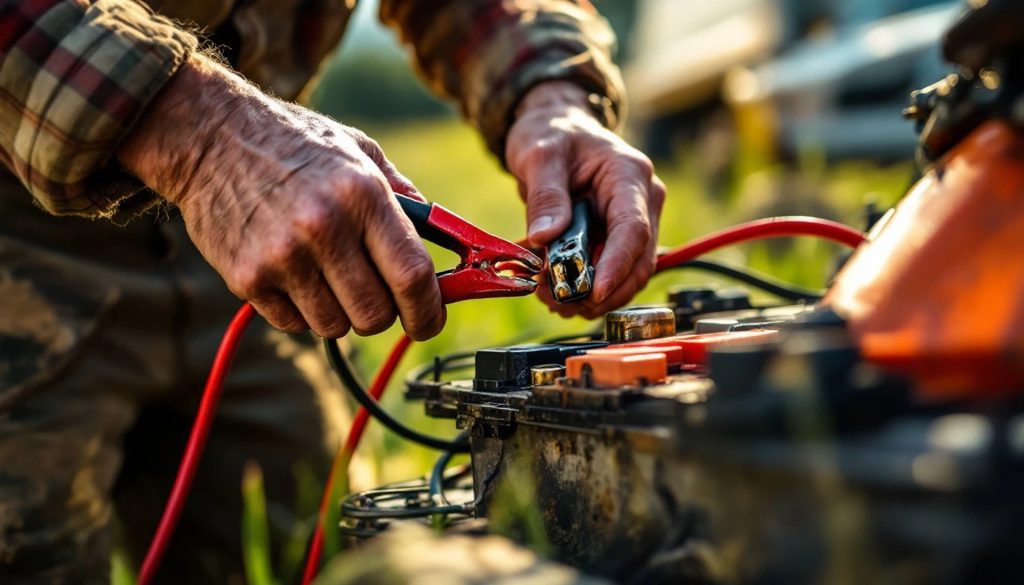
- Connect the red (positive) jumper cable to the dead ATV battery’s positive terminal first.
- Connect the other end of the red cable to the truck battery’s positive terminal.
- Connect the black (negative) cable to the truck battery’s negative terminal.
- Connect the other end of the black cable to an unpainted metal ground on the ATV frame, NOT directly to the ATV battery’s negative terminal. This reduces spark risk near the battery.
- Wait 2 to 3 minutes. This lets the truck battery share a small charge with the ATV battery.
- Try to start the ATV. Do NOT start the truck.
- If the ATV starts, disconnect cables in reverse order: black from ATV frame, black from truck, red from truck, red from ATV.
How Long Should You Let It Charge Before Cranking?
Two to three minutes is usually enough if the ATV battery has any life left. If the battery is completely dead and won’t take a charge at all, a jump start won’t help long-term anyway. You’ll start the ATV, but the battery will die again as soon as it sits. A dead cell means replacement, not a jump.
Why the Truck Engine Must Stay Off
A running truck engine sends 13.5 to 14.8V through its alternator into the connected ATV system. That extra voltage, combined with the amperage spikes during charging, is where real damage happens. The ATV’s regulator isn’t designed to handle an external charging source of that magnitude. Keep the truck off, and the risk drops significantly.
Jump Starting Methods Compared: Which One Is Safest?
You’ve got a few options when your ATV won’t start. Each has a different risk level, cost, and practicality depending on where you are. The table below breaks down the most common approaches.
| Method | Risk Level | Cost | Best For |
|---|---|---|---|
| Truck battery (engine OFF) | Low to Medium | Free (if done correctly) | Trail or field emergencies with a helper |
| Truck battery (engine ON) | High | Free until something breaks | Not recommended |
| Portable jump starter (lithium) | Very Low | $50 to $150 | Solo riders, frequent ATV use |
| Battery tender / trickle charger | None | $25 to $80 | Storage, slow overnight recovery |
| Car battery (small sedan) | Low | Free | Better than truck, still needs engine OFF |
| ATV-specific jump pack | Very Low | $40 to $120 | Purpose-built, zero voltage mismatch |
Honestly, if you ride ATVs regularly, a small lithium jump starter is the smartest $80 you’ll spend. They fit in a saddlebag, put out controlled amperage, and there’s no truck engine variable to worry about.
Got your ATV sorted and need to get it properly titled and registered? Dirt Legal handles the complex paperwork so you don’t have to deal with the DMV yourself.
See How We Can Help With Your ATV Registration →
Common Mistakes That Damage ATVs During a Jump Start
Most ATV electrical damage from jump starting isn’t from the method itself. It’s from skipping steps or making assumptions. Here are the mistakes that cause real problems.
Starting the Truck Engine While Connected
This is the single most common mistake. The truck engine creates a charging circuit that pushes alternator voltage directly into the ATV. Even a brief second of the truck running while connected can spike voltage high enough to damage the regulator/rectifier. Always confirm the truck is fully off and keys are out before connecting anything.
Connecting Cables in the Wrong Order
The sequence matters. Positive first, then negative on the source vehicle. Ground to ATV frame last. When you disconnect, reverse the order. Wrong sequencing causes sparks near the battery, which is a safety hazard, and can send a damaging pulse through the system. Take 10 extra seconds to get the order right every time.
Using Old or Damaged Jumper Cables
Thin or corroded cables with poor clamp connections create resistance, which creates heat. That heat can melt cable insulation mid-transfer, drop the actual power delivery, and make the whole process unreliable. Use cables rated for at least 400A, and inspect the clamps before every use.
Ignoring What Caused the Dead Battery
A jump start is a patch, not a fix. If you left the lights on overnight, fine. But if your ATV battery keeps dying, there’s an underlying issue: bad stator, failing regulator, parasitic drain, or a battery past its service life (typically 3 to 5 years). Jump starting a battery with a dead cell will get you running for the moment, but it’ll leave you stranded again. A load test at any auto parts store will tell you whether the battery is actually holding a charge.
What to Do If Your ATV Won’t Start Even After a Jump
If you’ve followed all the right steps and the ATV still won’t fire, the battery probably isn’t the only problem. A few other culprits worth checking before you assume the worst.
Check the Kill Switch and Safety Features
This sounds basic, but it’s where a lot of “dead ATV” situations end. Make sure the kill switch is in the run position, the parking brake is released on models that require it to start, and there’s no fault code on fuel-injected models triggered by a prior issue. Some ATVs also have a neutral safety switch that prevents starting in gear. These are the first checks before any electrical diagnosis.
Inspect the Fuse Box
A blown main fuse is one of the most common outcomes of an improper jump start. Pull the fuse box cover, identify the main fuse (typically a 20A to 30A blade fuse), and inspect or replace it. Keep a small assortment of ATV fuses in your gear bag. They cost almost nothing and solve a lot of trailside problems fast.
When It’s Time for a New Battery
ATV batteries typically last three to five years with proper maintenance. Signs it’s done: slow cranking even when charged, won’t hold voltage above 12.4V after a full charge, or physically swollen case. Replacing an ATV battery runs about $40 to $120 depending on the model, and it’s a straightforward job most riders can do themselves in under 15 minutes.
If your ATV is registered and road-eligible, you may also want to look at the street-legal options available in your state. Check out our guide on making a UTV street-legal in Montana for a look at how that process works on the registration side.
For riders in other regions, we also cover whether you can make a UTV street-legal in South Dakota, including what paperwork is involved.
Getting your ATV’s paperwork in order is just as important as keeping the battery healthy. You can find out how the whole process works at Dirt Legal’s registration service, where we handle the DMV side so you can focus on riding.
A related resource worth reading before you ride: The True Cost of Letting Your Registration Expire breaks down exactly what happens when you push renewal past the deadline, including the fees and exposure that most riders don’t think about until it’s too late.
Frequently Asked Questions About Jump Starting an ATV With a Truck Battery
Can jump starting an ATV with a truck battery damage the electrical system?
Yes, it can, if done incorrectly. The main risk is running the truck engine while connected. A truck’s alternator pushes 13.5 to 14.8V and significant amperage into the ATV’s system, which can damage the voltage regulator/rectifier, stator, or ECU. With the truck engine off, the risk drops substantially. The battery alone delivers a controlled, predictable voltage level that most ATV electrical systems can handle safely during a brief jump start.
Is a truck battery too powerful for an ATV?
In terms of voltage, no. Both use 12V systems. The concern is cold cranking amperage (CCA). A truck battery can deliver 600 to 900 CCA, while an ATV only needs 150 to 300 CCA. The ATV draws what it needs during cranking, so the excess capacity isn’t automatically harmful. However, if the truck engine is running, the alternator adds an uncontrolled charging source on top of that, which is where damage typically occurs.
What is the safest way to jump start an ATV?
A lithium portable jump starter sized for powersports is the safest option. These devices are purpose-built to deliver controlled amperage appropriate for small engine batteries. They’re compact, don’t require a second vehicle, and eliminate the risk of truck alternator interference. If you don’t have one, using a truck battery with the engine completely off and following proper cable sequence (positive first, ground to frame last) is the next safest approach.
How long should I wait after connecting the cables before trying to start the ATV?
Wait two to three minutes after connecting the cables. This gives the donor battery time to transfer a small surface charge to the ATV battery, making it easier to crank. If the ATV battery is deeply discharged, a longer wait of five to ten minutes may help, but it won’t fully recharge a dead battery. If it still won’t start after two or three attempts, there may be a deeper issue like a dead cell or blown fuse rather than just a discharged battery.
Can I use a car battery instead of a truck battery to jump start my ATV?
Yes, and in some ways a smaller car or sedan battery is a better choice than a truck battery. Smaller car batteries typically deliver 400 to 500 CCA, which is closer to what an ATV system is designed to handle. The same rules apply: engine off, correct cable sequence, and don’t crank the donor vehicle. A compact car’s battery gives you enough power to start the ATV without the extreme amperage overhead of a heavy-duty truck battery.
Will jump starting my ATV void the warranty?
Possibly. If you use an improper method, like running the donor vehicle’s engine while connected, and it damages the ATV’s electronics, most manufacturers won’t cover that under warranty. It would be categorized as user-inflicted damage. Using a purpose-built portable jump starter following the manufacturer’s instructions is typically the safest approach if your ATV is still under warranty. Check your owner’s manual for the manufacturer’s specific guidance on jump starting.
Why does my ATV battery keep dying even after a jump start?
Recurring dead batteries point to one of several issues: a battery past its service life (typically 3 to 5 years), a failing stator that isn’t charging the battery while the engine runs, a bad voltage regulator, or a parasitic drain from an accessory or wiring fault. A simple load test at an auto parts store will tell you if the battery itself is the problem. If the battery tests fine, the stator output should be measured with a multimeter at the battery terminals with the engine running (should read 13.5 to 14.5V at mid-throttle).
Does an ATV need to be registered and titled to ride street-legal?
In most states, yes. ATVs and UTVs typically require registration for off-highway use on public lands and full titling if operated on any public road. Requirements vary by state. Some states like Montana offer favorable registration options through an LLC structure that can benefit out-of-state owners. If you’re sorting out your ATV’s registration situation, you can read about UTV registration requirements in Montana or check out the full breakdown on registering a side-by-side for street use from our sister brand Ride Legal.
Your ATV deserves to be ridden, not parked over paperwork problems. Dirt Legal handles ATV and powersport registration so you can focus on getting back on the trail.
Start Your ATV Registration Today, No Hidden Fees →The Bottom Line on Jump Starting an ATV With a Truck Battery
Jump starting an ATV using a truck battery without damaging it comes down to one non-negotiable rule: keep the truck engine off the entire time. With the engine off, the voltage and amperage delivered are manageable for most ATV electrical systems. Start the truck, and you’re introducing alternator voltage that the ATV’s regulator wasn’t built to handle. Follow the correct cable sequence, wait a few minutes before cranking, and ground to the ATV frame rather than the battery terminal. That’s the complete process. If you ride regularly and want zero risk, a lithium powersports jump starter is a worthwhile addition to your kit. And once your ATV is running, make sure the registration side is handled too, because a trail-ready machine should also be a paperwork-ready one.
Related Reading
Shift Gears, Elevate Every Mile — Join us for tips that enhance your lifestyle. Subscribe to our newsletter for the latest updates.
Dirt Legal transforms vehicle registration for everyday drivers of Cars, Trucks, RVs, Motorcycles, Off-Road, Military, and more with digital, hassle-free and time-saving solutions. Keep your wallet happy and your vehicle 100% road-ready.
Want to learn more? Download our Hassle-free Guide to Vehicle Registration.
Have you used our services before? Your story could inspire someone! Share your experience to show others how Dirt Legal can make a difference and you’ll be entered for a chance to win up to $150!
If you love what we do, join our affiliate program at affiliates.dirt.legal and get rewarded for spreading the word.