

Out of state boat registration trips up more owners than you’d expect. You registered your vessel at home, loaded it onto the trailer, and crossed a state line, and now you’re wondering whether your paperwork is actually good where you’re standing. The answer depends on where you’re from, where you’re headed, and how long you plan to stay.
This guide covers how reciprocal agreements work between states, what documents you’re required to carry on board, how temporary registration fits into the picture, and what happens if you operate without proper registration. You’ll also find a quick-reference table comparing how different states treat visiting vessels.
One more thing before we get into it: while boats are watercraft governed by state fish and wildlife or natural resources agencies rather than the DMV, many of the same title and registration concepts apply. If you’ve got questions about registering a land vehicle across state lines, the same rules around documentation and state residency matter a great deal there too.
How Reciprocal Boat Registration Works Between States
Most states participate in some form of reciprocal boat registration, which means they’ll honor another state’s registration for a limited time without requiring you to register locally. The federal Motorboat Act and subsequent state agreements generally provide a 60- to 90-day grace period for visiting vessels. After that window closes, you’re typically expected to register in the new state.
Can I Use My Boat in Another State on My Home Registration?
Yes, in most cases. If you’re traveling temporarily, your home state registration is usually recognized by other states for short visits. The key word is “temporarily.” If you move to a new state and keep your boat there full-time, you’ll likely need to re-register it locally, often within 30 to 90 days depending on the state’s rules.
A handful of states have specific bilateral agreements that extend or restrict these periods. Always check the fish and wildlife or natural resources agency website for your destination state before you launch.
Which States Don’t Participate in Reciprocity?
A small number of states require immediate registration for any vessel operating on their waters, regardless of where it’s from. Some states also require a local registration if the boat owner becomes a resident, even if the boat was only brought in temporarily. Alaska, for instance, has specific rules around vessels operated commercially versus recreationally.
The safest move is to treat reciprocity as a starting point, not a guarantee. Carry your home state registration at all times and confirm the specific rules for any state you plan to use your boat in for more than a few weekends.
Temporary Boat Registration: When You Need It and How to Get It
Temporary boat registration comes into play most often when you’ve just purchased a vessel and haven’t completed the permanent registration yet, or when you’re operating in a state that doesn’t fully honor your home registration. Think of it as a placeholder that keeps you street-legal, or in this case, water-legal, while the paperwork catches up.
Ready to register your vehicle?
Join thousands of vehicle owners who use Dirt Legal to handle their registration quickly and hassle-free.
Register Your Vehicle Today → →How Long Does Temporary Registration Last?
Temporary registration periods vary by state. Most range from 15 to 60 days. Some states issue them automatically upon purchase, similar to a temporary tag on a car. Others require you to apply through the state agency, sometimes in person and sometimes online.
If you’ve bought a boat from a private seller and you’re towing it home across state lines before you’ve registered it, that’s exactly the situation temporary registration exists for. Don’t skip this step. Operating without any valid registration, even temporarily, creates real liability.
Temporary Registration for New Residents
If you’ve recently moved to a new state and you’re bringing a boat with you, most states will give you a grace period, usually 30 to 90 days, before requiring local registration. During that window, your old state’s registration is typically valid. After the grace period, you’ll need to register in your new state and may need to surrender your old registration card and decal.
This is similar to how vehicle registration works when you move. For a deeper look at how title and registration requirements carry over during a move, the guide on how to register a car in Montana without living there walks through a useful parallel, especially for owners who want to maintain a specific state’s registration for cost or tax reasons.
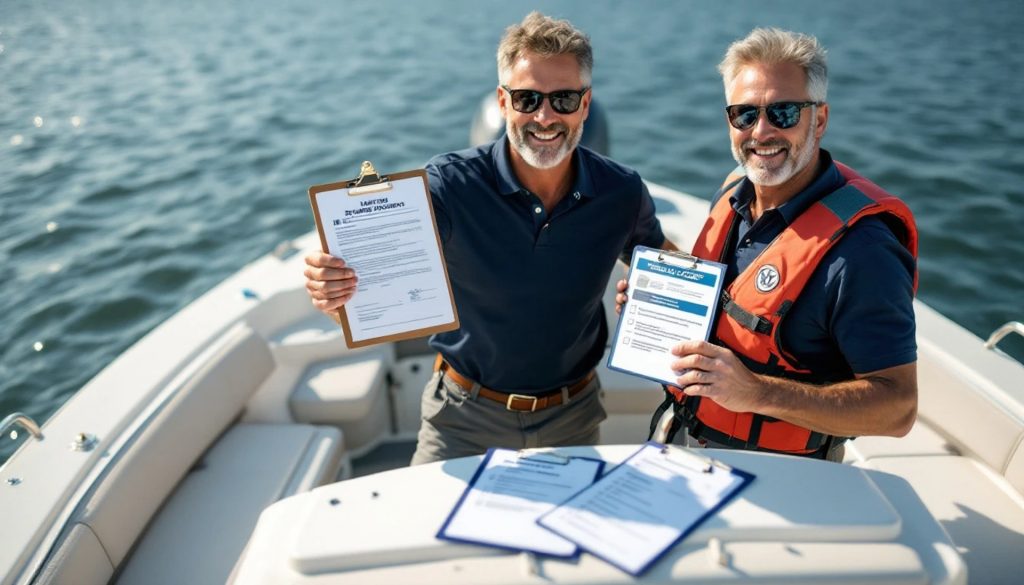
Operating a Boat Without Registration: What the Risks Actually Look Like
Operating a boat without valid registration is a citation risk in every state. It’s not a gray area. Officers from the U.S. Coast Guard, state fish and wildlife departments, and local marine patrols all have authority to stop and board recreational vessels to check documentation. Fines vary widely but can run from $50 to several hundred dollars for a first offense.
What Counts as “Valid” Registration When You’re Stopped?
Valid registration means your registration certificate is on board, your registration numbers are displayed on the bow in the correct format and size, and your validation decals are current and in the right position. Most states require numbers to be at least three inches tall, in block letters, and displayed on both sides of the bow. The decals go directly after the registration number.
Expired registration is treated differently from no registration at all, but neither will get you out of a citation. If you’re operating on an expired registration from your home state while visiting another state, you’re exposed on two fronts.
Federal Registration Requirements for Vessels with Engines Over 10 HP
Any vessel with a motor of 10 horsepower or more used on navigable waters of the United States must be registered in the state of principal use. “Principal use” means the state where the boat spends the most time on the water over a 12-month period. This is the federal baseline. States layer additional requirements on top of it.
Documented vessels, those registered with the U.S. Coast Guard rather than a state agency, are exempt from state registration but still need to carry their documentation on board at all times.
Required Documents on a Boat: What to Keep on Board
Whether you’re operating at home or across state lines, there’s a short list of documents that must be on the vessel every time you’re underway. Getting stopped without them creates headaches that are entirely avoidable.
The Core Document Checklist
- State registration certificate, the paper certificate issued when you registered, not just the decal
- Proof of ownership, either your title or bill of sale if the title is being processed
- Operator’s ID, some states require the person operating the vessel to carry a boater education card
- USCG documentation, if your vessel is federally documented instead of state registered
- Insurance card, not universally required by law but increasingly asked for during stops in some states
The registration certificate must stay on board. You can’t leave it at home and show a photo on your phone in most states. Some states are beginning to accept digital copies, but don’t count on that being accepted everywhere until it’s explicitly permitted by your state’s law.
For a broader look at what documents prove ownership of any motorized asset, the article on the best proof of vehicle ownership covers which documents carry the most weight when ownership is disputed or paperwork is incomplete.
What If You Only Have a Bill of Sale?
A bill of sale alone is not registration, and it’s not a title. If you bought a boat recently and you’re still waiting on the title, you can typically operate it locally on a temporary registration. Operating it in another state on just a bill of sale puts you in a difficult spot if you’re stopped.
This is also where understanding what makes a vehicle title invalid becomes relevant. A title with errors, a lien that wasn’t released, or a title that was never transferred properly can leave you without valid proof of ownership even when you believe you own the vessel outright. The article on what makes a vehicle title invalid is worth reviewing if you have any doubt about your documentation chain.
How Montana and South Dakota Registration Strategies Apply to Land Vehicles (and Why Boat Owners Often Get Curious)
Boat owners who research out of state registration frequently stumble onto Montana LLC registration and South Dakota residency strategies. These are legitimate options for land vehicles, motorcycles, RVs, and other titled assets. They don’t apply to watercraft in the same way, since boats are governed by different agencies and rules, but the underlying logic is similar enough that it’s worth addressing directly.
Montana has no sales tax on vehicles. South Dakota has some of the lowest vehicle registration fees in the country. Neither state requires emissions testing. For someone buying a high-value vehicle, registering through a Montana LLC for vehicle registration can result in significant savings on sales tax alone.
Does Montana Have State Sales Tax? The Short Answer
Montana has no state sales tax, period. That applies to vehicles purchased and registered in Montana. For a detailed breakdown of how this works and who it applies to, the article on Montana sales tax on vehicles is the most direct resource.
Dirt Legal has helped 80,000+ vehicle orders to date, many of them high-value vehicles where the sales tax savings alone covered the cost of the registration process many times over. The most frequent reason documents come back for correction is odometer compliance, so making sure your odometer disclosure is accurate and complete before submitting is one of the most important steps in the process (internal data, rolling last 90 days, n=114).
Montana LLC Registration for High-Value Assets
For collectors, RV owners, and buyers of expensive vehicles, Montana LLC vehicle registration remains one of the most widely used strategies for reducing the upfront cost of ownership. We manage the required filings to register assets through your newly formed Montana LLC. The vehicle registration itself comes through Montana, a state with no sales tax, no emissions testing, and no annual inspections.
Our sister brand LLC vehicle ownership guide for collectors goes deeper on how collectors specifically structure LLC ownership for asset protection and cost savings.
See How Montana LLC Registration Can Work for Your Vehicle →
State-by-State Reciprocity and Registration Snapshot
The table below provides a general overview of how several key states handle out-of-state boat registration. These are general guidelines, not official advice. Always verify current rules with the relevant state agency before operating.
| State | Reciprocity Period (Typical) | Requires Local Registration After | Temporary Registration Available | Notes |
|---|---|---|---|---|
| Florida | 90 days | 90 days of use | Yes | Non-residents may operate on home state registration for up to 90 days per year |
| Texas | 90 days | 90 days as resident | Yes | Texas Parks and Wildlife issues registrations; grace period for new residents |
| California | Varies | 60, 90 days | Yes | Stricter than most; verify with CA DMV for current rules |
| Montana | Reciprocal with most states | Upon establishing residency | Yes | No sales tax; low registration fees |
| South Dakota | 90 days | 90 days as resident | Yes | Low fees; strong reciprocity agreements with most states |
| New York | 90 days | 90 days | Yes | Documentation must be on board during all operations |
| Michigan | Honors most state registrations | When boat is principally used in MI | Yes | Great Lakes states generally have strong reciprocity |
Frequently Asked Questions About Out of State Boat Registration
How long can I use my boat in another state before I need to register it there?
Most states allow visiting vessels to operate on a home state registration for 60 to 90 days before requiring local registration. The exact period depends on the destination state’s rules and whether you’ve established residency there. If you’re just on vacation or a seasonal trip, your home registration typically covers you. If you’ve moved permanently, the clock starts ticking from your move date. Always check with the specific state’s fish and wildlife or natural resources agency for the current rule.
What happens if I operate a boat with expired registration in another state?
Operating with expired registration is a violation in every state, including when you’re visiting from elsewhere. Marine patrol officers can issue fines, and in some cases, require you to return to dock until you can produce valid documentation. Fines vary by state but typically start around $50 to $150 for a first offense. Repeat violations can result in higher fines. Keeping your registration current is the simplest way to avoid the situation entirely.
Do I need a separate registration if I’m just towing my boat through a state?
Simply towing a boat through a state on a trailer without launching it typically does not require registration in that transit state. The issue arises when you actually put the boat in the water. Some states extend this to requiring registration just for launching, even for a single day. If you plan to fish or recreate on waters in multiple states, it’s worth doing a quick check on each state’s rules before you launch.
Can a boat be registered in a different state than its owner’s residence?
Technically yes, in some cases. If you own property in another state or if you’re registering through an entity like an LLC, some states will accept registration based on where the vessel is principally used or where the entity is formed. However, this gets complicated quickly. Many states specifically tie registration to principal use location, meaning where the boat spends the most time on the water. This is different from how land vehicle registration strategies like Montana LLC registration work, so don’t assume the same rules carry over.
What documents must I have on board when operating in another state?
At minimum, you need your current registration certificate, not just the decal, plus proof of ownership such as your title or bill of sale. If your vessel is federally documented with the U.S. Coast Guard, you carry that documentation instead. Some states additionally require a boater education card for the operator. Keep everything in a waterproof bag or case. Getting stopped without your certificate on board is a citable offense in most states, even if your registration is otherwise current and valid.
Is federal documentation the same as state registration?
No, they’re separate systems. Federal documentation through the U.S. Coast Guard is available for vessels that meet certain size requirements and are owned by U.S. citizens. It gives your vessel a federal identity and is often required for international travel or commercial use. State registration, issued by the state where the boat is principally used, is what most recreational boaters carry. A federally documented vessel is generally exempt from state registration requirements, but you still need to display a valid state decal in many states.
Does Montana offer boat registration with the same tax benefits as vehicle registration?
Montana does register watercraft, and as a state with no sales tax, purchases made there avoid state sales tax. The registration process for watercraft in Montana is handled through the Montana Fish, Wildlife and Parks department rather than the Motor Vehicle Division. The same Montana LLC structure used for land vehicles may not apply in the same way to watercraft. For land vehicles, including RVs, motorcycles, and high-value cars, the Montana LLC registration path is well-established and widely used. The guide on registering a motorhome in Montana shows how the process works for large recreational vehicles specifically.
Where can I check the current registration requirements for a specific state?
Each state has its own agency that handles boat registration, typically the Department of Fish and Wildlife, Natural Resources, or Parks and Recreation. For vehicle registration across state lines, the Montana Vehicle Title and Registration page and the South Dakota Division of Motor Vehicles are authoritative sources for their respective states. For watercraft specifically, use the state agency search on each state’s government website.
Start Your Vehicle Registration Today, No Hidden Fees →
Out-of-state boat registration doesn’t have to be confusing. Most states honor your home registration for short visits, require documents on board, and give you a grace period when you move. The rules get more specific the longer you stay or if you establish residency, so staying current with the destination state’s requirements is the best way to keep your time on the water trouble-free. And if you’ve got a land vehicle, motorcycle, or RV you want to register with less hassle and lower upfront costs, find out how the process works and get started from anywhere in the country.