You’ve seen the videos. BYD’s lineup looks sharp, the price tags look even sharper, and somewhere in the back of your mind you’re wondering: can I just get one of these things over here? Maybe you spotted one crossing the border near El Paso. Maybe a friend in Mexico drives one and you’re genuinely jealous. The question “can I import BYD to the USA?” is showing up everywhere right now, and it deserves a straight answer.
Here’s where things stand. BYD doesn’t officially sell passenger cars in the United States. There’s no dealership network, no warranty infrastructure, and no federally approved import channel for most of their models. That doesn’t mean the curiosity is unreasonable. BYD is the world’s largest EV manufacturer by volume. Their cars aren’t fringe products. They’re mainstream vehicles in dozens of countries, and the fact that they’re not here yet is less about engineering and more about politics, tariffs, and a federal safety approval process that moves slowly by design.
This article walks through why BYD isn’t here, whether importing one is actually possible, what the situation looks like on the border, and what your registration options would be if you somehow landed one stateside.
Why BYD Doesn’t Sell Cars in the United States
The short answer: it’s expensive to enter this market and even more expensive now. In 2024, the Biden administration raised tariffs on Chinese-made electric vehicles to 100 percent. That’s not a rounding error. A BYD Seal that sells for roughly $20,000 in China would cost around $40,000 before you factor in shipping, customs processing, and compliance modifications. The math doesn’t work for BYD as a consumer product at that price point.
The longer answer involves federal safety standards. Every vehicle sold in the U.S. must meet NHTSA safety requirements, EPA emissions standards, and a handful of other federal thresholds. BYD hasn’t submitted most of its passenger car lineup for that certification process. Without it, those vehicles can’t be sold here through normal channels. That’s why the question “why doesn’t BYD sell cars in the United States?” keeps circling back to two things: tariffs and compliance, with politics sitting underneath both.
BYD is making moves, though. They’ve been watching the Mexican market closely. Their commercial vehicles, specifically electric buses and cargo trucks, have quietly found their way into some U.S. fleet programs. And the BYD in America release date conversation has been picking up steam as BYD explores building a factory in Mexico, which could sidestep Chinese tariffs through USMCA trade rules. No confirmed timeline yet, but analysts expect something to shift before 2030.
If you want a deeper look at how out-of-state and foreign vehicle paperwork works in practice, 7 Steps to Import a Vehicle From Canada to the US by Yourself covers the general federal import process in plain terms, which applies to any foreign vehicle, not just Canadian ones.
Wondering how vehicle registration works for unconventional imports? We’ve seen it all. Start here.Can I Buy a BYD Car in the United States Right Now?
Officially, no. If you’re asking “can I buy a BYD car in the United States?” the answer is that there are no authorized BYD passenger car dealerships in the U.S. You can’t walk into a showroom and drive one home. BYD does sell electric buses here through fleet programs, but that’s a completely different product category with different compliance requirements.
Ready to register your vehicle?
Join thousands of vehicle owners who use Dirt Legal to handle their registration quickly and hassle-free.
Register Your Vehicle Today → →The gray-market route is where it gets complicated. Some importers bring foreign vehicles into the U.S. under the 25-year exemption rule, which allows vehicles that are at least 25 years old to bypass certain safety and emissions standards. BYD as a major automaker only became relevant in the last decade, so none of their passenger EVs are old enough to Eligible. That route is closed.
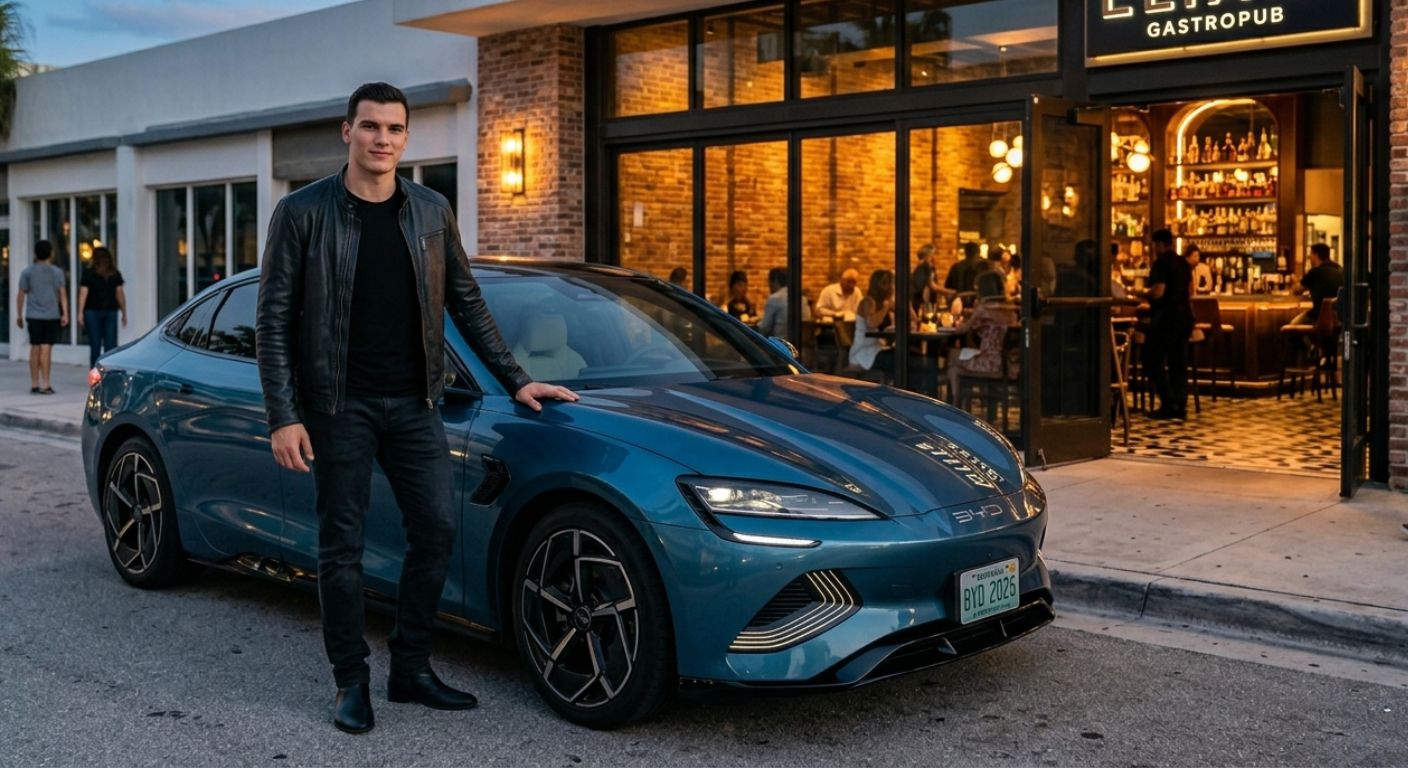
There’s also the question of importing BYD to the U.S. from Mexico. BYD sells vehicles there, including the Dolphin and the Seal, at prices that make American buyers envious. Some people near the border have tried to import one across. The U.S. Customs and Border Protection process requires a vehicle to meet NHTSA and EPA standards, and since BYD hasn’t certified those models for U.S. sale, they typically get flagged at the border. Reports from El Paso confirm that some BYD units have made it across, but usually as fleet or commercial vehicles, not private passenger cars. The U.S. has flagged China’s high-tech vehicles as a national security concern, which adds another layer to an already complex situation.
Attempting to bring one across as a personal import without proper documentation is a fast way to have it seized. Customs can require you to bring it into compliance or export it back. Vehicle registration costs for a non-compliant import can become the least of your problems.
What the Border Situation Actually Looks Like
The story about BYD vehicles already being in El Paso is real. The U.S. Wants to Ban China’s High-Tech Cars, but they’re already here in El Paso, specifically in fleet form. Commercial electric vehicles, shuttles, and some utility vehicles have crossed through existing fleet import channels that have different compliance structures than personal passenger cars.
Honestly, the border situation is a preview of where things are heading. BYD is the world’s top EV seller. Their technology is proven. The regulatory and trade walls are political, not engineering-based. But those walls are real right now, and trying to cross them with a personal import is a risk most buyers shouldn’t take without serious guidance and significant budget.
If you’re curious about how vehicle registration works for vehicles that fall outside normal channels, the same general principles that apply to a JDM import apply here. Japanese Domestic Market Vehicles: JDM Imports U.S. Market walks through how the process works for foreign-spec vehicles and what compliance actually requires.
For anyone dealing with a vehicle that has complex title or registration circumstances, understanding vehicle registration laws and car registration requirements is a solid place to start before spending money on the process.
If You Could Register a BYD in the U.S., Here’s What You’d Need
Let’s say, hypothetically, a compliant BYD model did arrive here. Maybe BYD gets their NHTSA certification. Maybe a factory in Mexico changes the tariff math. What would registration actually look like?
It would work like any other vehicle registration. You’d need a clean title, proof of compliance, and the standard state-level DMV paperwork. Depending on where you live, that means emissions testing, safety inspection, and paying vehicle registration costs that vary by state. Some states are more expensive than others for newer EVs because registration fees are sometimes tied to vehicle value.
Montana is one state that keeps things straightforward. No sales tax, no emissions testing, and Montana LLC vehicle registration is a path some owners use for high-value or unconventional vehicles to keep costs predictable. If a BYD Seal were imported at full compliance cost, it could easily tip into the price range where Montana LLC registration starts making financial sense. You can read about how that process works on the Montana Motor Vehicle Division site, and see the official Montana DOJ driving page for complete registration requirements.
The hidden perks of that approach go beyond just fees. Hidden Perks of a Montana License Plate: A Tax-Saving Edge explains the full picture for vehicle owners who want to register outside their home state.

The BYD in America Release Date: What We Actually Know
BYD has publicly stated their interest in the U.S. market. The challenge is timing. The 100% tariff wall means building or sourcing vehicles from outside China is the only viable path for competitive pricing. BYD’s Mexican factory ambitions have been reported by major outlets, but the project has faced political pressure from both the U.S. and Mexican governments.
The most realistic scenario for a BYD in America release date is somewhere in the late 2020s, assuming trade policy stabilizes and BYD commits to a North American manufacturing footprint. Until then, the vehicles aren’t coming through dealerships. They might trickle in through commercial or fleet channels. And the import route for personal buyers remains closed under current rules.
For buyers who are interested in EV registration costs and how they compare to traditional vehicles, EV Hidden Fees: Electric Car Taxes and Registration Costs from our sister brand Ride Legal breaks down what EV owners often don’t see coming when registration time arrives.
FAQ: Importing BYD to the U.S.
Can I import a BYD from Mexico to the U.S.?
Not easily. BYD models sold in Mexico haven’t been certified for U.S. federal safety or emissions standards. Customs and Border Protection can detain or reject non-compliant vehicles. Commercial BYD vehicles have crossed, but personal passenger car imports face significant financial hurdles under current rules.
Is BYD available in the U.S. at all?
BYD sells electric buses to U.S. fleet operators. Passenger cars are not available through any authorized U.S. dealer channel. There’s no showroom, no warranty service, and no approved import pathway for consumer vehicles at this time.
Why doesn’t BYD sell cars in the United States?
A combination of 100% tariffs on Chinese-made EVs and the requirement to meet NHTSA and EPA standards makes the economics difficult. BYD also hasn’t submitted most passenger models for U.S. federal certification, which is a prerequisite for street-legal sale here.
What is the BYD in America release date?
No confirmed date exists. BYD has discussed potential North American manufacturing, which could change the tariff math. Most analysts expect any U.S. consumer launch to be years away, contingent on trade policy, factory location, and federal approval.
If I register an imported vehicle, does Montana LLC registration help?
For compliant vehicles with a clean title, yes. Montana has no sales tax and no emissions testing requirements. Montana LLC registration is a legitimate option for owners of high-value or specialty vehicles looking to manage registration costs. See the official Montana fee schedule for current rates.
What if my imported vehicle has title issues?
Title problems are solvable in many cases. Bonded titles, bill-of-sale titles, and other routes exist for vehicles without clean paperwork. Should You Buy a Car Without a Title? covers your options clearly.
Where Dirt Legal Fits Into All of This
Dirt Legal started because a few of us wanted to register our own dirt bikes and couldn’t find a straightforward way to do it. That one problem turned into a service. Ten years later, we’ve helped thousands of people work through registration for all kinds of vehicles, from off-road bikes to high-value imports, UTVs, RVs, and everything in between.
We’re not the DMV. We’re the people who handle the DMV paperwork so you don’t have to spend three Saturdays figuring out forms, phone queues, and requirements that change by county. If you’re dealing with a vehicle that doesn’t fit neatly into the standard registration process, that’s exactly the kind of thing we’re built for.
BYD imports may not be widely available yet. But when the market shifts and those vehicles start arriving, the registration question is going to matter. And we’ll be ready for it.
Got a vehicle with complex registration? We’ve handled harder ones. Register Your Vehicle Today.