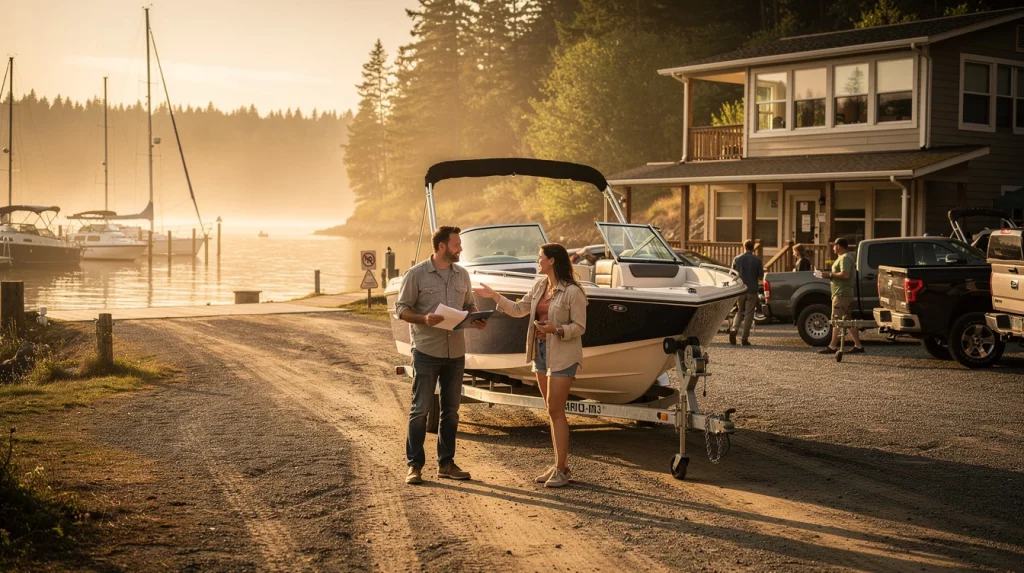
Vessel titling and registrations trip up a lot of vehicle owners, and for good reason. The rules for boats and watercraft sit in a completely different lane from cars, trucks, motorcycles, and powersports vehicles. If you own both a boat and a land vehicle, you’ve probably already noticed that the paperwork, agencies, and timelines don’t match up at all.
This guide breaks down how vessel titling and registrations work at a high level, where they differ from standard DMV title transfers and vehicle registration, and what land vehicle owners specifically need to know when they’re working through the process for the first time.
Honest disclaimer upfront: Dirt Legal handles DMV paperwork for land vehicles, including cars, trucks, motorcycles, UTVs, RVs, and trailers. We don’t process boat or watercraft registrations directly. But because so many of our customers ask about the comparison, we’ve put together this breakdown so you can get oriented before going to the right agency.
Need to register a car, truck, motorcycle, or powersport vehicle? we assist with DMV paperwork paperwork so you don’t have to.
What Vessel Titling and Registration Actually Means
Vessel titling and registration aren’t the same thing, even though people often use the terms together. A title proves ownership of the watercraft. A registration is the annual (or biennial) authorization to operate it on public waterways. You can think of it like a car: the title is your proof of ownership, the registration sticker on your plate proves it’s current.
Which agency handles vessel registration?
In most states, boats are handled by a completely different agency than cars. Your state’s Fish and Wildlife agency, Department of Natural Resources (DNR), or Parks and Recreation department typically handles watercraft registration, not the DMV. A handful of states do route everything through a single motor vehicle office, but it’s the exception rather than the rule. Always check your state’s specific agency before submitting paperwork.
Does every boat need a title?
Not always. Many states only require titles for motorized vessels over a certain length, typically 12 to 16 feet. Non-motorized kayaks, canoes, and small paddleboats are often exempt from titling requirements entirely, though some states still require registration numbers on the hull. Requirements vary significantly by state, so you’ll want to confirm before assuming your vessel is exempt.
What documents are typically required?
Most states require a completed application, proof of ownership (like a bill of sale or prior title), hull identification number (HIN) verification, and applicable fees. The HIN functions like a vehicle identification number for boats. If you’re buying a used boat without a clear title, a bonded title process may apply, similar to what’s available for land vehicles. You can read more about that process in our guide to what a bonded title is and when you need one.
How Vessel Registration Compares to Land Vehicle Registration
The differences between vessel titling and standard DMV title transfer processes are significant. Understanding them side-by-side helps you plan correctly, especially if you’re dealing with both simultaneously.
| Factor | Vessel / Boat | Land Vehicle (Car, Truck, Motorcycle) |
|---|---|---|
| Governing Agency | DNR, Fish & Wildlife, or Parks Dept. | State DMV or Motor Vehicle Division |
| Ownership Document | Vessel Title (if required) or MCO | Certificate of Title |
| ID Number | Hull Identification Number (HIN) | Vehicle Identification Number (VIN) |
| Inspection Required | Hull inspection in some states | VIN inspection in many states |
| Registration Display | Numbers painted/displayed on hull | License plate and registration sticker |
| Annual vs. Biennial | Often 2-year or 3-year cycles | Typically annual renewal |
| Can You Register in Another State? | Limited, based on primary use location | Yes, with options like Montana LLC registration |
| Sales Tax Implications | Varies by state, typically required | Can be reduced through Montana LLC structuring |
The biggest practical difference: land vehicle owners have far more flexibility in where and how they register. A Montana LLC registration, for example, lets you title a car, truck, RV, or motorcycle in Montana regardless of where you live, with no sales tax and no emissions testing required. That option doesn’t typically apply to watercraft in the same way. If you want to learn more about how the process works for land vehicles, see our guide to vehicle registration laws and car registration requirements.
Why Land Vehicle Owners Search for Vessel Titling Information
Here’s the thing: most people searching “vessel titling and registrations” aren’t boat dealers. They’re everyday vehicle owners who bought or inherited something with a hull, and they’re trying to figure out if the process is similar to what they’ve done with cars. Often they’re also dealing with a missing title situation at the same time.
Bought a used boat without a title?
This is extremely common. A prior owner may have lost the title, the bank may not have released a lien, or the vessel may have been passed down through an estate without proper paperwork. The solution depends heavily on your state, but options typically include an application for replacement title, an affidavit of ownership, or a bonded title process. For land vehicles, Dirt Legal handles these exact scenarios every day. Check out our breakdown of how to buy a car without a title, which applies many of the same principles.
Inherited a vessel from a family member?
Inherited property with no formal title transfer creates the same problem whether it’s a truck or a boat. You’ll typically need a copy of the death certificate, proof of your relationship to the deceased, and either a probate court document or a small estate affidavit. Your state’s vessel registration agency will have a specific form for this. For land vehicles in a similar situation, what to do when the seller never signed the title is a helpful starting point that covers the documentation gaps.
Moving to a new state with a registered vessel?
You typically have a set window, often 60 to 90 days, to re-register a vessel after establishing residency in a new state. The same window applies to land vehicles. Missing it can mean fines and complications when you sell. Read about what happens when you move states and keep your old registration to understand the risks on the vehicle side.
If you’ve got a land vehicle with title or registration complications, we’ve handled thousands of cases just like yours. Here’s how the process works for cars, trucks, motorcycles, and powersports.
Montana LLC Registration: A Real Option for Land Vehicles, Not Boats
One of the most common questions we get is whether a Montana LLC can be used to register a boat. The short answer is: not in the same way it works for land vehicles. Montana LLC vehicle registration is a well-established and completely above-board method to title and register cars, trucks, RVs, motorcycles, and powersport vehicles in Montana. The benefits are significant: no sales tax, no emissions testing, and no state inspections required.
What vehicles can be registered through a Montana LLC?
Nearly any land vehicle qualifies: passenger cars, pickup trucks, RVs, travel trailers, motorcycles, ATVs, UTVs, and even commercial vehicles. Montana has become one of the most popular states for out-of-state vehicle registration precisely because of these advantages. Check the official Montana Vehicle Title and Registration page for the official fee schedule. For a deeper look at the benefits and process, the Montana LLC vehicle registration breakdown covers all the key details.
How does a Montana LLC registration actually work?
Dirt Legal forms a Montana LLC with our paperwork support, then registers your vehicle under that LLC. You receive your Montana plates and title documents by mail. The whole process is handled remotely, meaning you never have to set foot in a Montana DMV office. Vehicles shipped in as little as 1 day in some cases. For a complete walkthrough, visit our page on how the process works. You can also look at the hidden perks of a Montana license plate to see why so many vehicle owners choose this route.
What about vehicle registration costs?
Vehicle registration costs through a Montana LLC are often significantly lower than in high-tax states, especially when you factor in the elimination of sales tax on vehicles. For a $100,000 RV, for example, avoiding a 7-9% sales tax saves $7,000 to $9,000 upfront. Annual registration fees in Montana are based on the age and weight of the vehicle rather than its value. See our current pricing for a full breakdown of service fees.
What to Do If You Have Title Problems on a Land Vehicle
Whether you bought a vehicle at auction, inherited one, or got stuck with a seller who never signed the title, missing or defective titles are one of the most common vehicle ownership headaches. And unlike vessel titling, which varies wildly by state agency and process, land vehicle title issues follow more predictable patterns with established solutions.
Duplicate and replacement titles
If you’ve lost your title, a replacement title (often called a duplicate title) is typically the simplest fix. Most states allow the registered owner to apply directly through the DMV with a small fee. If your situation is more complicated, auto title replacement services like Dirt Legal can handle the paperwork. Read about how to get a title for a motorcycle with no title for a practical example of how this works.
Bonded titles for vehicles without clear ownership history
A bonded title is a state-issued title that comes with a surety bond attached, protecting against future ownership claims. It’s typically used when the standard title process isn’t available because ownership documents are missing or incomplete. The bond period in most states is three years, after which a clean title is typically issued. This applies to cars, trucks, and motorcycles, not typically to vessels.
Out-of-state title transfers
Bought a vehicle from another state? A DMV title transfer across state lines involves surrendering the out-of-state title and applying for a new one in your state of registration. Common mistakes here include missing odometer disclosures, unsigned titles, or lien release documents. Our guide on the 5 biggest out-of-state registration mistakes covers exactly what to watch for.
Frequently Asked Questions About Vessel Titling and Registrations
Is a vessel title the same as a vehicle title?
They serve the same purpose, proving ownership, but they’re issued by different agencies, use different identification systems (HIN vs. VIN), and follow different state laws. A vessel title is issued by a state’s fish and wildlife or DNR agency in most states, not the DMV. The documentation requirements and transfer processes are also handled separately from standard car titles.
Do I need to title my boat in every state I use it?
No. You register a vessel in your state of primary use or primary residence, not in every state you visit. If you take a registered boat to another state temporarily, you’re typically covered under reciprocity rules. However, if you move states, you’ll generally need to re-register the vessel in your new state within a set window, often 60 to 90 days.
Can I use a Montana LLC to register a boat?
Montana LLC registration works well for land vehicles: cars, trucks, motorcycles, RVs, ATVs, and UTVs. Watercraft registration is handled through state fish and wildlife or DNR agencies based on where the vessel is primarily used, which makes the Montana LLC approach less applicable to boats. The tax and registration advantages of Montana registration are strongest for land vehicles, particularly high-value ones.
What happens if I let my vessel registration expire?
Operating an unregistered vessel on public waterways typically results in fines and can create problems with your insurance coverage. The same principle applies to land vehicles: expired registration creates financial and compliant exposure. Read about the true cost of letting your registration expire for a full breakdown of what’s at stake with land vehicles specifically.
What is a Hull Identification Number (HIN), and how does it compare to a VIN?
A HIN is a 12-character alphanumeric code assigned to every boat manufactured after 1972. It functions like a VIN for watercraft, identifying the manufacturer, serial number, and production date. Just as a vehicle VIN inspection may be required when registering a car in a new state, a HIN inspection or verification may be required when titling a used boat. For land vehicle VIN checks, see our guide on how to spot a fake vehicle VIN check.
Can I register a boat I bought without a title?
Yes, in most states, but the process is more involved. You’ll typically need to provide a notarized bill of sale, complete a lost title affidavit, and in some states go through a bonded title process. The specific forms and agencies vary by state. The general principle mirrors what applies to land vehicles: missing ownership documentation doesn’t mean you’re stuck, but it does mean more paperwork and time.
Where do I find my state’s vessel registration agency?
Most states handle vessel registration through their Department of Natural Resources, Fish and Wildlife Commission, or Parks and Recreation department. A handful of states route vessel registration through the DMV alongside car and truck registrations. Your state’s website is the fastest way to find the right agency and current fee schedule.
If your vehicle registration or title situation has gotten complicated, don’t spend hours in DMV lines. Dirt Legal handles the complex paperwork for land vehicles across all 50 states.
Putting It All Together
Vessel titling and registrations share the same core purpose as land vehicle title and registration: proving ownership and maintaining operating status. But the agencies, rules, identification systems, and options diverge significantly once you step off the pavement. For boat owners, that means working through a different, often with different timelines and requirements than you’d see at the DMV.
For land vehicle owners, the options are broader. Montana LLC vehicle registration, bonded titles, out-of-state DMV title transfers, and auto title replacement are all well-established paths that Dirt Legal handles every day. If you’re dealing with a car, truck, motorcycle, UTV, RV, or trailer, you don’t have to fight through the paperwork alone. We’ve built the process so you can get it done without setting foot in a government office.