
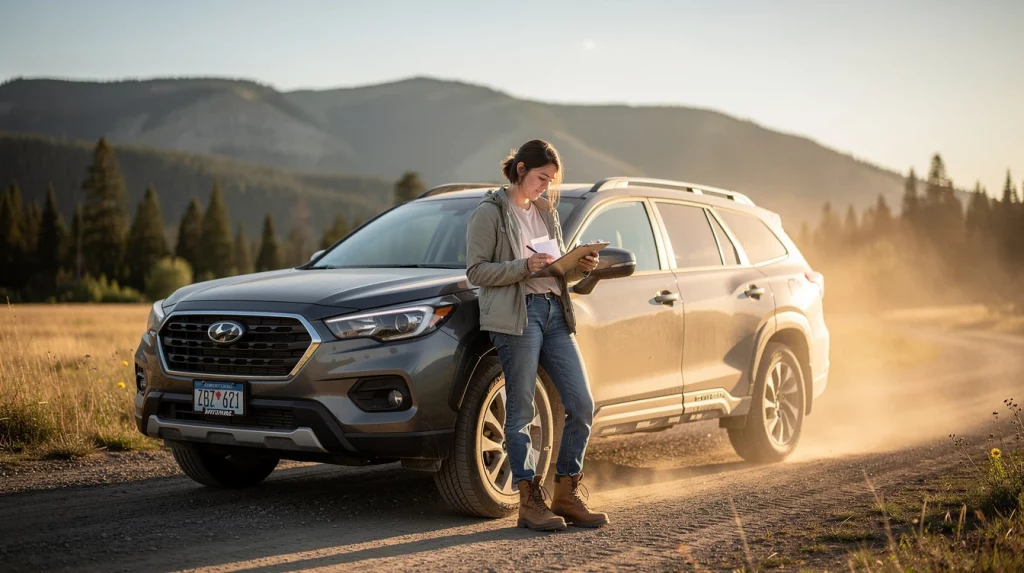
Knowing how to register your car in Montana is simpler than most people expect, and the payoff can be significant: no sales tax, no emissions testing, and some of the most flexible registration rules in the country. This guide walks you through every document you need, the exact steps to follow, the fees to expect, and the Montana LLC option that tens of thousands of out-of-state owners use every year.
Whether you just bought a new vehicle, moved to Montana, or you’re an out-of-state owner looking at how to get Montana plates, this checklist covers everything. We’ll also flag the common mistakes that cause delays so you can avoid them from the start.
Let’s get into it.
Why Montana Vehicle Registration Is Worth Your Attention
Montana is one of a handful of states with no general sales tax. That means when you register a vehicle here, you don’t pay a percentage of the purchase price to the state. On a $100,000 vehicle, that’s potentially $6,000, $10,000 in savings depending on where you’d otherwise register it.
There’s no emissions testing requirement either. No inspection stations, no smog checks, no annual vehicle inspections mandated by the state. For owners of older vehicles, high-performance builds, or lightly modified rigs, that matters a lot.
Does Montana Have a State Sales Tax on Vehicles?
No. Montana has no state sales tax at all, including on vehicle purchases and registrations. You can confirm this directly through the Montana Department of Revenue. This is the single biggest reason out-of-state buyers look at Montana registration seriously.
Registration fees still apply, and they vary by vehicle age and type. But those fees are a fraction of what sales tax would cost on most vehicles. For a complete breakdown of current fee schedules, check the official Montana Vehicle Title and Registration Fees page.
Who Can Register a Car in Montana?
Montana residents can register their vehicles directly with their county treasurer’s office. Out-of-state owners who don’t live in Montana typically use a Montana LLC to hold the vehicle, which is a completely separate but related path we cover in a dedicated section below. It’s worth knowing which category you fall into before you start gathering documents.
The Montana Car Registration Checklist: What You Actually Need
This is the core of what most people come here for. Keep in mind the exact documents required can vary slightly by county and vehicle type, but this list covers the vast majority of standard registrations.
undefined
Documents Required for Montana Residents
- Certificate of Title, the original title in your name, or a completed title transfer if you just bought the vehicle
- Proof of Montana residency, a Montana driver’s license, utility bill, or lease agreement will typically work
- Completed Application for Certificate of Title, available at your county treasurer’s office or the Montana Motor Vehicle Division
- Odometer disclosure, required for vehicles under 10 years old
- Lien release documentation, if the previous title had a lien that’s been paid off
- Payment for registration fees, varies by vehicle age, weight, and type
Additional Items for Newly Purchased Vehicles
- Bill of sale, highly recommended even when not strictly required. A detailed guide on what a bill of sale for a car should include can save you headaches later.
- VIN verification, some counties and situations require a physical VIN inspection. Our VIN inspection guide explains when this is needed and how to get it done.
- Manufacturer’s Certificate of Origin (MCO/MSO), required for brand new vehicles that haven’t been previously titled. Learn more about what MSO means at a car dealership.
Honestly, the most common reason registrations get delayed is a missing or improperly signed title. Double-check that the seller’s signature is exactly where it needs to be before you leave the transaction. If you’ve run into title issues, untangling title nightmares is a useful resource for sorting out lost paperwork or ownership problems.
Step-by-Step: How to Register Your Car in Montana
Once you have your documents in order, the process itself is straightforward. Here’s how it works for Montana residents going through the county treasurer’s office.
Step 1: Gather Your Documents
Use the checklist above. Make copies of everything. Bring originals to the office, but keep copies in case something gets lost or needs to be resubmitted.
Step 2: Visit Your County Treasurer’s Office
Vehicle registration in Montana is handled at the county level, not a centralized DMV. Find your local office through the Montana County Treasurers directory. Some counties also offer online or mail-in options for renewals and certain transfers.
Step 3: Submit Your Application and Pay Fees
Hand over your completed application, title, and supporting documents. Pay the registration fee, which is calculated based on the vehicle’s age, weight class, and type. Newer vehicles cost more to register; older vehicles are cheaper. The official Montana Motor Vehicle Division has the current rate tables.
Step 4: Receive Your Title and Plates
Once processed, you’ll receive your Montana license plates and registration card. Your title may be mailed separately. Processing times vary by county, but most standard registrations are completed within a few business days in person.
Want to skip the county office entirely? That’s exactly where a registration service comes in. Trusted DMV solutions handle the paperwork on your behalf so you never have to take a number and wait.
Montana LLC Vehicle Registration: The Out-of-State Owner’s Path
If you don’t live in Montana but want Montana plates, the standard route is registering through a Montana LLC. The LLC is a legal entity formed in Montana that owns the vehicle. You, as the member of the LLC, have full use of it.
This approach is especially popular among owners of high-value vehicles, RVs, and exotic cars because the savings on sales tax can be substantial. Learn more about 5 reasons to switch your vehicle to an asset-holding Montana LLC and whether it makes sense for your situation.
How the Montana LLC Registration Process Works
- Form a Montana LLC through the Montana Secretary of State
- Transfer or purchase the vehicle in the LLC’s name
- Register the vehicle through the LLC with the county treasurer
- File an annual report with the Montana SOS each year by April 15 to keep the LLC active
Dirt Legal handles the complete process, including LLC formation, title work, and registration, so you don’t have to manage each step separately. See how the process works and what’s included. For a deeper look at the LLC angle specifically, check out Montana LLC Vehicle Registration: Why It Matters from our sister brand Ride Legal.
Is Montana LLC Registration Right for You?
It depends on your vehicle’s value, your home state’s tax rate, and how you plan to use the vehicle. A $30,000 pickup might not generate enough tax savings to justify the LLC setup costs. A $200,000 motorhome almost certainly does. Read our guide on Montana recreational vehicle registration if you’re looking at RVs or large units specifically.
Also worth reading: Should you put your car in an LLC? breaks down the asset protection angle beyond just the tax savings.
Montana Registration Fees: A Quick Comparison
Montana registration fees are based on the age and type of the vehicle. Here’s a simplified overview of how fees are structured for passenger vehicles.
| Vehicle Age | Annual Registration Fee (Approx.) | Notes |
|---|---|---|
| 1, 2 years old | $217 | Newest vehicles pay highest base fee |
| 3, 5 years old | $132 | Moderate fee bracket |
| 6, 8 years old | $107 | Mid-range older vehicles |
| 9, 11 years old | $77 | Lower annual cost |
| Over 11 years old | $28 | Flat rate for older vehicles |
These are base registration fees for passenger vehicles. Trucks, RVs, and specialty vehicles have different rate structures. Additional county fees may apply. Always confirm current rates through the official Montana Vehicle Title and Registration page before submitting payment.
The 11-year-old flat rate is a particularly popular detail among collectors and vintage vehicle owners. If you’re holding a vehicle long-term, it eventually ages into a very low annual fee. The 11-Year Rule and Montana LLCs for Collectors covers this strategy in detail.
Common Mistakes to Avoid When Registering a Car in Montana
Most delays come from a short list of avoidable errors. Here’s what to watch out for.
Incomplete or Incorrectly Signed Titles
This is the single most common problem. The seller must sign the title exactly as their name appears on it. Any mismatch, correction fluid, or missing signature field can trigger a rejection. If the seller never signed the title before the sale, Seller Never Signed the Title? Here’s What to Do walks through your options.
Missing Lien Release
If the previous owner had a loan on the vehicle, the lender holds the title until the loan is paid off. Make sure a lien release is in hand before you try to register. Without it, the county treasurer can’t transfer the title to you.
Skipping the VIN Check
Some situations, particularly out-of-state purchases and vehicles with unclear histories, require a physical VIN inspection before registration. Skipping this step when it’s required means your application gets sent back. Our VIN inspection guide covers when it applies and how to handle it. If there’s any question about the vehicle’s history, it never hurts to run a VIN check first.
Not Understanding Your State’s Rules on Out-of-State Registration
Montana registration is completely legitimate, but your home state may have requirements around how and when you re-register vehicles that spend significant time there. What state can I register my vehicle in without living there? is a useful read on this topic. Also see What Happens If You Move States and Keep Old Registration for related context.
Frequently Asked Questions About Montana Car Registration
How long does it take to register a car in Montana?
In-person registration at a county treasurer’s office can typically be completed the same day if your documents are in order. Mail-in and online processes usually take 1, 2 weeks. When you use a registration service like Dirt Legal, processing timelines depend on document completeness, but most customers receive their plates and title within 2, 4 weeks. Rush options are sometimes available depending on the county.
Do I need to be a Montana resident to register my car there?
Montana residents can register directly. Non-residents typically use a Montana LLC to hold the vehicle, which is a legitimate legal structure that allows out-of-state owners to register in Montana. The LLC owns the vehicle, and you are the LLC member. This is the most common path for out-of-state owners and is used by owners of high-value cars, RVs, and specialty vehicles nationwide.
How much does it cost to register a car in Montana?
Registration fees range from approximately $28 per year for vehicles over 11 years old to around $217 per year for vehicles 1, 2 years old. There is no state sales tax on vehicle registration. Additional county fees may apply. If you’re forming a Montana LLC to register an out-of-state vehicle, there are also LLC formation and annual report fees to factor in. See the official Montana fee schedule for the most current rates.
Can I get Montana plates without living in Montana?
Yes, through a Montana LLC. The LLC is a Montana-based legal entity that owns the vehicle. You don’t need to be a Montana resident, live there, or even visit. Many out-of-state owners go this route specifically to avoid sales tax in their home states. It’s a well-established approach with a long legal history. Read how to register a car in Montana for a more in-depth walkthrough of the LLC path.
What happens if I buy a car without a title in Montana?
You’ll likely need a bonded title to establish legal ownership. A bonded title involves purchasing a surety bond equal to a set percentage of the vehicle’s value and filing for a new title through the state. It’s more involved than a standard transfer but it’s a workable path. What Is a Bonded Title and When Do You Need One? from Ride Legal covers the full process and requirements.
Does Montana require a vehicle inspection for registration?
Montana does not have a mandatory statewide vehicle safety inspection or emissions testing requirement. This makes it significantly different from states like California or New York, which have strict smog check programs. A VIN inspection may still be required in specific situations, such as when a vehicle is being titled in Montana for the first time or has had a history of title issues. Check with your county treasurer’s office if you’re unsure whether your vehicle needs one.
Can I register a salvage title vehicle in Montana?
Montana does allow the registration of rebuilt salvage vehicles, but the process involves additional documentation and inspections to verify the vehicle has been properly repaired. The title will reflect the vehicle’s salvage history. Before purchasing a rebuilt salvage vehicle, it’s smart to understand what that designation means for value and insurability. Our guide on Salvage Title vs. Clean Title: What Buyers Need to Know is a good starting point.
How do I renew my Montana vehicle registration?
Montana vehicle registrations are renewed annually through your county treasurer’s office. You’ll receive a renewal notice by mail. Many counties now offer online renewal options. If you registered through a Montana LLC, you’ll also need to file the LLC’s annual report with the Montana Secretary of State by April 15 each year to keep the LLC in good standing. Letting that lapse can create registration complications down the line.
Ready to Register? Here’s How to Get Started
Montana vehicle registration is one of the most accessible and cost-effective paths available to vehicle owners across the country. No sales tax, no emissions testing, low annual fees, and a straightforward process whether you’re a Montana resident or using an LLC from out of state.
Dirt Legal handles the complete registration process on your behalf, from LLC formation to title work to plates. You send us your documents, we handle the county, and you get your registration. No waiting rooms, no guesswork on forms, no complex paperwork.
If you’re still weighing your options, check out why some states make vehicle registration easier than others for broader context on how Montana compares. And if you want to see how our process actually works before committing, take a look at how it works and what’s included in each package.