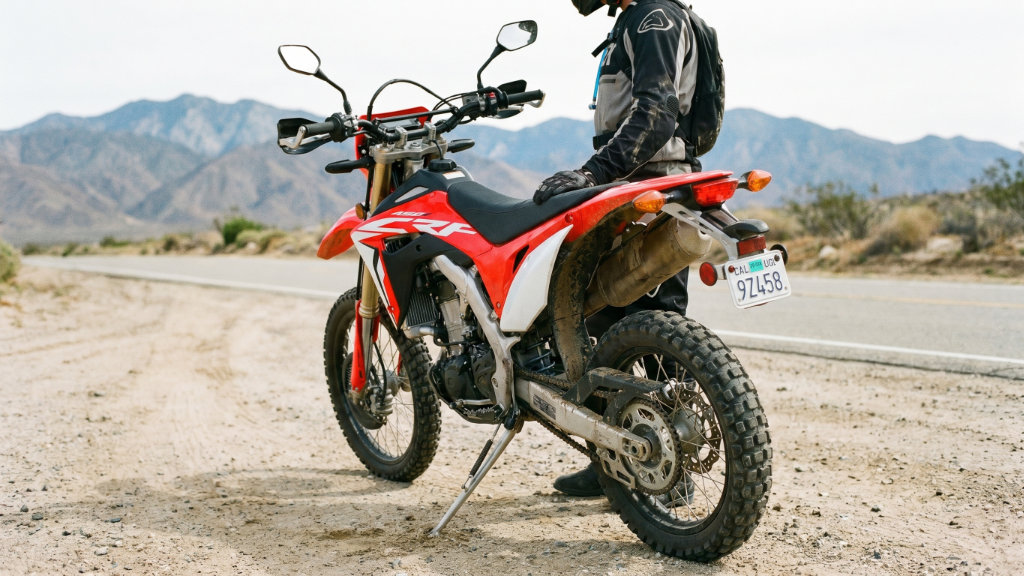
Many riders want to take their dirt bikes beyond the trail and onto public roads, but they aren’t always sure where to begin. Preparing an off-road motorcycle for road use involves both mechanical upgrades and navigating state road regulations.
While the process may seem intimidating at first, most riders with moderate mechanical skills can complete many of the required modifications themselves. In this guide, we will cover the essential equipment, electrical upgrades for gas and electric bikes, and the shifting documentation landscape of 2026.
Understanding Requirements and Common 2026 Rule Changes
There are many myths surrounding the process of preparing a dirt bike for public-road use. Some riders believe the bike must have been originally manufactured for road use, while others think a simple headlight is enough.
In reality, you must meet strict equipment standards and complete complex registration paperwork. As of 2026, many rules have tightened. For example, recent changes, like South Dakota SB 164, now strictly enforce a 120cc minimum displacement for two-wheel conversions.
Because these road regulations vary by state, researching local rules is vital before beginning. If your bike is under 120cc or lacks a clear path to registration, the process becomes significantly harder to manage on your own.
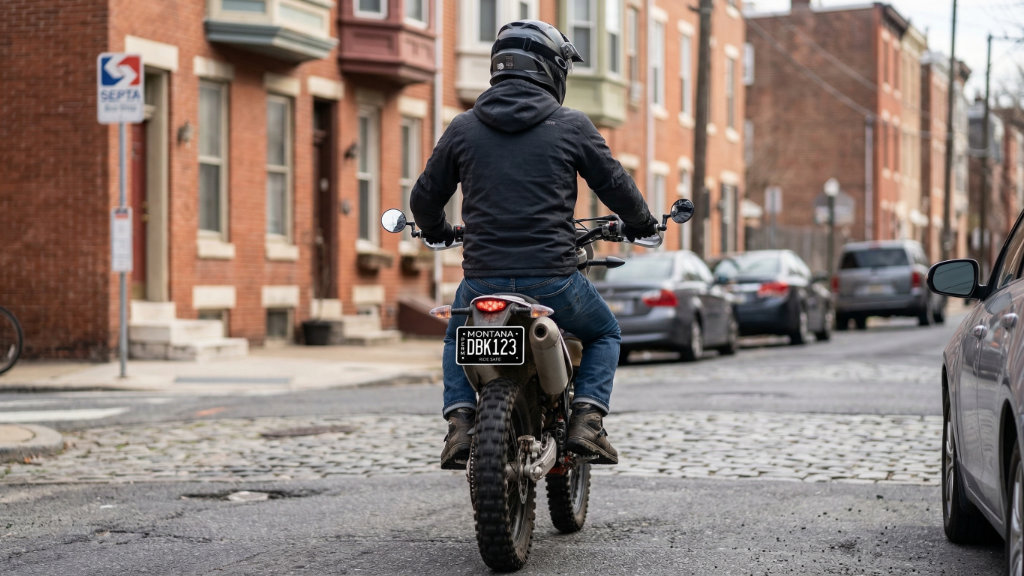
Essential Components for Public-Road Riding
The following equipment is commonly required for motorcycles used on public roads. Requirements can vary, so always confirm local rules before heading out.
Headlight and Tail Light
Most states require a DOT-compliant headlight with high and low beams. LED headlights are the gold standard in 2026 because they consume less power and stay brighter.
Your tail light must also act as a brake light, activated by both the front lever and rear pedal. In many jurisdictions, the system must remain illuminated for 15–20 minutes even when the engine is off, which often requires a dedicated battery backup.
Mirrors and Turn Signals
While some states once allowed a single mirror, many (including Washington and Maryland) now require two mirrors (one on each side) for converted off-road bikes. Mirrors improve your awareness and are a top priority for inspectors.
Turn signals are also increasingly mandatory. While hand signals were once a fallback, 2026 standards usually demand sequential LED signals to ensure you are visible to modern traffic.
DOT-Rated Tires and Horn
Motorcycles on public roads typically require DOT-certified tires. These are built for pavement heat and high speeds. You can find the “DOT” mark right on the sidewall.
You also need a functioning electric horn. In 2026, horns that need to be mechanically squeezed are rarely accepted by state agencies. A small, inexpensive electric horn is the simplest way to pass your inspection.
Upgrading the Charging System
One of the most overlooked aspects of a street-legal dirt bike is the electrical output. Off-road bikes usually have minimal power because they weren’t built to run a full lighting suite.
Stators and Regulators (Gas Bikes)
The stator generates the electricity. If yours is too weak, you’ll need to rewind it or buy a high-output version. You’ll also need a regulator/rectifier to convert that power into a stable current that won’t fry your new LED lights.
DC-DC Converters (Electric Bikes)
If you are converting a high-power electric bike like a Sur-ron or E-Ride Pro, you don’t have a stator. Instead, you must install a DC-DC converter. This steps your high-voltage main battery down to 12V so you can run standard street-legal accessories safely.
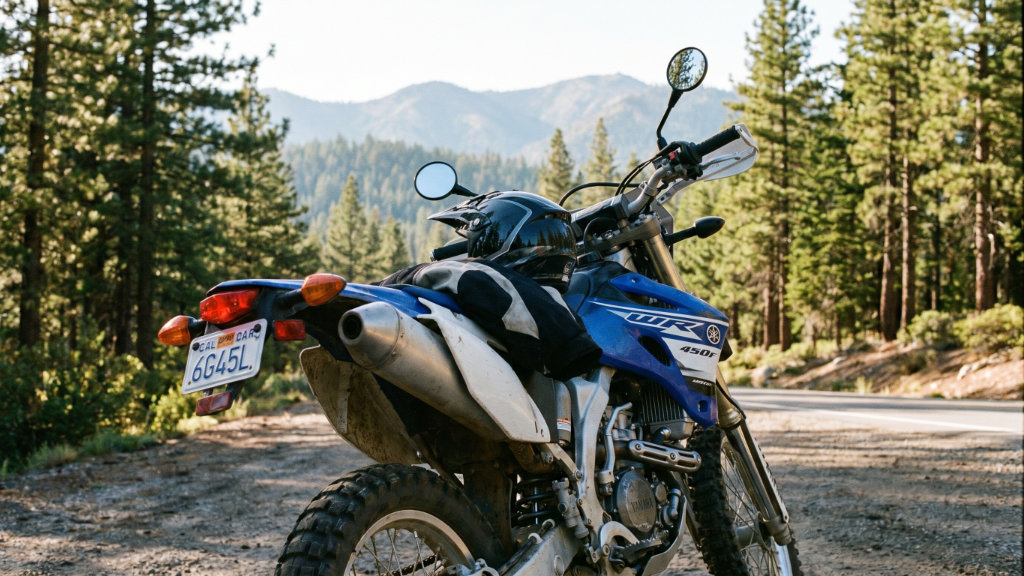
Preparing the Paperwork
Beyond the mechanical work, preparing a dirt bike for the road involves a mountain of documentation. This is where most riders hit a wall. Between verifying VINs, meeting displacement minimums, and dealing with out-of-state titles, the DMV process has become massively complex.
State agencies are increasingly skeptical of off-road conversions. If you miss one form or don’t understand the new 2026 residency rules, your application will likely be rejected, leaving you with a bike you can’t ride.
Why Dirt Legal is Your Easy Solution
Building a street-legal dirt bike should be a rewarding project, not a battle with a government clerk. The shifting road regulations of 2026 make it harder than ever to handle the registration on your own.
At Dirt Legal, we stay ahead of these complex rules so you don’t have to. We handle the heavy lifting, from LLC formations to title recovery and Montana registration.
You skip the DMV waiting rooms while we handle the paperwork directly with the state. We get your plates and registration shipped in as little as 1 day. Stop stressing over new rules and displacement limits. Let us get your dirt bike street-legal so you can focus on the ride.