TL;DR: How to Prep Your Vehicle for Off-Roading
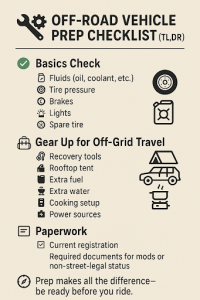
- Check all the basics: fluids, tire pressure, brakes, lights, and your spare tire.
- Pack the right gear for off-grid travel—recovery tools, rooftop tent, extra fuel and water, cooking setup, and power sources.
- Make sure your registration and paperwork are up to date, especially if your vehicle is modified or not street-legal.
- Preparation turns a rough trail into a smooth ride—don’t hit the dirt without it
It all comes down to how well your vehicle is prepared. Knowing what you need before you leave is what turns a dream trip into an epic one.
Why Off-Road Vehicle Prep Is Non-Negotiable
Before adventure calls, your vehicle has to be more than just ready to drive. It needs to be capable, dependable, and outfitted for whatever you might face when the pavement turns to dust, mud, or sand.
Solid off-road vehicle prep ensures your trip is not just safe but smooth, no matter the conditions.
Don’t Skip the Basics: The Boring Stuff That Saves Your Trip
Let’s be real: No one wants to be the one sidelined by a dead battery at the trailhead or limping along on a blown tire halfway through the adventure.
Start with the essentials:
– Check fluids
– Confirm tire pressure (including your spare!)
– Inspect brakes and suspension
– Test your lights and battery
It’s not glamorous, but it’s what keeps the wheels turning.
Gear Up for Off-Grid Travel
Prepping your rig isn’t just about surviving the wild—it’s about thriving in it. Roof racks, bed racks, hitch setups, and trail-rated mods let you haul what you need to stay out longer:
– Rooftop tents and camp kitchens
– Recovery gear
– Water and fuel reserves
– Portable power stations and solar panels
Power your devices, light up your camp, and stay self-sufficient—no matter how far you roam.
Read: Can You Drive Off-Road Vehicles on Public Roads?
Off-Road Vehicle Readiness & Registration FAQs
Getting your off-road vehicle ready isn’t just about gear and performance—it’s also about making sure everything is properly documented and set up for where you plan to ride. This section covers how to avoid common issues, handle paperwork the right way, and get your vehicle fully ready for the road.
How do I make sure my off-road vehicle is ready for the road?
Start with the basics—check your fluids, tires, brakes, and lights to ensure your vehicle is mechanically sound. From there, confirm your vehicle meets any local requirements if you plan to ride on public roads. Just as important, make sure your paperwork and registration are in order so you don’t run into issues once you’re out riding.
How can I avoid paperwork issues with my off-road vehicle?
Most problems come from missing documents, incorrect ownership records, or not understanding state-specific requirements. Off-road and modified vehicles can add extra complexity. Getting everything reviewed and set up correctly from the beginning helps prevent delays. Dirt Legal provides a hassle-free way to handle the complex paperwork so you can avoid common mistakes.
What’s the easiest way to handle off-road vehicle registration?
The simplest approach is to have a clear process in place from the start. Registration can involve multiple steps depending on your vehicle type and location, and trying to manage it alone often leads to confusion. Dirt Legal streamlines the process by handling the paperwork and guiding you through each step.
How do I get my off-road vehicle properly titled and registered?
You’ll need proof of ownership—such as a title, bill of sale, or manufacturer documentation—along with any required forms based on your state. If paperwork is missing or incomplete, additional steps may be needed. Dirt Legal helps ensure everything is completed correctly, giving you a clear path to proper title and registration.
Do modified vehicles need special registration?
In many cases, yes. Modifications can affect how a vehicle is classified and what requirements it must meet for registration. This can include equipment, inspections, or documentation changes. Because rules vary by state, it’s important to understand how your specific setup is treated. Dirt Legal helps simplify these requirements and ensures your vehicle is set up correctly.
Don’t Get Caught Without the Right Paperwork
Then there’s the paperwork no one likes to think about—until it becomes a problem. Freedom doesn’t feel so free when you’re pulled over for expired tags or denied access to a trail because your vehicle doesn’t meet local requirements.
If you’ve got an off-road beast that isn’t quite street-legal, or a custom setup that turns heads and raises eyebrows, it’s worth making sure your registration and documents are in order before you hit the road.
Registration, inspections, and compliance rules can vary wildly from state to state—especially if you’re asking “Can I drive my off-road vehicle on public roads?” Know before you go.
Real Freedom Comes from Being Ready
What makes a truly adventure-ready vehicle isn’t just rugged looks or cool accessories—it’s independence. It’s the ability to turn down the road less traveled and not have to turn back. It’s knowing your rig won’t let you down when cell service disappears and the next town is hours away.
So whether you’re heading for high mountain passes, desert trails, or backwoods campsites, make sure your ride is dialed in for the journey. How to prepare a vehicle for overlanding isn’t just a checklist—it’s a mindset. Prep like your freedom depends on it—because out there, it kind of does.
Ready to roam but missing the paperwork?
Make sure your off-road ride is properly registered and ready for the road — start your registration process here.