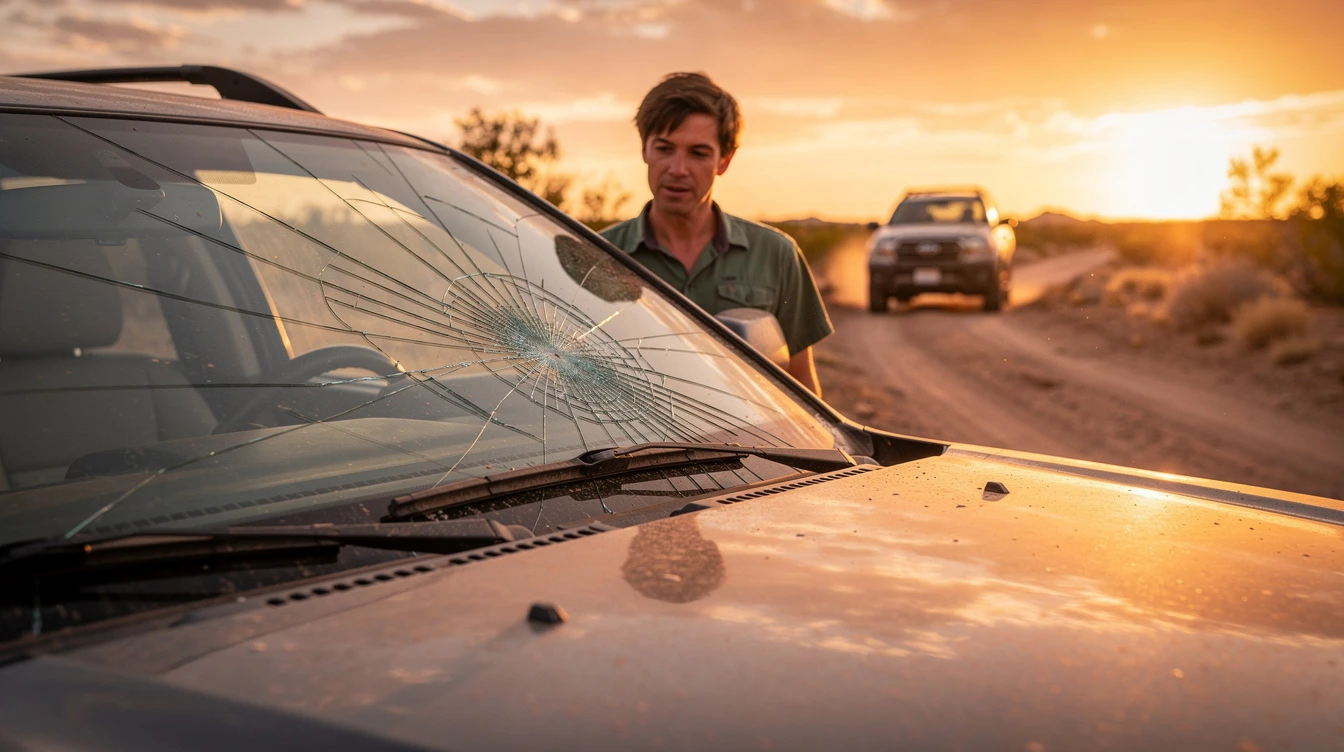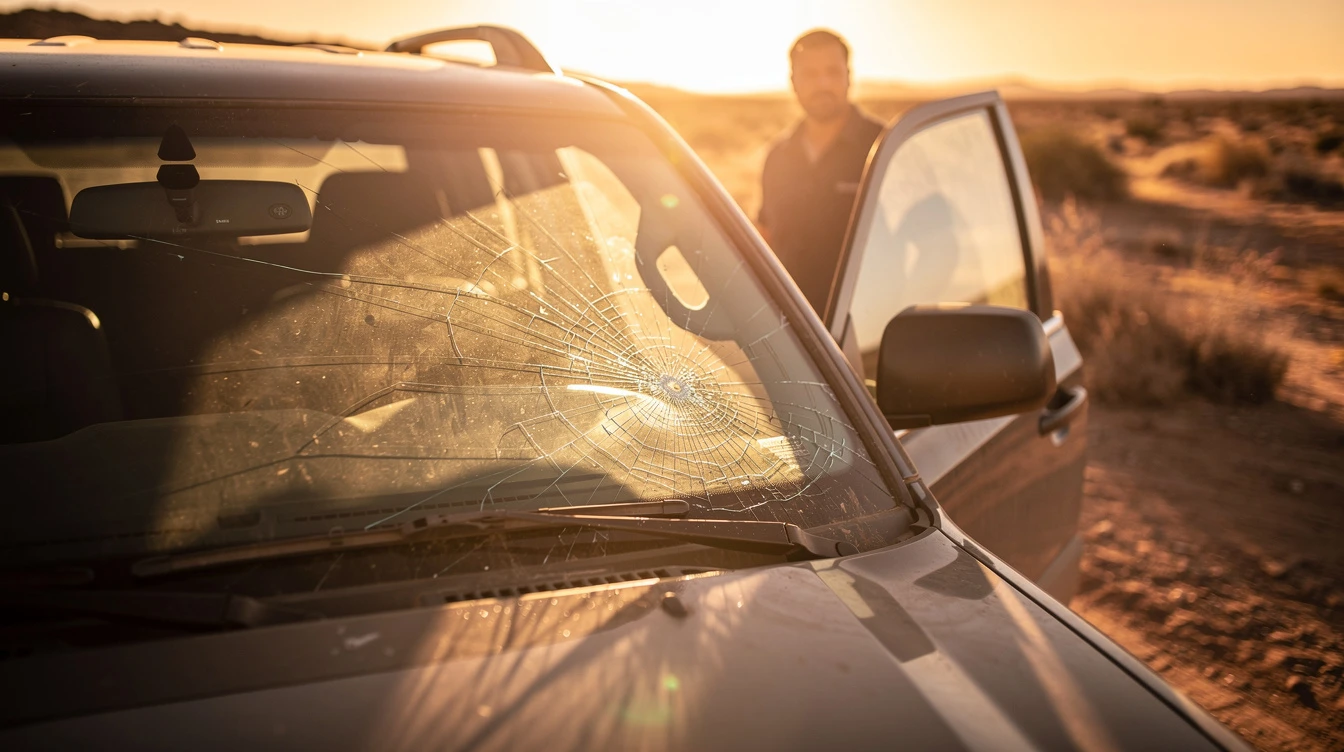
Yes, windshields can crack from heat in summer. Thermal stress, caused by uneven temperature expansion across the glass, is a documented and common cause of spontaneous windshield cracks, especially when an existing chip or weak point is already present.
Heat Alone Can Crack a Windshield, Even Without an Impact
Thermal stress cracks happen when one part of the glass heats up faster than another. The edge of the windshield stays cooler inside the seal, while the center absorbs direct sunlight, creating tension that can split the glass without any rock or debris involved.
- Direct sunlight can raise interior cabin temperatures above 150°F on a summer day
- Dashboard heat reflection concentrates radiant heat directly onto the lower windshield
- Pre-existing chips or micro-cracks dramatically lower the thermal stress threshold
- Rapid temperature swings, like blasting cold AC on a scorching windshield, are a top trigger
- Cracks typically start at the edge of the glass and run inward
Dark-colored vehicles parked in direct sunlight are at higher risk. The interior temperature climbs efficiently, and the windshield is essentially sandwiched between baking outside air and a heat-radiating dashboard. That stress has to go somewhere.
What Temperature Actually Causes a Windshield to Crack?
There is no single magic number. Windshields are laminated safety glass, which is more heat-tolerant than a single pane, but the real danger is temperature differential, not just peak heat. A difference of 50°F or more across the same pane is enough to initiate a thermal crack.
Ready to register your vehicle?
Join thousands of vehicle owners who use Dirt Legal to handle their registration quickly and hassle-free.
Register Your Vehicle Today → →- On a 95°F day, a black dashboard can radiate heat that pushes glass temps near 190°F
- Turning on the AC immediately cools the interior side while the outside stays hot
- Parking in direct sun for several hours creates prolonged, compounding heat buildup
Honest answer: most new windshields without existing damage will survive a normal summer. The risk jumps significantly the moment there is a chip, a stress point near the edge, or an abrupt cold blast from the AC.
How Do You Know If a Crack Is From Heat Vs. a Rock Strike?
Thermal cracks and impact cracks look different. Impact damage usually starts with a visible bull’s-eye or star pattern at the point of contact. Thermal cracks tend to be long, relatively straight lines that originate at the glass edge, with no obvious impact point.
| Crack Type | Starting Point | Appearance | Common Cause |
|---|---|---|---|
| Thermal / Stress Crack | Edge of windshield | Long, wavy, no impact point | Heat differential, AC shock |
| Impact Crack | Center of glass | Bull’s-eye, star, or spider web | Rock, debris, hail |
| Stress Crack (Manufacturing) | Edge | Smooth, minimal branching | Installation defect, seal failure |
| Combination Crack | Existing chip | Branches out from old damage | Heat accelerating prior damage |
Why does this matter? Insurance claims and repair coverage often depend on identifying the cause. A thermal crack from heat may be treated differently by your insurer than a rock chip, so documenting where and how the crack started is worth the effort.
What Steps Can You Take to Prevent Heat Cracks This Summer?
Prevention is simpler than repair. A few habits can meaningfully reduce the thermal stress your windshield faces every day.
- Park in shade or a covered garage whenever possible, especially during peak afternoon heat (2, 5 PM)
- Use a windshield sun shade to block direct UV and radiant heat from your dashboard
- Ease into the AC, start on low fan speed and let the cabin cool gradually before maxing out
- Never pour cold water on a hot windshield to cool it down, the temperature shock can trigger an instant crack
- Repair chips immediately, even small chips can spread into full cracks when thermal stress is applied
- Inspect the windshield edges regularly for micro-cracks or failing seal points
A windshield sun shade costs under $20 and can drop interior temps by 40 to 50°F. That single change removes most of the thermal stress risk for the average driver.
Does Car Insurance Cover Heat-Related Windshield Cracks?
Complete auto insurance typically covers windshield damage from heat, as thermal cracks are usually classified as a non-collision event. Check your policy, because some insurers exclude cracks that originate from pre-existing chips that were not repaired.
- Complete coverage generally includes glass damage from weather and heat
- Many states require insurers to offer no-deductible glass replacement under complete plans
- If the crack grew from an unreported chip, some policies may challenge the claim
- Document everything: photo the crack, note the date, note outdoor temperature conditions
If your vehicle is registered in a state with high summer temps, like Arizona, Nevada, or Southern California, reviewing your glass coverage before summer hits is a smart move. Speaking of registration, if your vehicle paperwork is not in order, summer is also a good time to sort that out. Dirt Legal has helped with 80,000+ vehicle orders to date, and a large share of those come from owners in warm-weather states who want their vehicle registration sorted without the back-and-forth.
Owners who register a car in Montana without living there often do so to simplify the annual registration process and reduce vehicle registration costs long-term. That article walks through the complete Montana LLC method for non-residents.
For a full breakdown of Montana plates options and what they cost, the Montana Plates guide covers options, costs, and the registration process in one place.
Frequently Asked Questions About Windshield Cracks and Heat
Can a windshield crack on its own in hot weather with no chips?
Yes, but it is uncommon in undamaged glass. A perfectly intact, properly installed windshield can technically crack from extreme thermal stress, but the threshold is high. Most spontaneous heat cracks originate from undetected micro-damage near the edge seal or from a rapid temperature swing caused by air conditioning blasting cold air on overheated glass.
Will a small chip spread into a crack in summer heat?
Very likely, yes. A chip weakens the structural integrity of the glass, and heat causes the surrounding glass to expand. That expansion puts direct mechanical stress on the chip edges. Summer heat is the number-one reason a chip that survived all winter will suddenly spread into a full crack by July.
How do I stop a windshield crack from spreading in hot weather?
Park in shade immediately. Do not use the AC on max blast until the glass cools gradually. Some drivers use clear nail polish or a commercial crack-stopper resin as a short-term fix. Get a professional repair or replacement as soon as possible, because heat will continue to work against any existing crack every day you wait.
Is a cracked windshield a safety issue?
Yes. A cracked windshield compromises structural integrity in a rollover and can reduce airbag deployment effectiveness. Most states have laws prohibiting driving with cracks in the driver’s direct line of sight. A crack that starts small can spread across the full windshield within days if left in direct summer heat.
Does window tint help prevent heat cracks?
Window tint reduces UV penetration and can lower cabin temperatures by 30 to 60 percent, which reduces the thermal differential the windshield experiences. It does not eliminate the risk, but it helps. Ceramic or metallic tint films offer the best heat rejection. Check your state’s tint laws before installing, as regulations vary by location.
Can I drive my vehicle with a heat crack in the windshield?
Short distances may be unavoidable, but driving with a significant crack is risky and in many states is a moving violation. The crack will almost certainly spread further with vibration and heat. If your vehicle registration is current and the car is otherwise road-ready, prioritize windshield repair before driving in high-heat conditions again.
If your vehicle is due for registration renewal and you want to sort out paperwork at the same time as your repair, the complete guide to forming a Montana LLC for vehicle registration explains how the process works for owners who want to simplify future renewals. For off-road vehicle owners dealing with both summer maintenance and registration questions, the off-road vehicles registration page at our sister brand Ride Legal covers the available options.
Disclaimer: This article is for informational purposes only. Dirt Legal is a private registration assistance service, not an insurance provider, glass repair company, or DMV. Consult a qualified auto glass professional for repair decisions and your insurer for coverage questions.