The terms Humvee, HMMWV, and AM General HUMMER get used interchangeably all the time, but they don’t all mean the same thing. One is a military designation, one is a nickname, and one is a civilian consumer product. If you own one, are shopping for one, or just want to settle a debate, here’s the full breakdown, including what each name actually means, how the vehicles differ, and what registration looks like when you want to take one on public roads.
This guide covers the origin of each name, the key mechanical differences, a side-by-side comparison table, and answers to the most common questions buyers ask before purchasing a surplus military vehicle or civilian HUMMER.
You’ll also find practical guidance on titling and registering these vehicles, which can get complicated fast without the right help.
What Does HMMWV Mean? The Military Origin of the Humvee
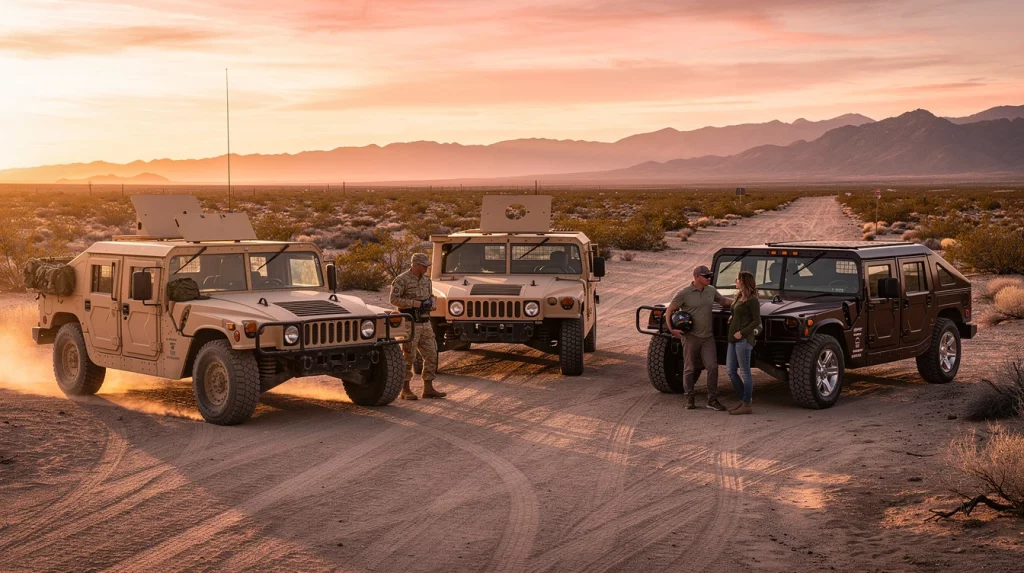
HMMWV stands for High Mobility Multipurpose Wheeled Vehicle. It’s a military designation, not a brand name. The U.S. Army adopted the HMMWV in 1984 to replace the old M151 jeep, and AM General Corporation won the contract to build it.
“Humvee” is simply a phonetic shortcut soldiers started using for HMMWV. It stuck. The Army never officially called it a Humvee, but the nickname became so widespread that even official communications started using it informally. Think of it the way people say “Kleenex” instead of “facial tissue.” Same thing, different level of formality.
Who Makes the HMMWV?
AM General, a defense contractor based in South Bend, Indiana, is the sole manufacturer of the HMMWV for the U.S. military. They’ve produced over 280,000 units since 1984 across dozens of body configurations, from cargo carriers to armored personnel variants.
The company has deep roots in military vehicle manufacturing, going back to the WWII-era Jeep program. The HMMWV was their most significant contract, and it defined the company’s identity for decades.
How Many HMMWV Variants Exist?
There are over 15 distinct body variants of the HMMWV, including the M998 (basic cargo/troop carrier), the M1025 (armament carrier), the M1045 (TOW missile carrier), and the M1097 (heavy variant). Each is optimized for a specific military mission but shares the same core platform: a 6.2-liter or later 6.5-liter diesel engine, a four-speed automatic transmission, and a full-time four-wheel drive system with independent suspension.
What Is the AM General HUMMER H1? The Civilian Spin-Off
After the Gulf War coverage made the HMMWV famous, AM General saw a commercial opportunity. In 1992, they started selling a civilian version under the name HUMMER, later branded as the H1. Arnold Schwarzenegger famously pushed AM General to build it for civilian sale after seeing the military vehicles during a film shoot.
undefinedThe civilian HUMMER H1 shares the same basic architecture as the HMMWV, including the portal axles, central tire inflation system, and wide stance, but it’s street-legal from the factory. It comes with creature comforts the military version never had: interior trim, air conditioning, a proper dashboard, and standard safety equipment required for civilian road use.
HUMMER H1 vs Military HMMWV: What’s Actually Different?
The differences are bigger than you’d expect from two vehicles that look nearly identical on the outside. The civilian H1 was built to meet federal motor vehicle safety standards. It has proper lighting, seatbelts, emissions controls (at least in later models), and a VIN that makes title and registration straightforward.
The military HMMWV has none of that from the factory. Surplus units sold through government auctions typically have no catalytic converter, may not have working brake lights or turn signals, and don’t carry a standard 17-digit VIN. Getting one titled and registered for street use requires a vehicle VIN inspection and often significant modification to meet your state’s requirements.
What Happened to the HUMMER Brand After AM General?
In 1999, AM General licensed the HUMMER brand name to General Motors. GM launched the H2 in 2002 and the H3 in 2005, both of which were very different vehicles built on GM truck platforms. The H2 was based on the Chevrolet Tahoe chassis. The H3 used a mid-size truck platform. Neither had the military-derived portal axles of the H1.
GM discontinued the HUMMER brand in 2010. GMC revived it in 2021 as an electric pickup truck under the GMC HUMMER EV nameplate, but that vehicle has no direct mechanical relationship to the original AM General product.
Quick-Reference Comparison: Humvee, HMMWV, H1, H2, and H3
| Name | Type | Manufacturer | Years | Street Legal? | VIN? |
|---|---|---|---|---|---|
| HMMWV (Humvee) | Military | AM General | 1984-present | Not from factory | Military serial only |
| HUMMER H1 | Civilian | AM General | 1992-2006 | Yes, factory-equipped | Standard 17-digit VIN |
| HUMMER H2 | Civilian | General Motors | 2002-2009 | Yes | Standard 17-digit VIN |
| HUMMER H3 | Civilian | General Motors | 2005-2010 | Yes | Standard 17-digit VIN |
| GMC HUMMER EV | Civilian Electric | General Motors | 2021-present | Yes | Standard 17-digit VIN |
Honestly, the naming confusion comes from the fact that two completely different companies produced vehicles under the HUMMER brand at different points in history. AM General built the “real” HUMMER. GM built the consumer versions that most people are more familiar with today.
Registering a Surplus Military HMMWV: What You Actually Need to Know
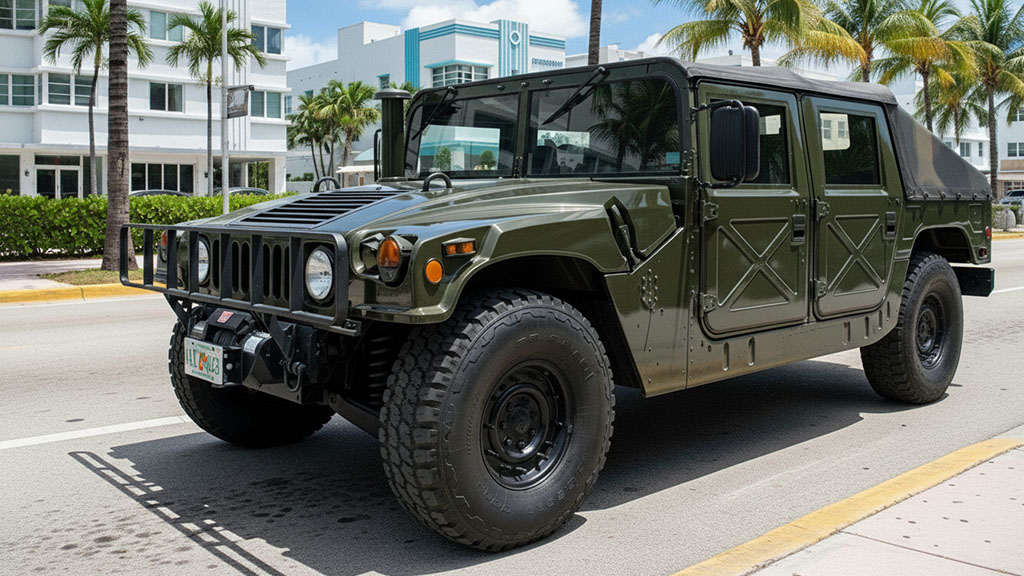
Buying a demilitarized HMMWV from a government auction site like GovPlanet is more common than ever. The price point is attractive, and the vehicles are mechanically proven. But getting one registered and on the road takes real work.
The core challenge: military vehicles don’t come with a standard title. They have military serial numbers, not civilian VINs. Before any state DMV will register one, you typically need to get a VIN assigned, which usually requires a vehicle VIN inspection by a state-authorized inspector. That post covers what inspectors look for and how to prepare.
Do You Need to Modify a HMMWV to Make It Street-Legal?
In most states, yes. Required modifications typically include working turn signals, brake lights, a horn, side mirrors, seatbelts, and sometimes a speedometer. Emissions requirements vary by state and vehicle age. Older pre-emission-era HMMWVs often get an exemption, but you should check your state’s specific rules.
Some states have pathways for registering military surplus vehicles as special equipment or off-highway vehicles with limited street use. Montana, for example, has relatively flexible registration rules, which is one reason many collectors look at Montana registration as an option for unusual vehicles.
What About Bonded Titles for HMMWVs?
If you’ve acquired a surplus HMMWV and can’t establish a clean ownership chain, a bonded title might be the path forward. A bonded title is essentially a surety bond that protects against future ownership claims while allowing the state to issue you a title. This guide to bonded titles explains when you need one and how the process works, which is particularly useful for military surplus buyers who often receive incomplete paperwork at auction.
For H1, H2, and H3 buyers, titling is much more straightforward since these vehicles have standard 17-digit VINs and were built for civilian sale. A standard DMV title transfer process applies in most cases.
Montana LLC Registration: Why Collectors Use It for HMMWVs and H1s
Montana has no sales tax. That’s the headline reason collectors registering expensive vehicles, including HUMMER H1s and even demilitarized HMMWVs, look at Montana LLC vehicle registration. On a vehicle priced at $60,000 or more, the sales tax savings in a high-tax state can easily exceed several thousand dollars.
Montana also doesn’t require emissions testing and has no vehicle inspections for registration. That matters a lot for surplus military vehicles that may not meet the emissions standards of California, Colorado, or other strict states.
How Montana LLC Registration Works for Unusual Vehicles
You form an LLC in Montana (we handle that), the LLC purchases and registers the vehicle in Montana, and you drive the vehicle wherever you live. The vehicle carries Montana plates. You pay no sales tax at the time of purchase. Montana LLC vehicle registration is explained in detail here, including who it works best for and what the annual costs look like.
This approach is particularly popular for HUMMER H1 buyers, classic car collectors, and anyone bringing in a high-value vehicle where state sales tax would be a significant expense. You can also read about the hidden perks of a Montana license plate for a broader look at what this registration path offers.
What About Vehicles With No Title or Incomplete Paperwork?
Military surplus vehicles often come with incomplete paperwork. If a seller never properly transferred ownership, that creates a title chain problem. Buying a car without a title carries real risks, and the same applies to HMMWVs bought at auction. Knowing what you’re getting into before you bid is critical.
For reference, title issues like title jumping (where ownership transfers happen without proper documentation) can create serious problems for future registration. Understanding what title jumping is and the penalties involved helps explain why clean paperwork matters even on a military surplus purchase.
Military vehicle title issues are more common than most buyers expect, especially with older surplus HMMWVs that may have incomplete ownership records or auction paperwork. Before moving forward with a purchase, it’s important to understand how title gaps can affect registration.
Take a look at the review below from a military Humvee owner who struggled with repeated DMV issues before successfully getting their vehicle titled and registered through Dirt Legal.

Frequently Asked Questions About Humvees, HMMWVs, and AM General HUMMERs
Is a Humvee the same as a HMMWV?
Yes, “Humvee” is the informal nickname for the HMMWV (High Mobility Multipurpose Wheeled Vehicle). Soldiers coined the term as a phonetic shorthand. The two words describe exactly the same vehicle. Neither term is a brand name, HMMWV is a military designation and Humvee is slang that became universal. The manufacturer is AM General, but they did not trademark the term “Humvee” for commercial use.
Is the AM General HUMMER H1 street-legal from the factory?
Yes. The civilian HUMMER H1, produced by AM General from 1992 to 2006, was built to meet federal motor vehicle safety standards and is street-legal from the factory. It carries a standard 17-digit VIN and can be titled and registered like any other passenger vehicle. Emissions compliance depends on the model year and your state. California, for example, has stricter standards that affect some older H1s. Most other states have no issue registering H1s without modification.
Can you drive a surplus military HMMWV on public roads?
In many states, yes, but it typically requires modifications and a VIN assignment first. Military HMMWVs are not street-legal from the factory. You’ll need working lighting, seatbelts, mirrors, and other equipment required by your state. Many buyers register them as off-highway vehicles or antique/special equipment with limited street use. Montana and South Dakota are among the more registration-friendly states for unusual vehicles. Check your state’s DMV requirements before you buy.
What’s the difference between the H1, H2, and H3?
The H1 was built by AM General and shares its platform with the military HMMWV. It has portal axles, a central tire inflation system, and serious off-road capability. The H2 and H3 were built by General Motors on standard GM truck platforms and have no mechanical connection to the military HMMWV. The H2 used a Tahoe chassis. The H3 used a mid-size truck frame. They look similar on the outside but are fundamentally different vehicles underneath. Off-road enthusiasts generally consider the H1 far more capable than either the H2 or H3.
How do I get a title for a military surplus HMMWV?
The process varies by state, but generally you’ll need a VIN inspection to get a state-assigned VIN, proof of purchase (typically your auction receipt or bill of sale), and documentation that the vehicle has been demilitarized. Some states issue a bonded title when the ownership chain is incomplete. Others have specific programs for military surplus vehicles. Working with a registration service that handles complex title situations can save significant time. Montana and South Dakota tend to have more accessible processes for these vehicles than many other states.
Why do some HUMMER H1 owners register in Montana?
Montana has no sales tax, no emissions testing, and no vehicle inspections for registration. On a high-value H1, the savings on sales tax alone can be substantial. Buyers typically form a Montana LLC, have the LLC purchase the vehicle, and register it in Montana. The vehicle carries Montana plates regardless of where the owner lives. This is a completely compliant approach when done correctly, and it’s particularly popular among collectors buying expensive or unusual vehicles. See the full breakdown of Montana plate benefits for more detail.
What is the towing capacity and payload of a civilian HUMMER H1?
The HUMMER H1 has a towing capacity of approximately 8,300 pounds and a payload of around 2,200 pounds, depending on the configuration and model year. Its 6.5-liter turbodiesel engine (in later models) produces around 195 horsepower and 430 lb-ft of torque, figures that prioritize low-end pulling power over outright speed. Top speed is typically limited to around 70 mph. The vehicle’s real strength is its approach angle, ground clearance (16 inches), and the portal axle design that keeps the drivetrain high above obstacles.
Are there any classic car registration benefits for older HMMWVs or H1s?
Yes, in some states. Vehicles over 25 years old often Eligible for antique or historic vehicle registration, which typically comes with lower fees and fewer requirements. A 1992 HUMMER H1 is now eligible for that status in many states. Military HMMWVs from the 1980s and early 1990s may also Eligible. Antique registration often restricts the vehicle to limited street use (parades, shows, occasional driving), so it’s worth checking your state’s specific rules. The 11-year rule and Montana LLCs for collectors is worth reading if you’re registering an older or collectible vehicle.
The Bottom Line on Humvees, HMMWVs, and AM General HUMMERs
Here’s the short version: HMMWV is the military designation, Humvee is the nickname everyone uses, and the AM General HUMMER H1 is the civilian version built on the same platform. The H2 and H3 are GM-built consumer trucks that borrowed the name. They’re very different vehicles underneath.
If you’re buying any of these and want to get it properly titled and registered, especially a surplus military HMMWV with incomplete paperwork, the process can get complicated fast. That’s where we come in. Dirt Legal handles the DMV paperwork so you don’t have to, including out-of-state registrations, Montana LLC setups, and title recovery for vehicles with unusual ownership histories.
For anyone buying a high-value H1 or dealing with a surplus HMMWV title situation, registering your vehicle through a Montana LLC is worth a serious look. No sales tax, no emissions testing, and a process that actually works for unusual vehicles. See how the process works and get started today.