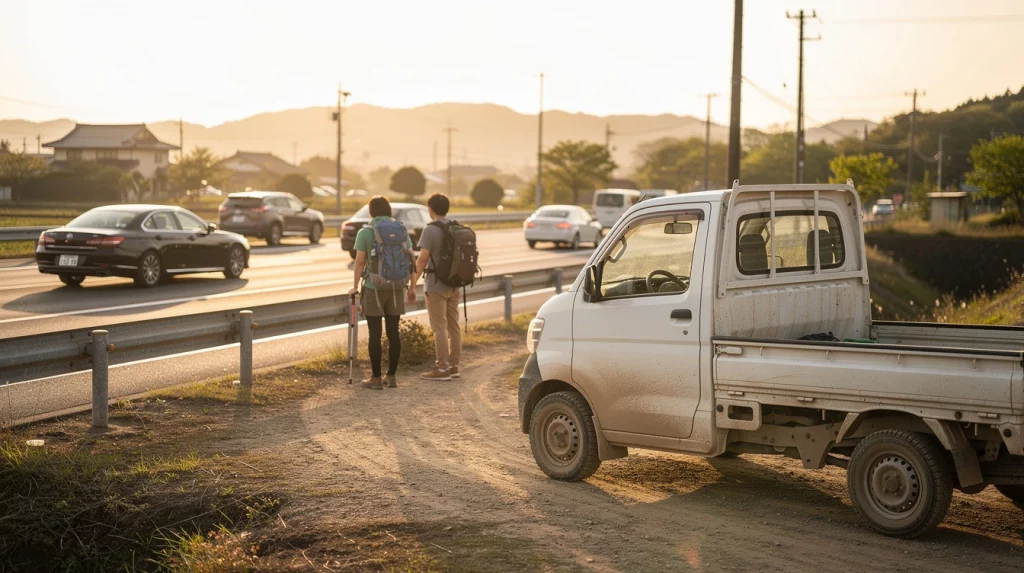
Japanese mini trucks are difficult to register for public-road use in many parts of the United States, and the answer comes down to federal safety standards, not the trucks themselves. Kei trucks, as they’re commonly called, are purpose-built workhorses that are wildly popular in Japan. But when they land on American soil, they run into a wall of federal and state regulations that most owners aren’t prepared for.
This guide breaks down exactly why these vehicles face restrictions, what federal law actually says, which states allow them under certain conditions, and what your real options are if you already own one or plan to buy one. You won’t need a law degree to follow along.
Honestly, the situation is more workable than most people think. It just requires knowing the right path.
What Federal Law Says About Japanese Mini Trucks on Public Streets
The core issue is the 25-year import rule enforced by the National Highway Traffic Safety Administration (NHTSA). Under federal law, any foreign-market vehicle less than 25 years old must meet Federal Motor Vehicle Safety Standards (FMVSS) before it can be driven on public roads. Most kei trucks coming into the US right now were built in the late 1990s through the 2010s, which means many still fall under that restriction.
Japanese domestic market vehicles, including kei trucks, were never engineered to meet American crash standards, bumper height requirements, or emissions rules. They weren’t designed for sale here, so manufacturers had zero reason to build them to FMVSS specs. That gap is the root of the problem.
The NHTSA 25-Year Rule, Explained
A vehicle manufactured 25 years ago or more is considered a collector or antique vehicle under federal rules. At that age, NHTSA exempts it from current safety standards because modifying decades-old vehicles to meet modern specs is considered impractical. So a 1999 kei truck becomes federally eligible in 2024. A 2005 model won’t clear that bar until 2030.
You can check a vehicle’s compliance status using the NHTSA VIN Lookup tool, which is the official federal decoder for recalls and vehicle identification data. For a deeper look at how VIN data affects your registration options, see our guide on How to Spot a Fake Vehicle VIN Check, which covers what a proper vehicle inspection report should include.
EPA Emissions Standards Add Another Layer
Even if a kei truck clears the NHTSA age threshold, the Environmental Protection Agency has its own import requirements. Vehicles must meet emissions standards for the model year they were produced. Most Japanese mini trucks were tuned for Japan’s JC08 test cycle, not the EPA’s standards. Bringing them into full compliance requires certified modifications that can cost more than the truck itself.
State-Level Restrictions on Japanese Mini Trucks
Federal rules set the floor, but states build their own walls on top. Even if a kei truck somehow cleared federal requirements, individual state DMVs can still refuse to title or register it for highway use. Most states require vehicles to meet all FMVSS standards before issuing a road-use title, which loops right back to the federal problem.
undefinedSome states have taken a harder line than others. California, for example, has some of the strictest vehicle import and emissions standards in the country. Getting a kei truck titled for street use in California is extremely difficult under current rules. For more on how California handles non-standard vehicles, our guide to making a UTV street-legal in California gives a solid picture of how the state approaches off-road or foreign-spec vehicles.
States Where Kei Trucks Have More Flexibility
A handful of states allow kei trucks on public roads under specific conditions, typically limited to low-speed roadways or under agricultural use exemptions. States like Montana, South Dakota, and several rural Midwest states have historically been more permissive about titling older or non-standard vehicles. Montana, in particular, has a well-known reputation for flexible vehicle registration rules.
If you’re looking at vehicle registration laws and car registration requirements by state, that resource lays out how dramatically the rules can vary depending on where you live.
Agricultural and Off-Highway Exemptions
Many states allow kei trucks to operate on private property, farm roads, or designated off-highway vehicle areas without any street-use title. This is probably the most common way owners use them in the US right now. They’re genuinely excellent farm and utility vehicles, and plenty of owners are completely happy keeping them off public roads. The title situation gets complicated only when someone wants to cross a public street or drive between properties.
Ready to register your vehicle?
Join thousands of vehicle owners who use Dirt Legal to handle their registration quickly and hassle-free.
Register Your Vehicle Today → →How the 25-Year Rule Creates a Registration Path
Here’s where things get more interesting. As each year passes, more kei trucks age out of the NHTSA restriction. A truck built in 1999 is already eligible. Those built in 2000 became eligible in 2025. Owners who bought a truck a few years ago thinking it was stuck in a gray zone may now actually have a clear path to a title.
The first step is confirming your truck’s model year and build date. The NHTSA exemption is based on manufacture date, not import date. Once you confirm the truck is 25 years old or older, the federal barrier drops and you move to the state-level question, which is where a service like Dirt Legal becomes useful.
Montana LLC Registration for Imported Vehicles
Montana is one of the most accessible states for registering non-standard vehicles, including older kei trucks that meet the age threshold. Montana charges no sales tax, has no emissions testing requirement, and doesn’t require a physical inspection in most cases. Owners who register through a Montana LLC vehicle registration can title and register their vehicle under the LLC, which is a fully recognized approach for imported and non-standard vehicles.
The Montana LLC vehicle registration explained resource from our sister brand Ride Legal covers why this approach works, who it’s right for, and what the process actually looks like from start to finish.
South Dakota as an Alternative Path
South Dakota is another state that tends to be straightforward about titling vehicles that might face bureaucratic headaches elsewhere. The South Dakota Division of Motor Vehicles handles registrations with relatively low fees and minimal red tape around non-standard vehicles. If Montana doesn’t fit your situation, South Dakota is worth a close look.

The JDM Import Picture: Kei Trucks Are Not Alone
Kei trucks are part of a broader category of Japanese domestic market (JDM) imports that face similar challenges in the US. The same 25-year rule applies to the Honda Beat, the Acura NSX Type R, and dozens of other vehicles never officially sold in the American market. Kei trucks just happen to be among the most popular because of their utility.
Our in-depth article on Japanese Domestic Market Vehicles and JDM imports in the US market covers the full import landscape, including which models are currently eligible and which are still waiting out the clock. If you’re a JDM enthusiast, that’s required reading.
There’s also a broader conversation happening around kei vehicles globally. Our news piece on whether Japan’s kei cars could address Europe’s EV challenges gives useful context on how other markets are treating these vehicles, which often contrasts sharply with the American approach.
Title Jumping and Import Paperwork Risks
One thing to watch for when buying a used kei truck in the US: title jumping. Some trucks have been resold multiple times without proper DMV title transfers at each step. That creates a chain-of-ownership problem that can make it very difficult to get a clean title later. If you’ve purchased a vehicle where the title situation is murky, understanding how to buy a car without a title in the United States explains your options for clearing the chain and getting proper documentation.
For vehicles where the original title is genuinely lost or unavailable, a bonded title may be the solution. The bonded title explainer from Ride Legal walks through what a bonded title is, when you need one, and how to get one in your state.
Your Options as a Kei Truck Owner: A Practical Comparison
| Situation | Federal Status | Likely Path | Street-Legal Possibility |
|---|---|---|---|
| Truck is under 25 years old | NHTSA restricted | Off-highway / farm use only | No (without conformance modifications) |
| Truck is 25+ years old | Federally eligible | Title in a permissive state | Yes, in most states |
| Truck has no US title | Depends on age | Bonded title or bill of sale process | Possible with proper documentation |
| Want Montana registration | Age-dependent | Montana LLC formation + registration | Yes, if federally eligible |
| Agricultural/off-road use only | Not applicable | No street title needed | Not applicable |
Frequently Asked Questions About Japanese Mini Trucks and Street Use
Are Japanese mini trucks street-legal in the US?
Not all of them. The restriction is primarily based on age. Kei trucks that are 25 years old or older are no longer subject to the federal NHTSA import ban and can typically be titled and registered for road use in states that permit it. Trucks under 25 years old face significant federal barriers because they weren’t built to meet American safety standards. The short version: check the manufacture date before assuming your truck is permanently off-limits.
Can I register a kei truck in Montana even if my home state won’t title it?
Montana has flexible registration rules and no sales tax, emissions testing, or mandatory physical inspection for most vehicles. If your kei truck is 25 years old or older, registering it through a Montana LLC is a legitimate path that many owners use. You don’t have to live in Montana to own a Montana-registered vehicle through an LLC structure. Dirt Legal handles the paperwork side of this process on your behalf, so you don’t have to work through Montana DMV forms on your own.
What is the 25-year rule for importing vehicles?
The 25-year rule is a federal exemption that allows vehicles manufactured 25 or more years ago to enter the US without meeting current Federal Motor Vehicle Safety Standards. NHTSA created this exemption because retrofitting old vehicles to modern safety specs is considered impractical. The rule applies to all foreign-market vehicles, not just Japanese ones. Once a vehicle hits that age threshold, the path to a US title becomes much cleaner, although state-level rules still apply.
What happens if I drive an improperly registered kei truck on public streets?
Driving a federally restricted or improperly titled vehicle on public roads can result in fines, impoundment, and in serious cases, vehicle seizure by customs or federal authorities if the import was done improperly.
Beyond the risk, there are insurance implications too. An unregistered vehicle isn’t covered by most standard auto policies, which creates real financial exposure.
Can I get a bill of sale for a kei truck with no title?
A bill of sale documents the transfer of ownership but doesn’t replace a title. For a kei truck that was never formally titled in the US, a bill of sale is often the starting point for pursuing a bonded title or a title through a permissive state’s process. Some states will accept a proper bill of sale plus supporting documentation to issue an original title on a vehicle. The process varies significantly by state, which is why working with a service that knows the system saves a lot of time.
Do I need a VIN inspection for a kei truck registration?
Many states require a vehicle VIN inspection as part of the title and registration process, particularly for imported or non-standard vehicles. A VIN inspection confirms the vehicle identification number matches what’s on the title documents and that the vehicle isn’t reported stolen. For older kei trucks, the VIN format may look different from what American inspectors are used to, so it helps to have your documentation in order before showing up. Our resource on vehicle registration laws and requirements covers how VIN inspections work across different state systems.
Are there any states where kei trucks can be driven on any public road?
Once a kei truck is 25 years old and properly titled, it can typically be driven on public roads in most states just like any other registered vehicle. The restrictions are primarily about the federal import age rule and proper titling, not a permanent ban on the trucks themselves. Some states may limit certain low-speed vehicles to roads under a specific speed limit, but a properly imported and titled kei truck generally doesn’t fall into that low-speed vehicle category once it clears the NHTSA threshold.
What’s the difference between a kei truck and a standard JDM import?
Kei trucks are a specific class of Japanese mini trucks, typically under 660cc engine displacement, built to Japan’s “kei” vehicle regulations. They face the same 25-year NHTSA import rule as other JDM vehicles but are more commonly used in agricultural or utility roles in the US. Standard JDM imports like sports cars or sedans go through the same federal process but are more likely to be sought for street use. Both categories benefit from the same registration strategies once the age threshold is met. Our full overview of Japanese Domestic Market vehicles and JDM imports covers both categories in detail.
The Bottom Line on Japanese Mini Trucks and Street-Legality
Japanese mini trucks are not universally banned from public road use. The restriction is tied to federal age rules and proper titling, both of which have clear solutions. If your truck is 25 years old or older, you have a real path to registration. If it’s younger, your best options are off-highway or agricultural use until it clears the threshold. Montana LLC registration, South Dakota titling, and bonded title processes are all legitimate tools for owners who want to get their kei truck properly documented. Dirt Legal handles the complex paperwork side of vehicle registration so you don’t have to deal with the DMV yourself. Check out the facts about Dirt Legal’s services if you want a plain-language look at what we actually do and how the process works.