
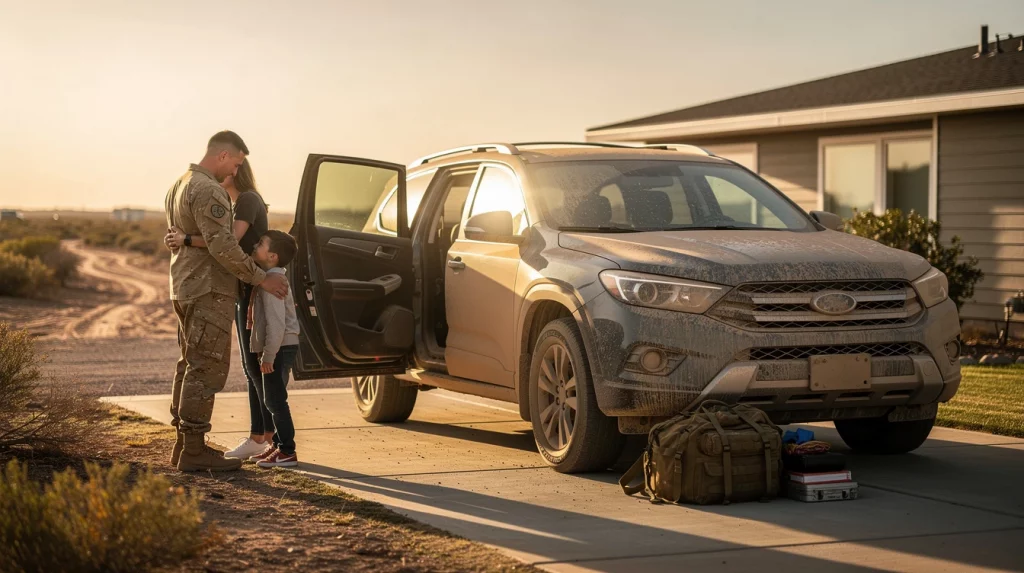
Canceling car insurance during deployment sounds like a smart way to save money when your vehicle is sitting in a garage for months. The logic seems obvious: no driving, no risk, no reason to pay. But that thinking can set you up for serious financial problems when you return stateside, and the savings rarely justify the exposure. This article breaks down exactly why keeping your coverage active matters, what your real options are, and how military-specific protections can actually work in your favor.
If you also need to sort out your vehicle registration before you ship out, we have helped thousands of people get that handled quickly and without the headache.
The Real Cost of Canceling Car Insurance During Deployment
The premium savings feel tangible. The risks are not obvious until they hit. Here is what most people do not think about when they cancel coverage before deployment.
A Coverage Gap Follows You Home
Insurance companies track continuous coverage. When you come back and try to reinstate or start a new policy, a gap on your record signals higher risk to insurers. Even a few months without coverage can push you into a higher premium bracket. In many states, insurers are permitted to charge significantly more to drivers who show any lapse in coverage history. The money you saved monthly may be wiped out in the first year of higher premiums after returning.
You can read a solid breakdown of how different coverage types work and why continuous coverage matters in De-coding Car Insurance: Explanation of Car Insurance Coverages and What You Need to Know. It covers the terminology clearly if any of this is new territory.
Your Registration May Be at Risk
Most states require proof of insurance to maintain valid registration. If your policy lapses while you are deployed, your state’s DMV may flag your registration as non-compliant. Some states will actually suspend your registration automatically once they receive a cancellation notice from your insurer. Returning to a suspended registration means fees, reinstatement paperwork, and potentially having to re-register your vehicle before you can drive it again.
For a broader look at how registration laws vary by state and what happens when things fall out of compliance, see Navigating Vehicle Registration Laws and Car Registration Requirements.
Your Vehicle Is Still Exposed to Risk
A parked car is not a zero-risk asset. Fire, theft, flood, vandalism, falling trees, hail, and garage collapses are all real scenarios that happen to vehicles that never move. Without comprehensive coverage, any one of those events leaves you with zero recourse. A vehicle worth $15,000 to $30,000 sitting in storage is not protected just because it is not being driven.
What the Servicemembers Civil Relief Act Actually Covers
The Servicemembers Civil Relief Act, commonly called SCRA, gives active-duty service members real financial protections. But people often misunderstand what it does and does not cover when it comes to car insurance during deployment.
Ready to register your vehicle?
Join thousands of vehicle owners who use Dirt Legal to handle their registration quickly and hassle-free.

SCRA Caps on Interest Rates and Contracts
The SCRA does cap interest rates at 6% on pre-service debts and gives service members the right to terminate certain contracts, including residential leases and cell phone agreements, without penalty. However, it does not eliminate insurance requirements or automatically suspend your registration obligations. The protections are financial, not blanket exemptions from state law requirements.
You can review the official details of SCRA protections through the Consumer Financial Protection Bureau’s service member resources, or check directly with your installation’s professional assistance office.
Canceling vs. Suspending: There Is a Difference
Some insurers will allow you to suspend certain coverages rather than cancel entirely. A suspension, sometimes called a policy lay-up or storage option, removes liability coverage while keeping comprehensive coverage active. This protects your vehicle from non-driving risks like theft or weather damage while reducing your monthly cost significantly. Critically, some insurers do not count a suspension the same way they count a full cancellation when assessing your coverage history. Calling your insurer before deployment to ask specifically about military suspension options is a step most people skip.
State-Level Military Exemptions Vary Widely
A small number of states have specific provisions allowing service members to maintain registration without active insurance during documented deployment periods. These are exceptions, not the rule, and they typically require documentation and advance filing. Without that paperwork, your state will treat your lapse the same way it treats any other driver’s lapse.
Smarter Alternatives to Canceling Your Coverage
You do not have to choose between paying full rates or canceling entirely. There are real middle-ground options that protect you financially while reducing what you spend while deployed.
Reduce Coverage Instead of Canceling
If your vehicle is going into secure storage, talk to your insurer about dropping liability and collision while keeping comprehensive only. Comprehensive covers theft, weather, fire, and other non-collision damage. Monthly costs for comprehensive-only coverage are often a fraction of a full-coverage premium. You stay protected, your coverage history stays intact, and you avoid the DMV complications that come from a full lapse.
Storage Insurance Is a Real Product
Several major insurers offer storage-specific vehicle policies designed for vehicles that will not be driven for extended periods. These are worth pricing out before deployment. They typically cost significantly less than standard policies, often $10 to $30 per month depending on vehicle value and location, and they maintain your coverage continuity record. Some specialty insurers also offer military-specific storage rates.
Check for Military Discounts Before Changing Anything
Before you make any changes to your policy, ask your insurer directly whether they offer military deployment discounts or rate adjustments. GEICO, USAA, Progressive, and several other carriers have specific military rate categories. USAA in particular was built specifically for military families and their policies reflect that. You may already be eligible for a lower rate that you have never been told about. A single phone call before deployment could cut your costs without touching your coverage status at all.
Vehicle Registration and Car Insurance During Deployment: What to Handle Before You Leave
If you have a vehicle that needs to stay current on registration while you are gone, you need a plan in place before you ship out. Letting registration lapse creates a second layer of problems on top of any insurance complications.
Consider Whether a Montana LLC Registration Makes Sense
Some service members with higher-value vehicles, RVs, or specialty vehicles choose to register their vehicle through a Montana LLC for the long-term advantages it offers. Montana charges no sales tax on vehicles, requires no emissions testing, and has no inspections. For someone who moves frequently between duty stations, a stable Montana registration can actually simplify vehicle ownership considerably. You can read more about how the hidden perks of a Montana license plate work in practice, particularly for people whose residence situation changes frequently.
Make Sure Your Stored Vehicle Is Actually Accessible
Whether a vehicle sits with family, at a storage facility, or on base, confirm that whoever holds the keys has access to any documents needed for renewal or emergencies. Keep copies of your title, registration, and insurance declarations page in a location accessible to your emergency contact. Problems that seem small when you are stateside become complicated when you are 8,000 miles away and cannot get to a notary.
What Happens If You Come Back to a Lapsed Policy
If you have already canceled or are returning from a deployment where coverage lapsed, here is what the path back looks like.
Expect Higher Initial Premiums
Any gap over 30 days is typically flagged by insurers as a lapse. Depending on the length of the gap and your state, you may see rate increases of 10% to 35% over what you paid before. This typically normalizes after 12 to 24 months of continuous coverage, but it is real money in the meantime. Shopping multiple insurers when reinstating after a gap can help, as different companies weigh coverage history differently.
Address Registration Before You Drive
Before you drive your vehicle after returning, verify that registration is still valid and that your state has not flagged the registration as suspended due to the insurance lapse. Driving on a suspended registration carries penalties in most states that far exceed whatever you saved on premiums. In many states, it also creates an SR-22 requirement, which means you will need to file a certificate of financial responsibility with your DMV and carry it for a defined period, typically three years.
Document Your Deployment Period
Keep your deployment orders and any military documentation ready when you approach insurers or your state DMV. Some states and some insurers will treat a military deployment lapse differently from a civilian lapse. You cannot count on this, but having the documentation available gives you a starting point for negotiation or appeals if you run into complications.
| Option | Monthly Cost | Coverage Gap? | Registration Risk? | Recommended? |
|---|---|---|---|---|
| Cancel policy entirely | $0 | Yes | High | No |
| Suspend to comprehensive only | Low ($10, $30/mo typically) | No | Low (varies by state) | Yes |
| Storage insurance policy | Low ($10, $30/mo typically) | No | Low | Yes |
| Military discount rate | Reduced | No | None | Yes |
| Keep full coverage unchanged | Standard rate | No | None | Depends on budget |

Frequently Asked Questions About Car Insurance During Deployment
Can I keep my car registered without insurance during deployment?
In most states, no. State registration requirements are tied to insurance requirements, and a lapse in insurance can trigger an automatic registration suspension. A small number of states have military-specific exemptions, but these require advance documentation and filing. Never assume the exemption applies automatically. Contact your state DMV before deployment to understand exactly what is required. The South Dakota Division of Motor Vehicles is one example of a state agency that outlines its specific requirements clearly for service members.
Does SCRA protect me from insurance consequences during deployment?
The Servicemembers Civil Relief Act protects against some financial obligations and gives you the right to terminate certain contracts. It does not override your state’s insurance requirements for vehicle registration, and it does not prevent insurers from treating a policy cancellation as a coverage gap in your history. SCRA is a useful protection but not a shield against all insurance-related consequences. Talk to your installation’s regulation assistance office to understand exactly which protections apply to your situation before making changes to your policy.
Will canceling my car insurance during deployment raise my rates when I get back?
In most cases, yes. Insurers view any gap over 30 days as a lapse and typically charge higher rates to drivers with coverage gaps, regardless of the reason. The increase varies by insurer and state but can range from 10% to over 30% on your post-deployment premium. The savings you see while deployed are often smaller than the premium increase you absorb over the following 12 to 24 months. Shopping around aggressively when reinstating coverage after a gap is the best way to limit this impact.
What is the cheapest way to keep my car insured while I am deployed and not driving?
The two most cost-effective options are suspending your policy to comprehensive-only coverage and switching to a storage-specific policy. Both typically cost between $10 and $30 per month depending on your vehicle’s value and your insurer. Comprehensive-only keeps your vehicle protected against theft, weather, and fire without liability or collision coverage. Some insurers also offer specific military deployment rate reductions. Call your current insurer, explain your deployment timeline, and ask explicitly about these options. Do not assume they will proactively offer them.
Can I put my car in storage and cancel insurance if it is fully paid off?
You are not required by a lender to carry collision or comprehensive if you own the vehicle outright, but your state may still require minimum liability coverage to maintain valid registration. And even if your state does not catch it immediately, a full cancellation creates a coverage gap in your history that follows you. The smarter approach for a paid-off vehicle is comprehensive-only or storage coverage. You are protected against real risks to the vehicle itself, your coverage history stays clean, and your costs drop substantially.
Are there resources specifically for military service members managing vehicle registration?
Yes. Your installation’s regulation assistance office is a good first stop for guidance on SCRA rights and state-specific exemptions. For registration itself, services like Dirt Legal have helped service members, veterans, and civilians sort out registration across a wide range of situations. The process started because we simply wanted to register our own vehicles and there was not a clear way to do it. Ten years and thousands of customers later, we handle far more than dirt bikes, including cars, trucks, RVs, and specialty vehicles. If you are heading out and need registration handled reliably, that is exactly what we do.
The Bottom Line on Car Insurance During Deployment
Canceling car insurance during deployment feels like a practical cost-cutting move but it almost always costs more than it saves. Between coverage gaps that raise your future premiums, state registration complications, and the very real physical risks to a stored vehicle, the financial logic does not hold up under scrutiny. The better path is a low-cost comprehensive or storage policy, a military discount inquiry, or a policy suspension that preserves your coverage history without the full premium. And before you ship out, make sure your vehicle’s registration is squared away too. That is one less thing to deal with when you get home.
For service members who want a cleaner, more flexible registration arrangement, Montana registration offers some advantages worth understanding, particularly if your duty stations change frequently or if you own a higher-value vehicle. And if any of this raised questions about your registration status or title situation, the Dirt Legal team is ready to help you get it sorted.