Ever looked at your dirt bike and thought, “I wish I could ride this to town?” You’re not alone. Thousands of riders love the idea of taking their dirt bikes from the trails to public roads—but quickly discover it takes more than adding a headlight.
The reality is that preparing a dirt bike for road use involves both equipment upgrades and proper paperwork. The good news? Once you understand the steps involved, the process becomes much more manageable.
This guide walks you through what most states require and how riders typically handle the registration process.
Watch the Quick Overview
Before diving deeper, check out this short video where we summarize the process.
What Does It Take to Make a Dirt Bike Road-Ready?
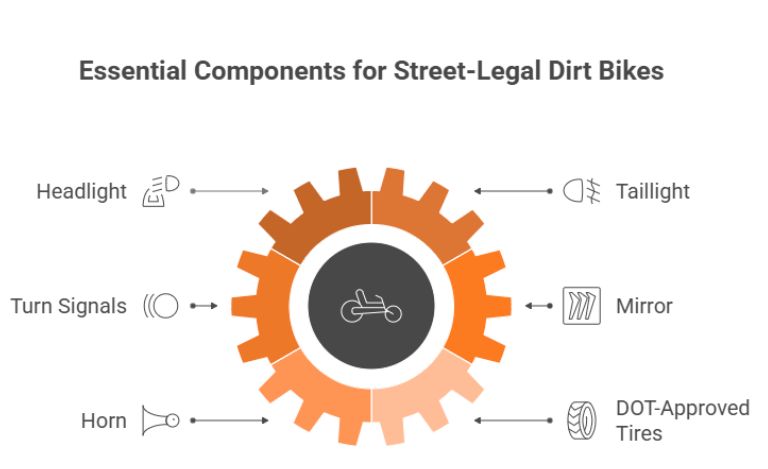
Most states require motorcycles used on public roads to have certain safety equipment installed. While requirements vary slightly, the core components usually include:
Headlight (high and low beam)
Taillight with brake light function
Turn signals
At least one mirror
Working horn
DOT-approved tires
These components help ensure your bike is visible, safe to operate in traffic, and compliant with state vehicle standards.
Many dirt bikes were originally designed for off-road riding, which means they may not have the electrical capacity to power additional equipment. Riders often upgrade their charging system or stator so lights and signals operate reliably.
The Part Most Riders Struggle With: Paperwork
Once the equipment is installed, the next step is titling and registration. For many riders, this is where things become complicated.
Different states have different documentation requirements, inspections, and processes. Missing paperwork or unclear vehicle history can sometimes create delays.
This is where services like Dirt Legal can help simplify the process. Instead of navigating forms, state rules, and documentation requirements alone, Dirt Legal assists riders with the paperwork needed to properly register their vehicles.
The goal is simple: make complex vehicle paperwork hassle-free so riders can focus on enjoying their bikes.
Why Many Riders Use Dirt Legal
Riders often choose professional assistance because it helps avoid common issues such as:
Confusing DMV requirements
Missing or incorrect paperwork
Delays caused by rejected applications
Uncertainty about state regulations
By working with a service experienced in vehicle registration, many riders find the process easier to complete correctly the first time.
Ready to Ride?
Once your dirt bike has the proper equipment and the paperwork is completed, you can enjoy the flexibility of riding beyond the trails.
If you’re interested in learning more about the mechanical upgrades required, take a look at our full guide:
Here’s How To Easily Make Any Dirt Bike Street Legal
That article breaks down the parts, electrical upgrades, and equipment many riders install when preparing a dirt bike for public roads.
Quick Recap
To prepare a dirt bike for road use, most riders follow three main steps:
Install required safety equipment (headlight, taillight, signals, mirror, etc.)
Upgrade the electrical system if necessary
Complete the title and registration process
With the right information—and the right help when needed—the process can be much smoother than many riders expect.
Preparing a dirt bike for public roads involves more than installing parts—it also requires the right paperwork. Dirt Legal helps riders navigate title and registration requirements so the process stays simple and hassle-free.