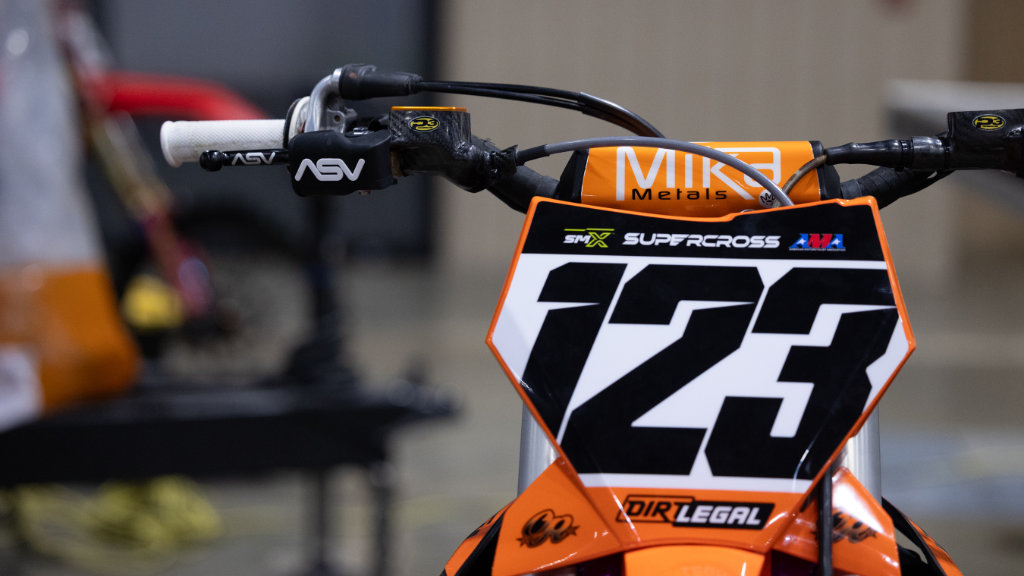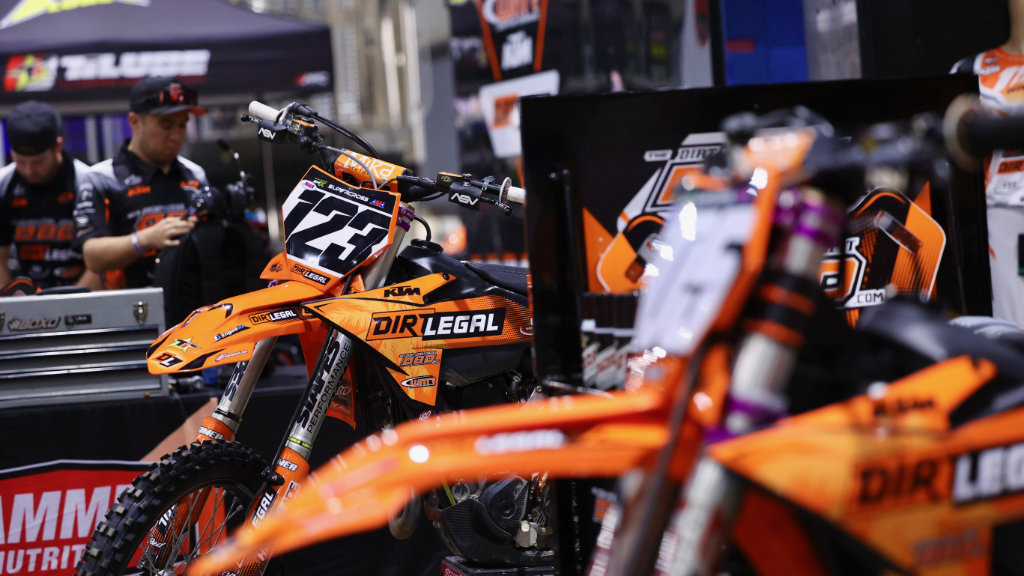
Off-Road Use: Registration Requirements
In New Jersey, dirt bikes are classified as Off-Road Vehicles (ORVs) and must be registered before they can be operated in permitted off-road areas.
Registration Process
All ORVs, including dirt bikes, must be registered with the New Jersey Motor Vehicle Commission (MVC).
Registration typically requires:
-
Proof of ownership, such as a Manufacturer’s Certificate of Origin (MCO)
-
A notarized bill of sale
-
Payment of the required registration fee
Registered ORVs must display the assigned registration number on both sides of the vehicle.
Insurance Requirements
Liability insurance is required for registered ORVs operating in approved riding areas.
Age Restrictions
Operators must be at least 14 years old to operate a dirt bike off-road in New Jersey.
Riders under the age of 18 must complete an approved safety course before operating an ORV.
Operational Restrictions
Dirt bikes may only be operated:
-
On private property with the owner’s permission, or
-
In designated off-road riding areas
Operation of dirt bikes is prohibited in New Jersey State Parks.
Public Road Use: Converting a Dirt Bike for Road Registration
Registering a dirt bike for public road use in New Jersey can be difficult due to strict vehicle eligibility requirements.
Many dirt bikes are manufactured exclusively for off-road riding and may not be eligible for motorcycle registration within the state.
Because the process can involve multiple agencies and complex paperwork, riders should carefully review the requirements before attempting a conversion.
Eligibility
Dirt bikes originally designed for off-road use are often not eligible for motorcycle registration in New Jersey.
Some riders explore registration options through other states before attempting road registration, though requirements vary and should be carefully reviewed.
Required Equipment
If a dirt bike meets eligibility requirements for motorcycle registration, it must typically include:
-
DOT-approved headlight with high and low beams
-
Taillight with brake light function
-
Front and rear turn signals
-
Rearview mirrors (at least one, typically two)
-
Horn audible from at least 200 feet
-
Speedometer and odometer
-
DOT-approved street tires
-
Muffler that meets state noise standards
Inspection and Documentation
To complete motorcycle registration, the bike may need:
-
A Vehicle Identification Number (VIN) inspection
-
Proof of ownership (such as an MCO or previous title)
-
A completed Application for Certificate of Title
These documents must be submitted to the New Jersey MVC for review.
Registration
If the vehicle is approved, it can be registered as a motorcycle and issued a license plate through the New Jersey Motor Vehicle Commission.
Insurance
Motorcycles operated on public roads in New Jersey must carry liability insurance.
Where You Can Ride
Off-Road
Private Property
Riding is permitted with the landowner’s consent.
Designated Riding Areas
ORV riding is allowed only in areas where off-road vehicles are specifically permitted. Riders should check local rules before riding.
On Public Roads
Dirt bikes may only be operated on public roads if they have been successfully converted, registered as motorcycles, and insured.
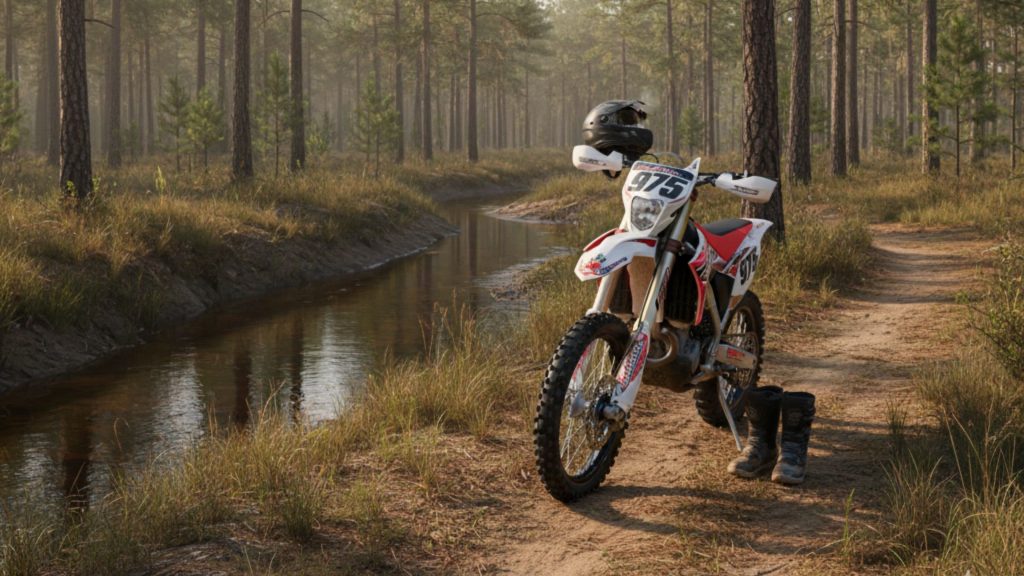
Parked dirt bike on a sandy trail beside a calm stream in the New Jersey Pine Barrens.
Rider Requirements
License
Operating a motorcycle on public roads in New Jersey requires a valid driver’s license with a motorcycle endorsement.
Helmet Use
All riders and passengers must wear a U.S. Department of Transportation–approved helmet.
Eye Protection
If the motorcycle does not have a windshield, riders must wear protective glasses, goggles, or a face shield.
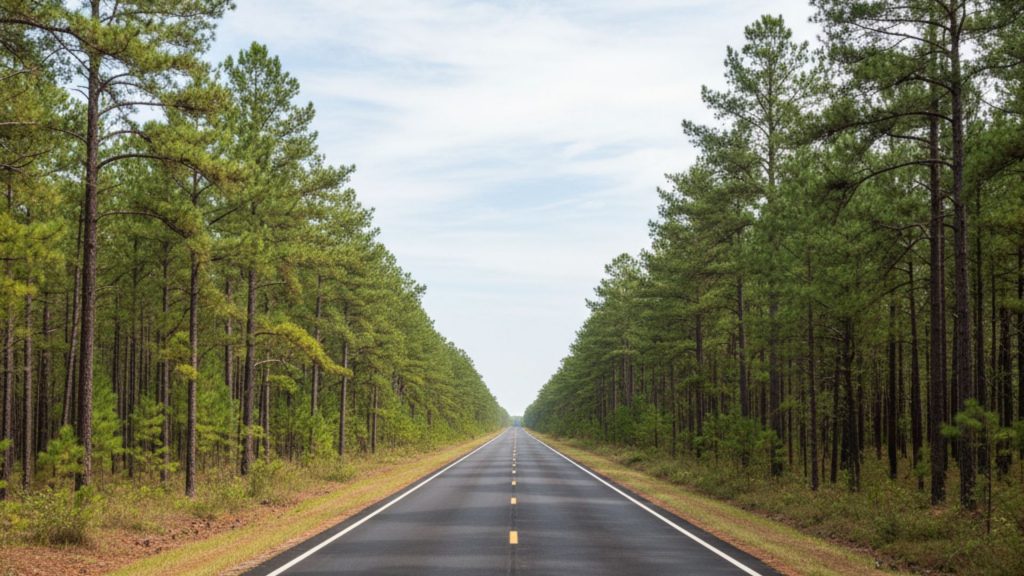
Straight rural road cutting through dense pine forest in the New Jersey Pine Barrens.
Penalties for Non-Compliance
Failure to follow New Jersey dirt bike requirements may result in:
Fines
Monetary penalties for unregistered or improperly equipped vehicles.
Vehicle Impoundment
Unauthorized vehicles may be seized by law enforcement.
License Suspension
Operating without proper licensing or insurance can result in suspension of driving privileges.
Relevant New Jersey Laws and Agencies
- New Jersey Motor Vehicle Commission (MVC): Handles vehicle titling, registration, and licensing. nj.gov/mvc
- New Jersey Statutes Title 39: Outlines motor vehicle laws, including those pertaining to dirt bikes and off-road vehicles. findlaw.com
- Local Law Enforcement Agencies: For information on local ordinances and enforcement.