Off-Road Use: Registration Requirements
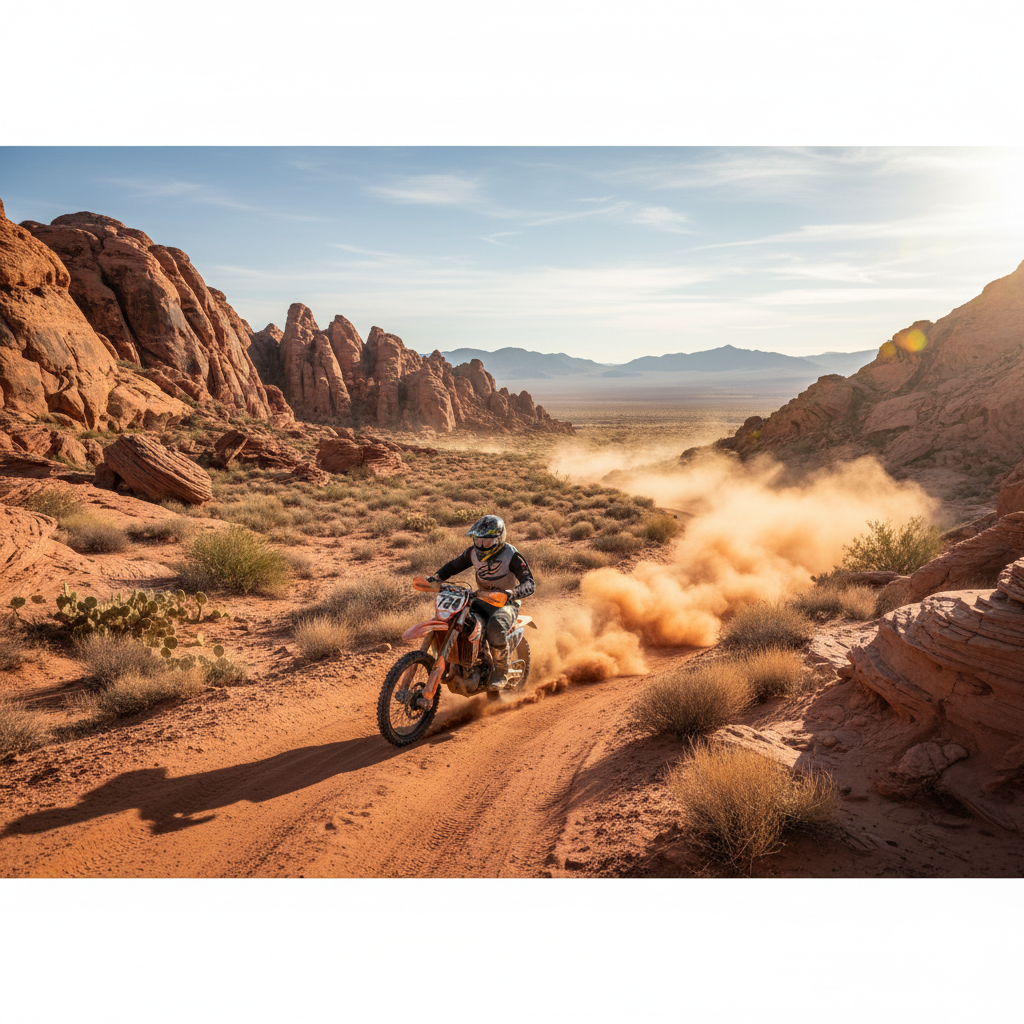
In Nevada, dirt bikes are classified as Off-Highway Vehicles (OHVs) when used off-road. To operate on public lands, your OHV must be registered.
- Registration Process:
- All OHVs over 70cc and manufactured in 1976 or later must be registered and display a registration decal to operate legally in Nevada.
- Registration applications are accepted and decals are issued by mail only.
- The annual registration fee is $20.
- A Vehicle Identification Number (VIN) inspection must be completed by a licensed Nevada OHV dealer or a sworn law enforcement officer.
- If the OHV was purchased on or after July 1, 2012, a certificate of title is required.
- All OHVs over 70cc and manufactured in 1976 or later must be registered and display a registration decal to operate legally in Nevada.
- Titling Requirements:
- Owners of OHVs purchased on or after July 1, 2012, are required to obtain a certificate of title.
- Proof of ownership must be provided through an ownership document or affidavit.
- Owners of OHVs purchased on or after July 1, 2012, are required to obtain a certificate of title.
Street Use: Converting a Dirt Bike to Street-Legal
Converting a dirt bike for street use in Nevada is possible by meeting specific equipment and registration requirements.
- Eligibility:
- The dirt bike must be a two-wheeled motorcycle not originally equipped or certified for use on public roads.
- The bike must have a seat designed to be straddled by the operator and handlebar-type steering control.
- The bike must not be an all-terrain vehicle, dune buggy, snowmobile, trimobile, moped, electric bicycle, pocket bike, side-by-side, utility vehicle, or grey market vehicle.
- The dirt bike must be a two-wheeled motorcycle not originally equipped or certified for use on public roads.
- Required Equipment:
- DOT-approved headlight (does not need to be high/low beam).
- Taillight with brake light function.
- Front and rear turn signals.
- Rearview mirrors on both the left and right sides of the handlebars with a diameter of 3 inches.
- Horn audible from at least 200 feet.
- Rear reflector.
- DOT-approved tires.
- Muffler to comply with noise regulations.
- DOT-approved headlight (does not need to be high/low beam).
- Inspection and Documentation:
- Complete Form VP-254, available from the Nevada DMV.
- Have the dirt bike inspected by a Nevada licensed motorcycle dealer or registered motorcycle repair shop qualified to certify that the converted off-highway two-wheeled motorcycle is mechanically safe to operate on public roads.
- The dealer or repair shop will complete Part I of Form VP-254 upon successful inspection.
- Complete Form VP-254, available from the Nevada DMV.
- Registration:
- Submit the completed Form VP-254, proof of ownership, and any other required documents to the Nevada DMV to obtain a certificate of title and registration for street use.
- Submit the completed Form VP-254, proof of ownership, and any other required documents to the Nevada DMV to obtain a certificate of title and registration for street use.
- Insurance:
- Secure liability insurance for the dirt bike as required for all street-legal vehicles in Nevada.
Where You Can Ride
Off-Road:
- Private Property: Riding is permitted with the landowner’s consent.
- Public Lands: Riding is allowed on designated trails and areas where OHV use is permitted. Ensure your OHV is registered and displays the appropriate decal.
On-Road:
- Permitted Roads: Operation of dirt bikes on public roads is allowed only if the bike has been converted to meet street-legal requirements and is properly registered and insured.
- Local Ordinances: Some cities, like Mesquite, allow OHVs to operate on public streets, roads, or highways if they comply with operator and equipment requirements.

Rider Requirements
- License: A valid driver’s license with a motorcycle endorsement is required to operate a street-legal dirt bike on public roads.
- Helmet Use: All riders and passengers are required by state law to wear a helmet that meets U.S. Department of Transportation standards.
- Eye Protection: If the motorcycle is not equipped with a transparent windscreen, riders must wear protective glasses, goggles, or a face shield.
Penalties for Non-Compliance
Failure to adhere to Nevada’s dirt bike laws can result in:
- Fines: Monetary penalties for unregistered or improperly equipped vehicles.
- Impoundment: Unauthorized vehicles may be impounded by law enforcement.
- License Suspension: Operating without a valid license or insurance can lead to suspension of driving privileges.
Relevant Nevada Laws and Agencies
- Nevada Department of Motor Vehicles (DMV): Handles vehicle titling, registration, and licensing. dmv.nv.gov
- Nevada Commission on Off-Highway Vehicles: Manages OHV registration and regulations. ohv.nv.gov
- Nevada Revised Statutes Chapter 490: Outlines laws pertaining to off-highway vehicles.