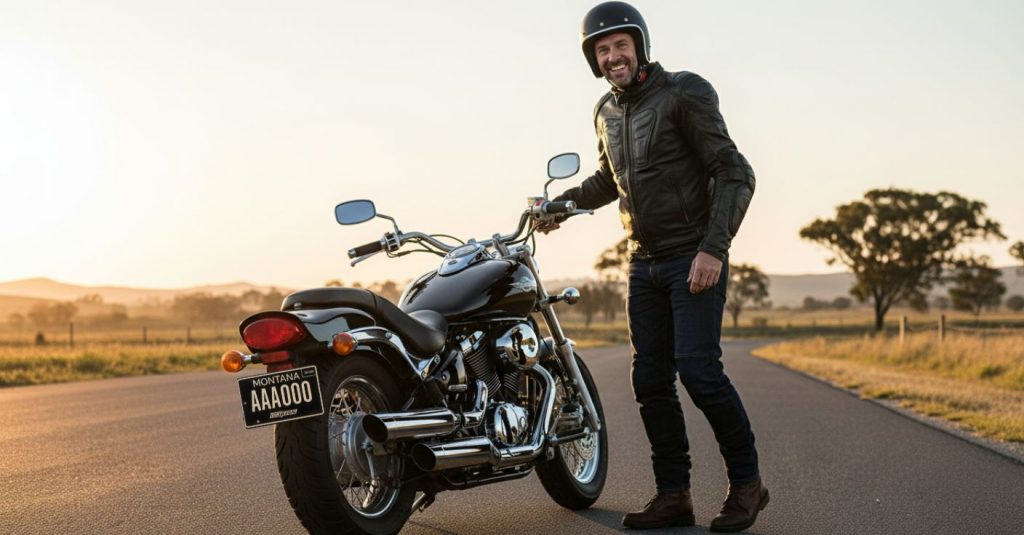
A motorcycle without a title is like a passport without a stamp—it leaves you stranded, unable to prove where you’ve been or where you’re allowed to go. The title is more than just a piece of paper; it’s the official proof that you own your bike. Without it, selling, registering, or even insuring your motorcycle can become a bureaucratic nightmare.
While the exact process to secure a title varies by state, most riders face a similar set of steps. You’ll need to establish ownership, clear the bike’s history, and meet your DMV’s specific requirements.
This guide will walk you through the standard process for getting a motorcycle title, highlight special cases such as lost or missing titles, and point you toward reliable resources—including Dirt Legal—that can make the job easier.
Why You Need a Motorcycle Title
A title isn’t just paperwork—it’s the essential backbone of motorcycle ownership. Here’s why it matters:
- It’s a requirement. A title proves ownership and is necessary to register your bike with the state. Without it, you can’t ride on public roads.
- It protects your investment. Whether you plan to sell, trade, or finance your motorcycle, a valid title is non-negotiable. Buyers and lenders won’t touch a bike without one.
- It prevents disputes. A title helps guard against fraud and theft, showing a clear line of ownership. Without it, you could face costly battles—or worse, lose your motorcycle.
If all of that sounds like a headache, professional services like Dirt Legal exist to simplify the process, ensuring you never get stuck in red tape.
How to Get a Motorcycle Title Step by Step
Securing a motorcycle title isn’t as intimidating as it sounds—if you know what to expect. While the specifics differ from state to state, most riders follow the same general path.
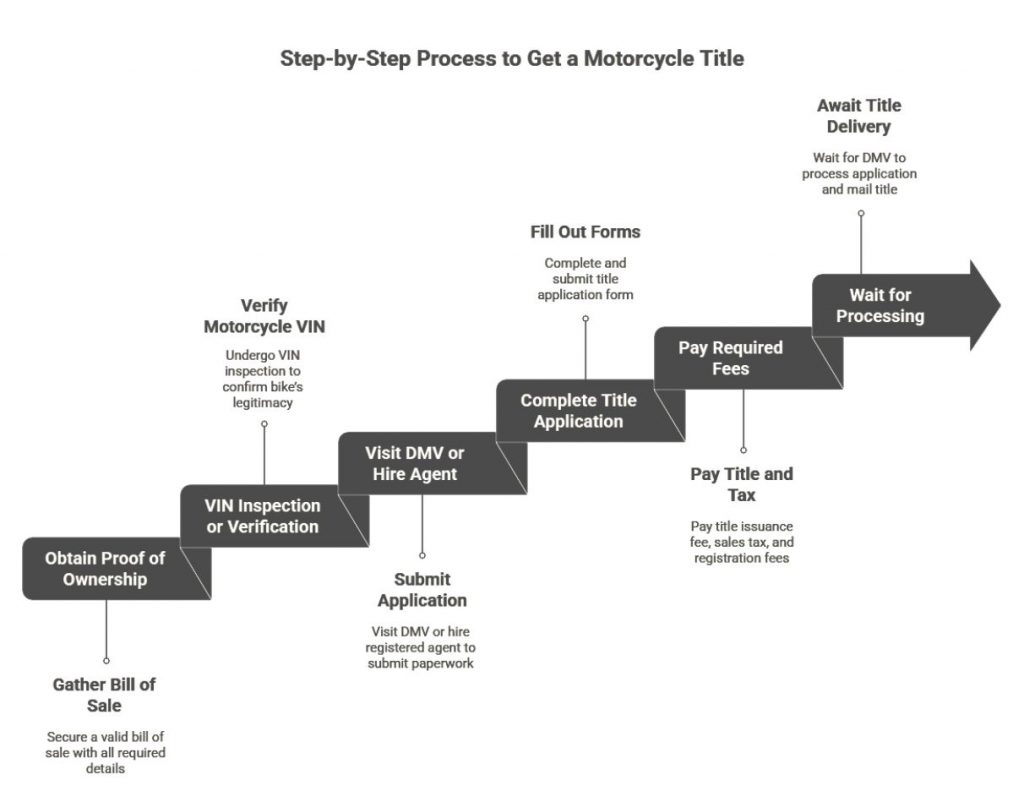
Step 1: Obtain Proof of Ownership
The foundation of the titling process is proving that you actually own the motorcycle. A bill of sale is the most common document used. To be valid, it should include:
- Full names of the buyer and seller
- A detailed description of the motorcycle
- The VIN (Vehicle Identification Number)
- Purchase price
- Date of sale
- Signatures from both parties
If you’re missing paperwork, Dirt Legal can help you reconstruct ownership records and get everything in order.
Step 2: VIN Inspection or Verification
Next, many states require a VIN inspection. This ensures the bike hasn’t been stolen, tampered with, or previously deemed salvage. It’s especially important if:
- The motorcycle has never had a title
- The bike is being brought in from another state
- Ownership history is unclear
Dirt Legal can coordinate VIN verification for you, saving you the hassle of scheduling with the DMV or law enforcement.
Step 3: Hire a Registered Agent or Visit the DMV
With your ownership proof in hand, it’s time to head to your local DMV or title office. Bring:
- Your bill of sale
- A valid driver’s license or ID
- Proof of insurance
- The odometer reading (if the motorcycle is less than 10 years old)
Some states may ask for extra documents depending on the situation, so always check the requirements before you go.
If navigating the DMV sounds overwhelming, services like Dirt Legal can streamline the process for you. Instead of waiting in lines or risking paperwork errors, Dirt Legal handles the forms, ensures compliance with state rules, and manages the back-and-forth with the DMV on your behalf—saving you both time and frustration.
Step 4: Complete the Title Application
At the DMV, you’ll be asked to fill out a title application form. This may be straightforward paperwork or, in some states, it may also require notarization—especially if the sale was private.
Dirt Legal takes care of this step for you, making sure every detail is accurate and compliant.
Step 5: Pay Required Fees
Titles aren’t free. You’ll need to pay:
- A title issuance fee (varies by state)
- Sales tax on the motorcycle purchase
- Possibly registration fees, if you plan to get on the road right away
Step 6: Wait for Processing
Once you’ve submitted the documents and fees, the DMV will process your application. In most states, the new title will arrive by mail within a few weeks. During peak times, it may take longer—patience is part of the process.

Special Cases: No Title or Lost Title
Not every motorcycle comes with a clean, straightforward paper trail. If your bike’s title is lost, missing, or nonexistent, there are still several ways to resolve the situation and establish ownership.
If you’re currently dealing with missing paperwork or a lost title, you may also find it helpful to read our detailed guide on: How To Replace a Lost Motorcycle Title.
It explains how riders can recover ownership documents—even in cases where a bill of sale or previous title is missing.
Not every motorcycle comes with a clean, straightforward paper trail. If your bike’s title is lost, missing, or nonexistent, here are your options:
Duplicate Title
If the seller lost the original title, the easiest fix is for them to request a duplicate from their DMV before selling the bike. This ensures the ownership trail is clear and avoids complications for you as the buyer.
Bonded Title
When a duplicate isn’t possible, many states allow riders to apply for a bonded title. This involves:
- Purchasing a surety bond based on the motorcycle’s value
- Using that bond as a guarantee in case someone else later claims ownership
A bonded title may take extra paperwork, but it’s often the cleanest solution when ownership documents are incomplete.
Using a Title Service
For riders who want to skip the red tape, professional services can take over. Companies like Dirt Legal specialize in recovering lost or missing titles. They handle DMV paperwork, coordinate VIN verification, and streamline the process so you don’t have to wrestle with bureaucracy yourself.
The benefit? Less stress, less guesswork, and a recognized title in your hands.
Tips for a Smooth Motorcycle Titling Process
Getting a title doesn’t have to feel like an uphill battle. A little preparation can save you from long DMV lines and frustrating delays:
- Always check your state’s DMV website. Requirements can shift overnight. What worked last year may not apply today, so confirm you’re following the most up-to-date rules.
- Expect extra steps for out-of-state motorcycles. VIN inspections, additional forms, and proof of emissions compliance (in some states) are common hurdles. Plan for more time if you’re bringing your bike across state lines.
- Don’t confuse a title with registration or insurance. Owning a motorcycle title proves ownership, but it doesn’t automatically grant you the right to ride. You’ll still need active registration and insurance before hitting the road.
Other Frequently Asked Questions about Motorcycle Titling
Why would a motorcycle not have a title?
There are several reasons. Older motorcycles may have been sold before titles were required in that state. In other cases, the title could have been lost, misplaced, or damaged. Sometimes, sellers don’t transfer titles properly, leaving gaps in ownership paperwork.
How do I get a title if I only have a bill of sale?
If a bill of sale is all you have, the process depends on your state. Many states will require you to apply for a bonded title, which involves purchasing a surety bond equal to a percentage of your motorcycle’s value. This provides proof of ownership when the original title is unavailable.
How to get a lost motorcycle title in Florida?
In Florida, the current owner can request a duplicate title through the Department of Highway Safety and Motor Vehicles (DHSMV). The application can usually be completed online, by mail, or in person. If you purchased a motorcycle without a title, the seller should apply for the duplicate before transferring ownership to you.
How hard is it to get a title for a motorcycle in Florida?
The difficulty depends on your situation. If the previous owner has the title or can request a duplicate, the process is straightforward. If the bike never had a Florida title or comes from another state without paperwork, you may need to go through a bonded title process, which requires extra steps and verification.
Can I register and ride my motorcycle with only a bill of sale?
No. A bill of sale proves the transaction, but it isn’t a substitute for a title. You must obtain a title before you can register the motorcycle and get plates. Registration and insurance both require a valid title.
Get It Right the First Time with Dirt Legal
At the end of the day, a motorcycle title is far more than just paperwork—it’s your proof of ownership, your protection against fraud, and your ticket to ride and resell your bike. Without it, you’re left vulnerable to hassles and financial setbacks.
By following the steps outlined here—securing proof of ownership, completing your VIN inspection, and working with the DMV—you’ll have everything in place to get your title. For more complex cases like lost or missing titles, bonded titles, or out-of-state transfers, remember that you don’t have to tackle the process alone.
If you run into roadblocks, professional services like Dirt Legal can step in to handle the process, ensuring you get a clean, compliant title without the stress.