What Riders Often Get Wrong
There is no shortage of confusion around dirt bike titling and registration.
Some riders assume a bike must have come from the factory with a title. Others think adding a headlight and taillight is enough to ride on public roads. In reality, most dirt bikes can be converted for road use, but the process usually involves much more than a few cosmetic upgrades.
Preparing a dirt bike for public-road riding generally means meeting equipment standards, addressing electrical system limitations, and following your state’s registration and inspection requirements.
That’s where many riders get stuck.
What It Usually Takes
Depending on the state and the bike, common requirements may include:
headlight with high and low beam
tail light with brake light function
mirrors
horn
DOT-approved tires
license plate mount and light
turn signals in some states
battery or charging system upgrades
inspection and registration paperwork
The exact list depends on where the bike will be registered, so checking state-specific requirements is essential before buying parts.
If you want a deeper look at how the process works and what makes the experience different, explore our full guide on Why Choose Dirt Legal for Vehicle Registration. It explains how the platform simplifies paperwork, handles documentation, and helps drivers avoid common registration delays.
Core Equipment for Road Use
Dirt Bike Public-Road Use Checklist
| Component | Common Requirement | Notes |
|---|---|---|
| Headlight | Usually required | High and low beam commonly needed; LED reduces power draw. |
| Tail Light / Brake Light | Usually required | May also include plate light and turn signals in one unit. |
| Mirrors | At least one in many states | Some states require two mirrors. |
| Turn Signals | Varies by state | Some states allow hand signals instead. |
| Horn | Usually required | Electric horn is the simplest option. |
| DOT Tires | Usually required | Off-road-only tires may not be acceptable for pavement use. |
| License Plate Mount | Required for road use | Check state rules for placement and lighting. |
| Battery | Sometimes required | Helpful for stable lighting and accessories. |
| Stator Upgrade | Depends on bike setup | Often needed for bikes with low factory electrical output. |
| Inspection | Varies by state | Some states require safety or equipment inspections before registration. |
| Title / Registration Paperwork | Required | Rules vary depending on the state and vehicle history. |
Headlight
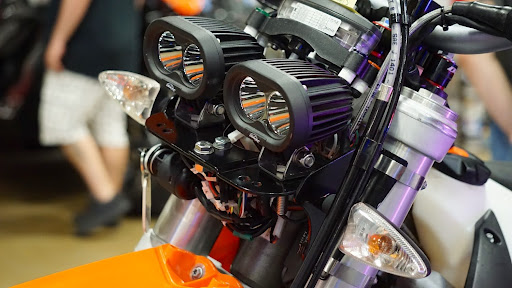
Most states require a DOT-compliant headlight with both high and low beam. It must be visible without blinding other drivers and usually must remain on during operation.
LED headlights are a popular option because they place less strain on the bike’s electrical system than halogen bulbs.
Tail Light and Brake Light
A functioning tail light helps other drivers see the bike, and the brake light signals when the rider is slowing down.
Many tail light setups can cover several needs at once, including:
tail light
brake light
turn signals
plate illumination
Some states also require the light to remain on for a period of time even when the engine is not running, which may make a battery setup necessary.
Mirrors
Most states require at least one mirror, while others require two.
Mirrors are a basic safety feature and should offer a stable, usable view behind the bike. Low-profile mirrors may look better, but visibility matters more than appearance once the bike is used in traffic.
Turn Signals
Not every state requires turn signals, but they are still a smart upgrade.
They improve visibility, make communication with drivers easier, and let the rider keep both hands on the bars while turning. LED signals are especially helpful because they use less power.
Tires
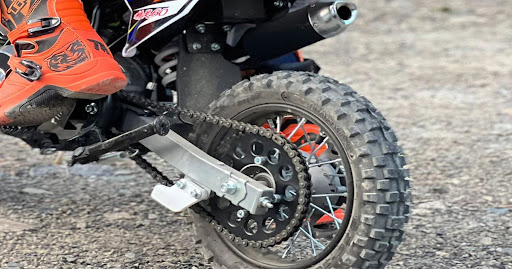
For public-road use, the bike will generally need DOT-approved tires.
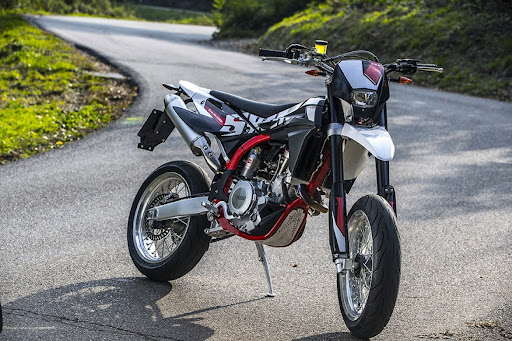
Off-road-only tires are not designed for sustained pavement use and may wear quickly or perform poorly at highway speeds. Many riders also choose to convert their dirt bikes into supermoto builds with 17-inch wheels and road-focused tires.
Horn
A working horn is commonly required.
Because some states are specific about horn type, the simplest route is usually to install a basic electric horn. They are inexpensive and easy for most charging systems to support.
License Plate Mount
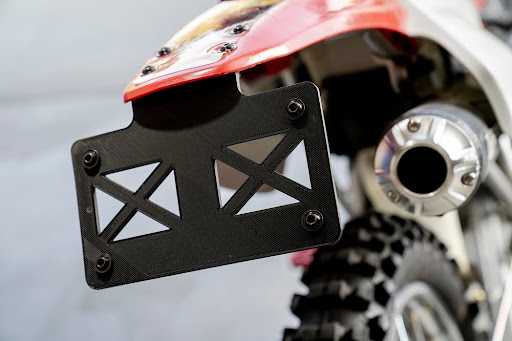
Any bike used on public roads will need a visible and properly mounted license plate.
Some states are very specific about placement, lighting, and visibility, so it is worth checking those rules before finalizing the setup.
Do Not Overlook the Charging System
One of the most common mistakes in dirt bike conversions is ignoring the electrical system.
Many dirt bikes were built for off-road riding only, which means they may not have enough electrical output to support added lighting and accessories. To reliably power road-use equipment, riders may need to upgrade three key components:
Stator
The stator generates electricity. Bikes with minimal factory electronics often have low-output stators, which may not support added equipment.
Regulator/Rectifier
This converts AC power from the stator into DC power that lights and accessories can use while also regulating voltage.
Battery
A battery is not always required, but it improves consistency, prevents dim lighting at idle, and supports accessories more reliably.
If the bike will be ridden regularly on public roads, a proper charging setup is usually worth the investment.
Helpful Optional Upgrades
Some upgrades may not be strictly required in every state, but they can make the bike safer and more practical.
Odometer or Digital Display
Useful for speed, mileage, RPM, and trip tracking.
Kickstand
A simple convenience that becomes much more important once the bike is used around town.
Street-Oriented Gearing
Changing sprockets can improve road performance depending on how the bike will be ridden.
Cooling Fan
Helpful for bikes that will spend time idling in traffic.
Cush Drive Hub
Can reduce drivetrain shock and may help protect the transmission during long-term pavement use.
Before You Start Buying Parts
Before purchasing equipment, riders should confirm:
whether the bike can be titled in their state
which inspection steps apply
whether turn signals are required
whether a battery is necessary
how the plate must be mounted
whether DOT tires are mandatory
whether emissions or safety inspections apply
This step can save a lot of wasted money and rework.
Final Takeaway
Converting a dirt bike for public-road use is possible in many cases, but it requires more than a headlight and a title. Riders need to think through equipment, power requirements, inspections, and state paperwork before getting started.
For owners dealing with title issues, registration paperwork, or state-specific requirements, Dirt Legal helps riders navigate the process and handle the documentation involved.