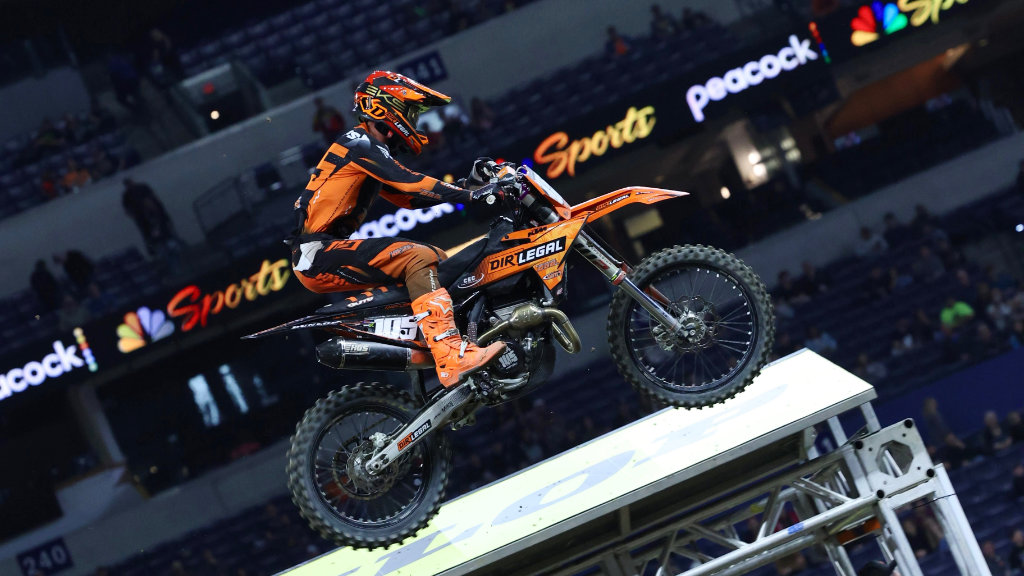
A dual-sport motorcycle that is titled and registered for public road use typically only requires motorcycle registration. Even though it can operate off-road, a properly registered road-ready dirt bike usually does not need separate ATV or OHV registration in most states, according to the American Motorcyclist Association.
Dual-Sport Motorcycle Requirements
Dual-sport motorcycles are built to operate both on trails and public roads. Because they meet federal and state equipment standards for motorcycles, they are usually classified and registered as motorcycles rather than ATVs or recreational vehicles.
To qualify for road registration, these bikes typically include:
Headlights and taillights
Turn signals
Mirrors
DOT-approved tires
Emissions compliance equipment
These requirements are based on federal motor vehicle safety standards outlined by the National Highway Traffic Safety Administration (NHTSA) Laws & Regulations.
Can You Ride a 49cc Dirt Bike Without a License or Registration?
Despite their small engine size, 49cc dirt bikes are not always exempt from registration and licensing requirements.
Most states classify these vehicles as mopeds or motor-driven cycles, which may require:
A valid driver’s license
Vehicle registration
Insurance in some states
In many jurisdictions, a 49cc bike operated on public roads is treated like any other small motor vehicle. Riders should check their state motor vehicle agency requirements to confirm what documentation is required.
For general state-by-state DMV guidance, see USA.gov state motor vehicle services directory
Does California Require Registration for Off-Road Dirt Bikes and ATVs?
California uses a dual registration system for motorcycles and off-highway vehicles.
Road-ready motorcycles require standard motorcycle registration and a license plate through the California DMV vehicle registration portal (https://www.dmv.ca.gov/portal/vehicle-registration/).
Off-road motorcycles and ATVs require a Green Sticker or Red Sticker issued through the California State Parks OHV program (https://ohv.parks.ca.gov).
If a dirt bike is already registered as a motorcycle for road use, it typically does not require an OHV sticker. However, off-road-only bikes must have the appropriate off-highway registration to be used on designated public lands and trail systems.
ATV Registration Requirements
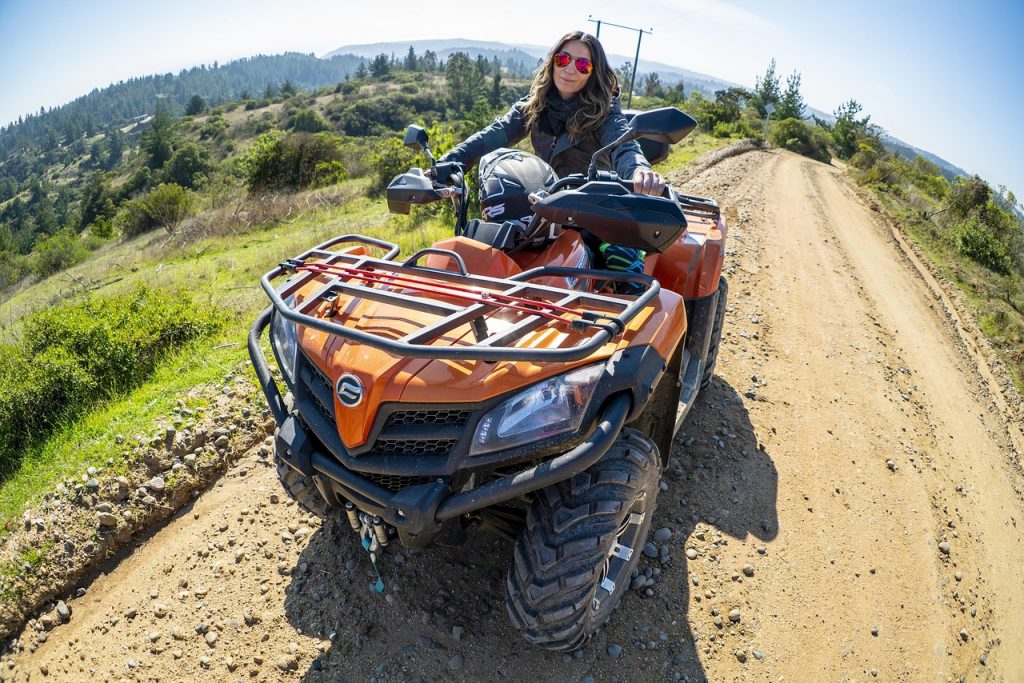
Four-wheelers (ATVs) are generally classified as off-road vehicles. Most states require OHV registration or a state-issued off-road decal to operate them on trails or designated riding areas.
If someone wants to operate a four-wheeler on public roads, the vehicle usually must:
Meet safety equipment requirements
Be titled and insured
Be registered through the state motor vehicle agency
The exact process varies by state and can involve multiple steps and complex paperwork. State-by-state government resources can be found through USA.gov motor vehicle services (https://www.usa.gov/motor-vehicle-services).
UTVs: Off-Road Capability With Road Potential
Utility Terrain Vehicles (UTVs) are among the most versatile off-road vehicles available. Many models seat two to four passengers, while some larger versions can carry six riders.
These vehicles are known for their durability, large cargo capacity, and protective roll cages. Because of these features, UTVs are widely used for recreation, agriculture, and land management.
With the proper equipment upgrades and registration process, some UTVs may become eligible for operation on certain public roads depending on state rules. Federal safety regulation context is provided by the NHTSA Laws & Regulations page (https://www.nhtsa.gov/laws-regulations).
Can You Ride an ATV Around Your Neighborhood?
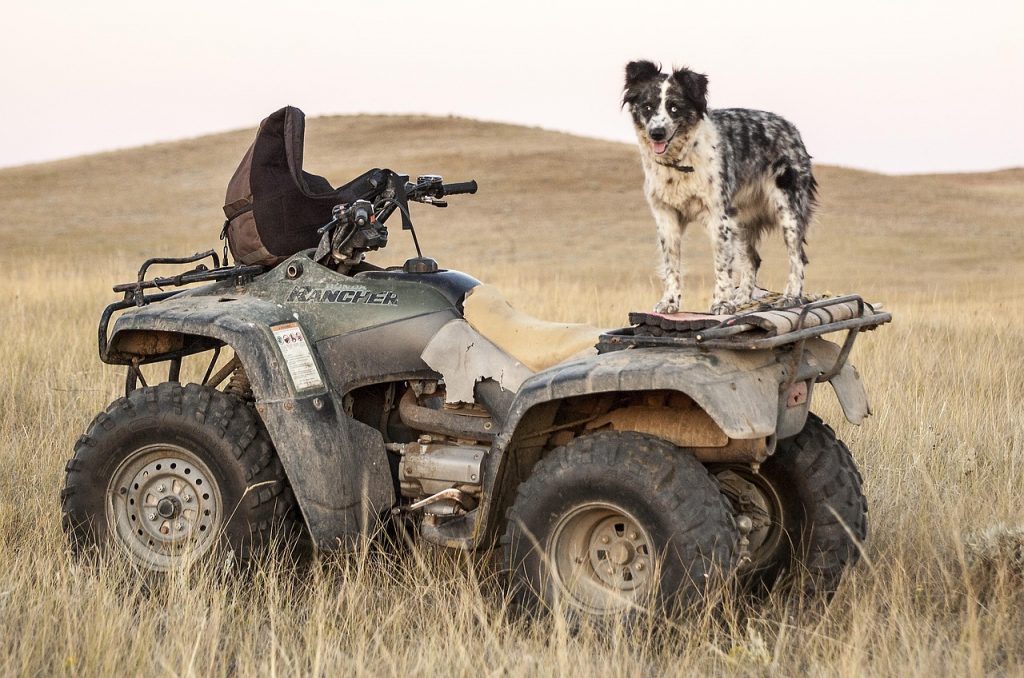
In most areas, riding an ATV on residential streets or public roads is not permitted unless the vehicle has been converted and registered for road operation.
Even if a rider follows traffic signals or uses proper hand signals, the vehicle must still meet equipment, registration, and insurance requirements before it can be used on public roads.
Many jurisdictions treat ATVs as off-road vehicles that are restricted to:
Private property with permission
Designated riding areas
Approved trail systems
For your state’s official rules and forms, start with USA.gov motor vehicle services.
Got an ATV, UTV, dirt bike, or buggy you wish you could drive on the road?
Taking your off-road ride from the trail to the pavement might be easier than you think. The key is understanding the equipment, paperwork, and registration options that make it possible.
This guide breaks down what vehicles can be driven on the street and how the registration process works so you can ride with confidence.
Read the full post:
How To Make Off-Road Vehicles Street-Legal: Registration Solutions That Work.
How Dirt Legal Helps Riders Navigate Registration
Understanding whether a dirt bike, ATV, or dual-sport vehicle is eligible for road registration can be confusing. Requirements vary widely between states and often involve detailed documentation.
Dirt Legal helps riders navigate the process by assisting with:
Determining vehicle eligibility
Preparing registration documentation
Handling complex paperwork
Guiding customers through the process from start to finish
The goal is a hassle-free path to getting your vehicle properly registered so you can focus on riding.
Ready to Get Your Vehicle Registration Sorted?
If you’re unsure what registration your dirt bike, ATV, or dual-sport needs — or you’re dealing with missing paperwork — Dirt Legal can help simplify the process.
From ATVs and UTVs to dirt bikes and dual-sport conversions, the team helps riders handle complex paperwork and move forward with confidence.
Start your journey today and get your vehicle properly registered for the road.