Off-Road Use: Registration Requirements
In Alaska, dirt bikes used strictly for off-road riding are generally not required to be titled. However, they must be registered with the Alaska Division of Motor Vehicles (DMV) when operated on public land or public property.
Registration Fees
2-Year Registration: $10
4-Year Registration: $20
6-Year Registration: $30
Registration helps identify vehicles and ensures compliance with state off-road vehicle rules.
Helmet and Eye Protection
Safety equipment requirements depend on the rider’s age.
Under 18:
Riders under the age of 18 must wear a helmet that meets Alaska safety standards when operating an off-road vehicle.
18 and Older:
Helmet use is not required by state law for adults riding off-road, but it is strongly recommended for safety.
Eye protection such as goggles is also recommended when riding in dusty or rugged terrain.
Age Restrictions
Riders under the age of 16 are allowed to operate dirt bikes off-road, but they must be under the direct supervision of someone who is at least 18 years old.
Supervision helps ensure young riders operate vehicles safely and responsibly.
Operating on Public Roads
Off-road vehicles—including dirt bikes—are generally not allowed to operate on public roads unless they have been modified to meet public-road equipment requirements and properly registered.
These requirements are intended to ensure motorcycles can operate safely alongside other vehicles.
Lighting Requirements
When riding during low-visibility conditions, dirt bikes must have proper lighting installed.
Typical requirements include:
A functioning headlamp
A visible taillamp
These lights help improve visibility for both the rider and other drivers.
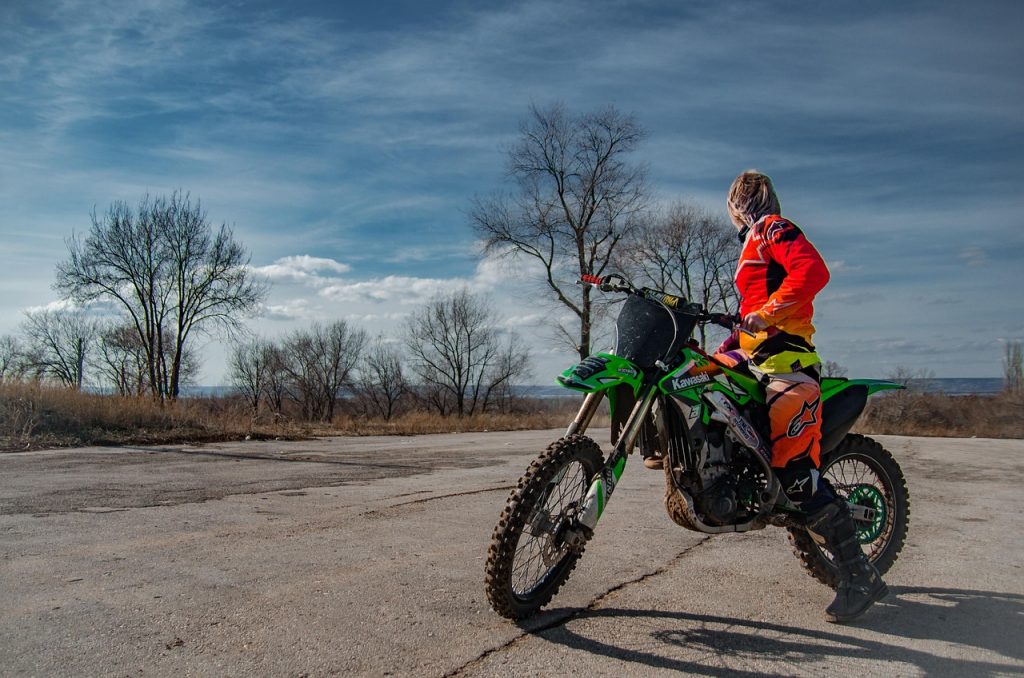
Preparing a Dirt Bike for Public-Road Riding
To operate a dirt bike on public roads in Alaska, the motorcycle must meet standard road-use equipment requirements.
Required Equipment
Common equipment requirements include:
Headlight with high and low beams
Brake light and taillight
Rear reflector
Front and rear turn signals
Rearview mirrors on both sides
Horn audible from at least 200 feet
DOT-approved tires
Speedometer and odometer
Muffler that complies with noise regulations
Title and Registration
To operate on public roads, riders must:
Obtain a title through the Alaska DMV
Register the motorcycle with the state
Submit required documentation and forms
Inspection
The motorcycle may need to be inspected by an authorized inspection station to confirm it meets safety and emissions requirements.
Insurance
Liability insurance is required for motorcycles operated on public roads in Alaska.
License Plate
A valid Alaska license plate must be mounted on the motorcycle and remain clearly visible.
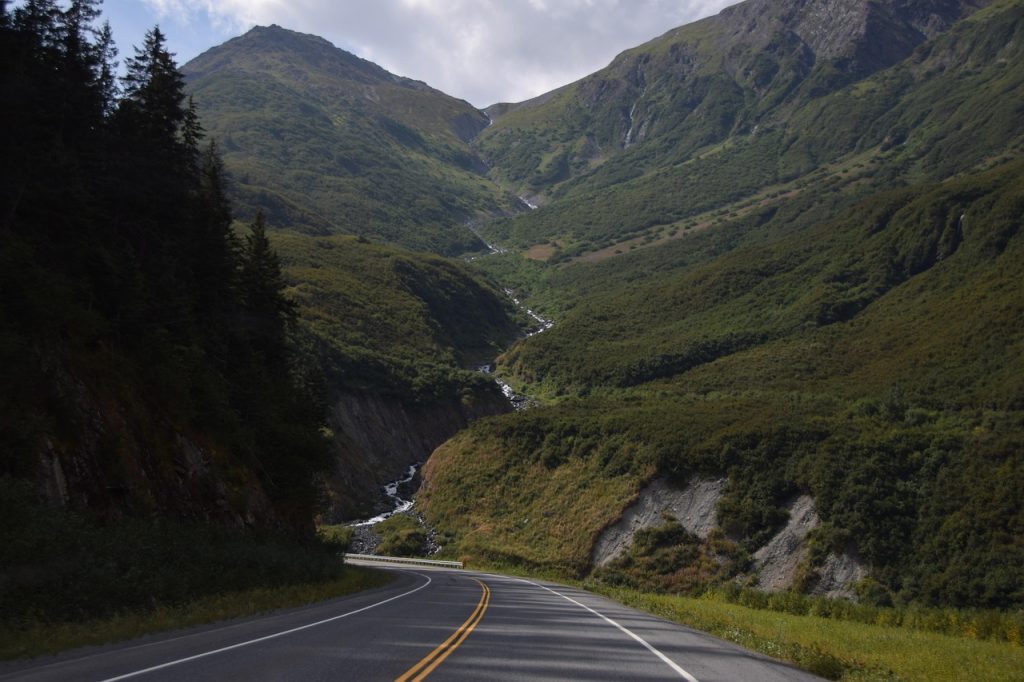
Where You Can Ride
Off-Road Areas
Dirt bikes may be ridden in the following locations:
Private Property
Riding is allowed with permission from the property owner.
Public Lands
Some public lands allow off-road riding, but only on designated trails or areas.
For example, Wrangell–St. Elias National Park requires permits for off-road vehicle use in designated locations.
Road Use
Motorcycles equipped for road use may operate on many public roads, though interstate highways and limited-access highways are typically restricted.
Off-road dirt bikes may also cross public roads at a 90-degree angle during daylight hours if the rider comes to a full stop and yields to traffic.
Rider Requirements
To operate a dirt bike on public roads in Alaska, riders must meet several requirements.
Driver’s License
A valid driver’s license with a motorcycle endorsement is required.
Helmet
Riders under 18 must wear a DOT-approved helmet. Helmet use is encouraged for all riders.
Insurance
Liability insurance is required for motorcycles operated on public roads.
Penalties for Violations
Failure to follow Alaska dirt bike regulations may result in penalties such as:
Fines for unregistered or improperly equipped vehicles
Vehicle impoundment
Suspension of driving privileges for operating without a valid license or insurance
Relevant Alaska Laws and Agencies
- Alaska Division of Motor Vehicles (DMV): Handles vehicle titling, registration, and licensing. dmv.alaska.gov
- Alaska Department of Natural Resources: Manages public lands and designated OHV trails. dnr.alaska.gov
- Alaska Statutes Title 28: Outlines motor vehicle laws, including those pertaining to dirt bikes and off-road vehicles.