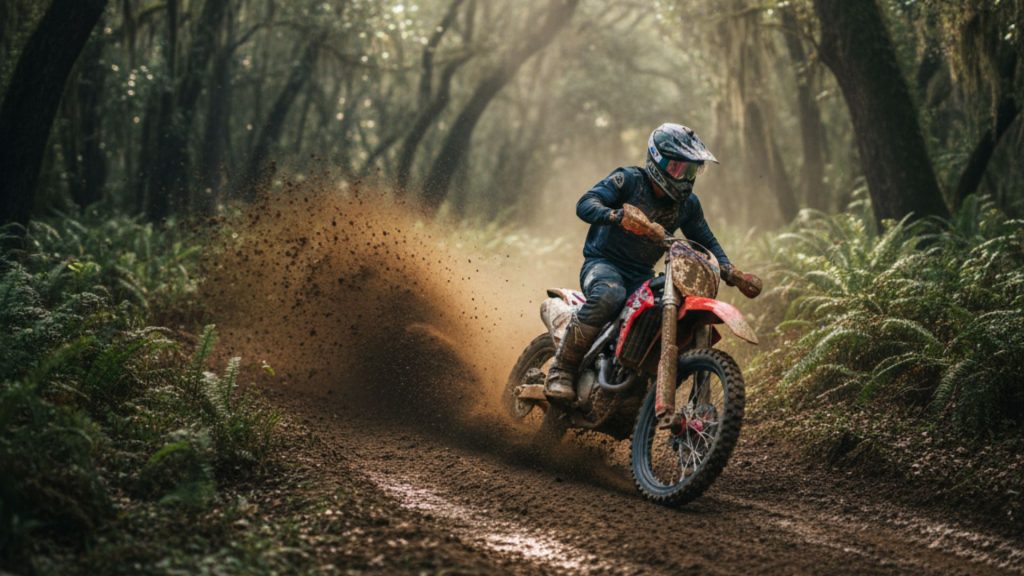
If you’re wondering can you ride a dirtbike on the street, the answer in Alabama depends on whether the bike meets on-road equipment standards and is properly titled, registered, and insured. Many riders also ask are dirt bikes street legal by default—most off-road models are not, unless they’ve been converted and approved for roadway use. This guide breaks down the practical rules riders need to know, including are dirt bikes street legal in Alabama, what equipment is typically required, and where you can ride legally both on and off the road.
Alabama Bike Laws: What You Need to Know
Off-Road Use: Registration Requirements
In Alabama, dirt bikes used exclusively off-road are not required to be registered or titled. However, if you plan to ride on public lands designated for off-road use, you must obtain an Off-Road Vehicle (ORV) registration from the Alabama Law Enforcement Agency (ALEA). The registration fees are:
- Public Use: $45.00, plus $2.50 issuance fee (valid for three years)
- Private Use: $15.00, plus $2.50 issuance fee (valid for three years)
Helmet and Eye Protection:
- All Riders: Alabama law mandates that all riders and passengers wear a DOT-approved helmet when operating a motorcycle or motor-driven cycle. The helmet must have a hard, shatter-proof shell and a secure chin strap.
Age Restrictions:
- Under 16: Riders under 16 are allowed to operate dirt bikes off-road but must be under the direct supervision of someone 18 years or older.
Operation on Public Roads:
- Operating dirt bikes on public streets, roads, or highways is prohibited unless the bike has been properly modified to meet street-legal requirements and is registered accordingly.
Lighting Requirements:
- If operating during low-light conditions, the dirt bike must be equipped with a functioning headlamp and taillamp.
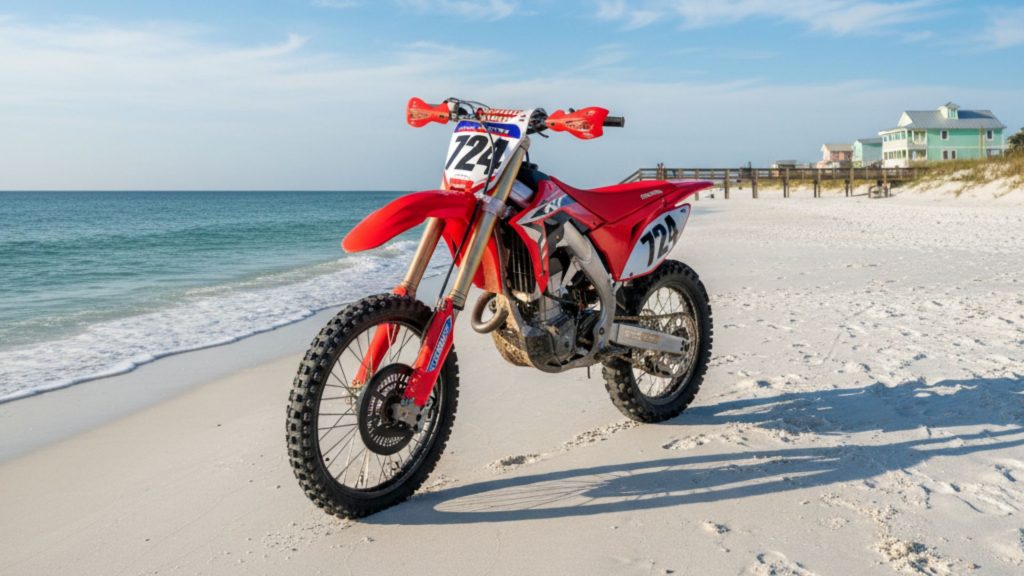
Street Use: Converting a Dirt Bike to Street-Legal
To operate a dirt bike on public roads in Alabama, it must be converted to meet street-legal requirements:
Conversion Steps:
- Required Equipment:
- DOT-approved headlight with high and low beams
- Taillight with brake light function
- Rear reflector
- Turn signals (front and rear)
- Rearview mirrors (one on each side)
- Horn audible from at least 200 feet
- DOT-approved tires
- Speedometer and odometer
- Muffler to comply with noise regulations
- Title and Registration:
- Obtain a title from the County Clerk.
- Register the bike with the County Treasurer.
- Submit the necessary forms and documentation to the Alabama Department of Revenue.
- Inspection:
- Have the bike inspected by a licensed inspection station to ensure it meets all safety and emissions standards.
- Insurance:
- Secure liability insurance for the bike.
- License Plate:
- Affix a valid Alabama license plate to the bike in a visible and unobstructed manner.
Where You Can Ride
Off-Road:
- Private Property: Riding on private property is permitted with the landowner’s consent.
- Public Lands: Riding on public lands is allowed only in designated areas and trails. For example, the National Forests in Alabama have specific trails open to Off-Highway Vehicles (OHVs).
On-Road:
- Permitted Roads: Street-legal dirt bikes can operate on public roads, excluding interstate highways and limited-access highways.
- Crossing Roads: Off-road dirt bikes may cross public roads at a 90-degree angle during daylight hours, provided they come to a complete stop and yield to oncoming traffic.
Rider Requirements
- License: A valid driver’s license with a motorcycle endorsement is required to operate a street-legal dirt bike on public roads.
- Helmet Use: All riders must wear a DOT-approved helmet.
- Insurance: Liability insurance is mandatory for all street-legal vehicles in Alabama, including dirt bikes.
Penalties for Non-Compliance
Failure to adhere to Alabama’s dirt bike laws can result in:
- Fines: Monetary penalties for unregistered or improperly equipped vehicles.
- Impoundment: Unauthorized vehicles may be impounded by law enforcement.
- License Suspension: Operating without a valid license or insurance can lead to suspension of driving privileges.
Relevant Alabama Laws and Agencies
- Alabama Law Enforcement Agency (ALEA): Handles vehicle titling, registration, and licensing.
- Alabama Department of Revenue: Oversees vehicle registration and taxation.
- Alabama Department of Conservation and Natural Resources: Manages public lands and designated OHV trails.
Frequently Asked Questions
Can you ride a dirtbike on the street in Alabama?
Only if it’s compliant for on-road use (proper title/registration and required street equipment). Many dirt bikes are sold for off-road use only, so they typically need conversion and approval before street riding.
Are dirt bikes street legal?
Most are not street legal “out of the box.” Dirt bikes are usually manufactured for off-road trails and tracks. To be street legal, they generally must meet road equipment requirements and be properly registered.
Are dirt bikes street legal in Alabama?
They can be, but only when the bike qualifies for on-road use and you follow Alabama’s registration/title and equipment requirements. If your bike is strictly off-road, you’ll likely need a street-legal conversion pathway.
If your dirt bike has paperwork issues, out-of-state complications, or you’re trying to understand your options for registration and documentation, Dirt Legal can help you identify a compliant path based on your situation and vehicle type.