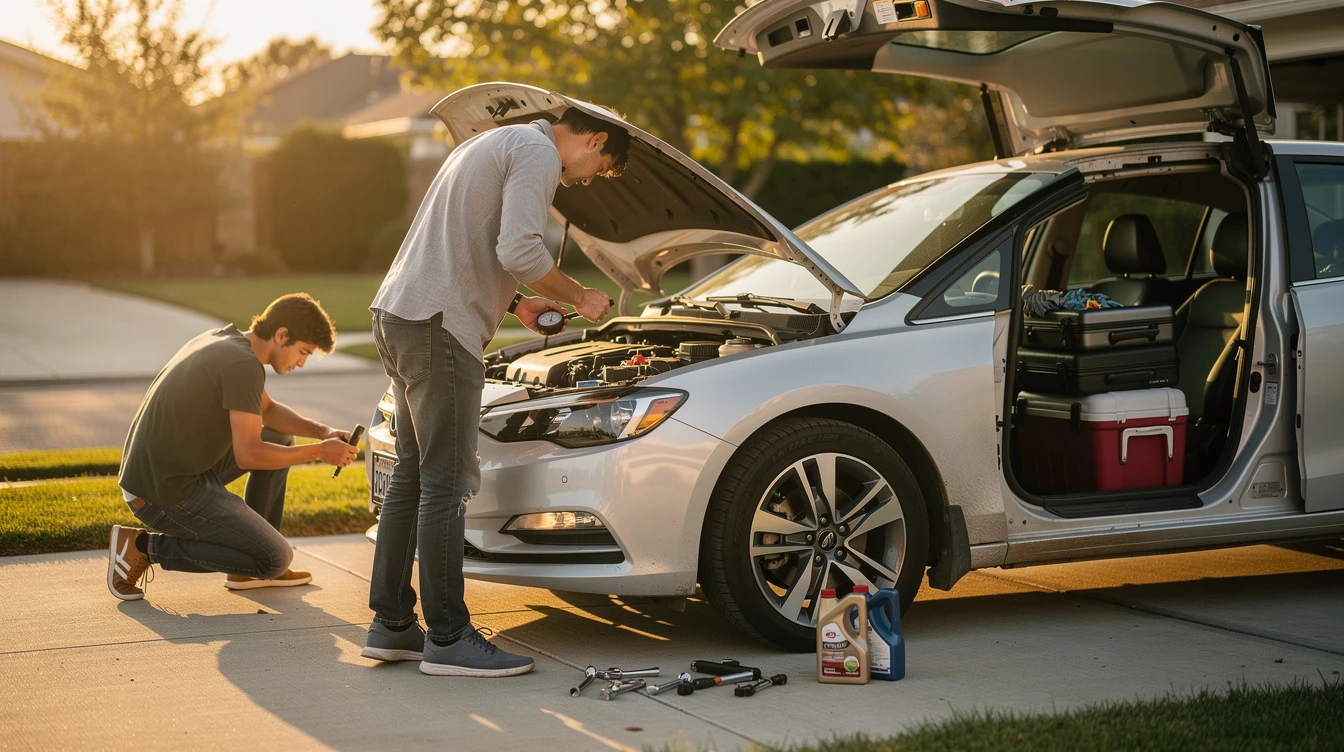
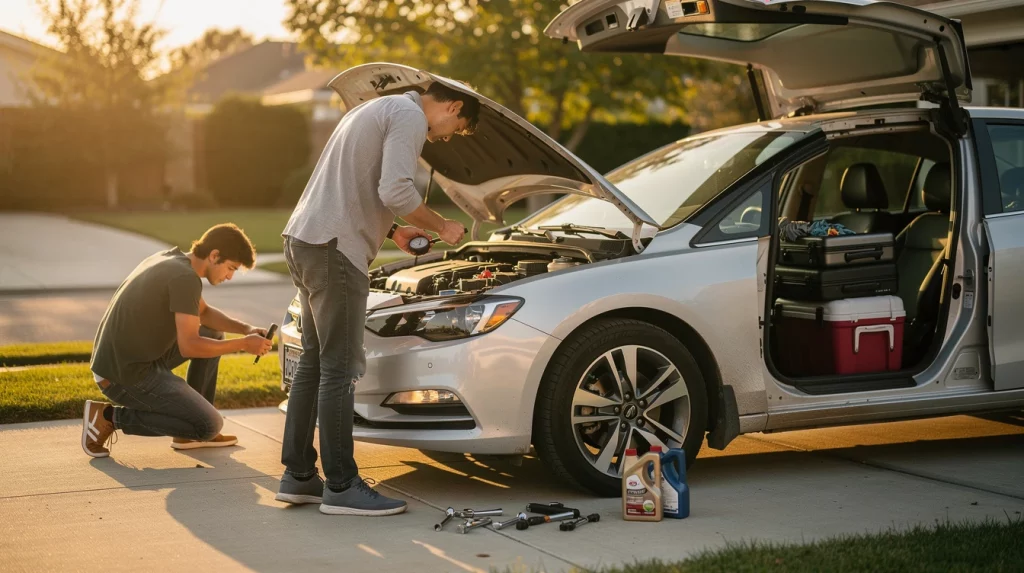
To make sure your vehicle is ready for the road, you should check your engine oil levels, tire pressure including the spare, brake pads, coolant, battery health, and all exterior lighting. These six core areas represent the most common points of failure that can turn a smooth vacation into a costly repair nightmare.
Engine Fluids and Mechanical Systems Must Be Verified
Fluid maintenance is the lifeblood of your engine. Engine oil is a lubricant that prevents metal parts from grinding together; you should check it while the engine is cool on level ground to make sure it sits between the min and max markers. Coolant, also known as antifreeze, is a liquid mixture that regulates engine temperature, preventing overheating during long drives through hot climates.
Tire Safety and Pressure Standards
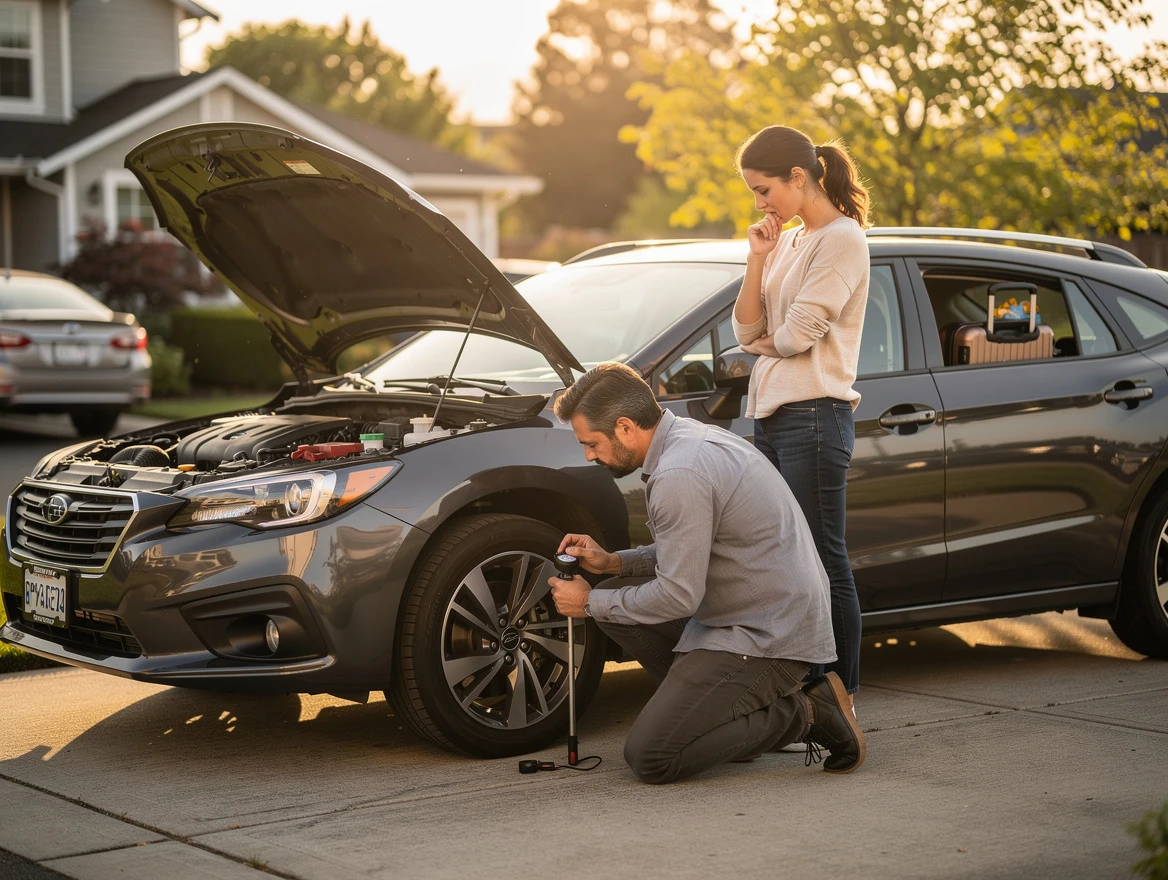
Tires are your only contact point with the pavement. Proper tire pressure is typically found on a sticker inside your driver-side door jamb, not just the number printed on the tire sidewall, which is a maximum rating. Low pressure decreases fuel economy by up to 3% and increases the risk of a blowout. Inspect your tread depth using the penny test; if you can see the top of Lincoln’s head, you need new tires before your departure.
Brake and Battery Inspection Essentials
Brake pads are friction materials that clamp onto rotors to stop your vehicle. If you hear a squealing sound when braking, your wear indicators are likely touching the rotor, signaling an immediate need for replacement. Batteries, which provide the electrical current to start your engine, often fail after 3 to 5 years of use. If your engine cranks slowly, get your battery tested at a local shop before you leave.
Verify Your Documentation Before You Leave

Before you cross state lines, make sure your registration and insurance documents are current. If you have recently moved, you might need to register your vehicle to remain compliant. Dirt Legal has helped 80,000+ vehicle orders to date (internal data, lifetime through current month, n=5,738). Understanding your local requirements helps prevent fines while traveling.
Ready to register your vehicle?
Join thousands of vehicle owners who use Dirt Legal to handle their registration quickly.
Register Your Vehicle Today →Common Document Pitfalls
Title jumping occurs when a seller signs over a title without registering the vehicle in their own name, which creates a broken chain of ownership that is difficult to fix. Always make sure your name matches the registration card. If you have lost your paperwork, seek an auto title replacement immediately to avoid issues during a traffic stop.
| Item | Frequency | Importance |
|---|---|---|
| Engine Oil | Before every long trip | Critical |
| Tire Pressure | Monthly | High |
| Brake Pads | Every 15k-30k miles | Critical |
| Headlights | Before night travel | High |
Frequently Asked Questions About Road Trip Preparation
How often should I check my oil on a long trip?
On trips exceeding 1,000 miles, you should check your oil every 500 miles. Some vehicles consume small amounts of oil naturally, and running low can cause permanent engine damage.
Does tire pressure change with the temperature?
Yes, tire pressure changes by approximately 1 PSI for every 10-degree Fahrenheit change in ambient air temperature. Always adjust your pressure based on the current weather conditions of your destination.
What is title floating?
Title floating is when a title is passed from person to person without being registered or taxed at each transfer. It is generally not allowed and can prevent you from obtaining a clean title in your name later.
Should I carry a spare tire or a patch kit?
A full-size spare is ideal, but a space-saver donut or a modern tire repair kit with a 12-volt inflator is sufficient for most passenger vehicles. Always check that your spare tire has at least 32 PSI of air.