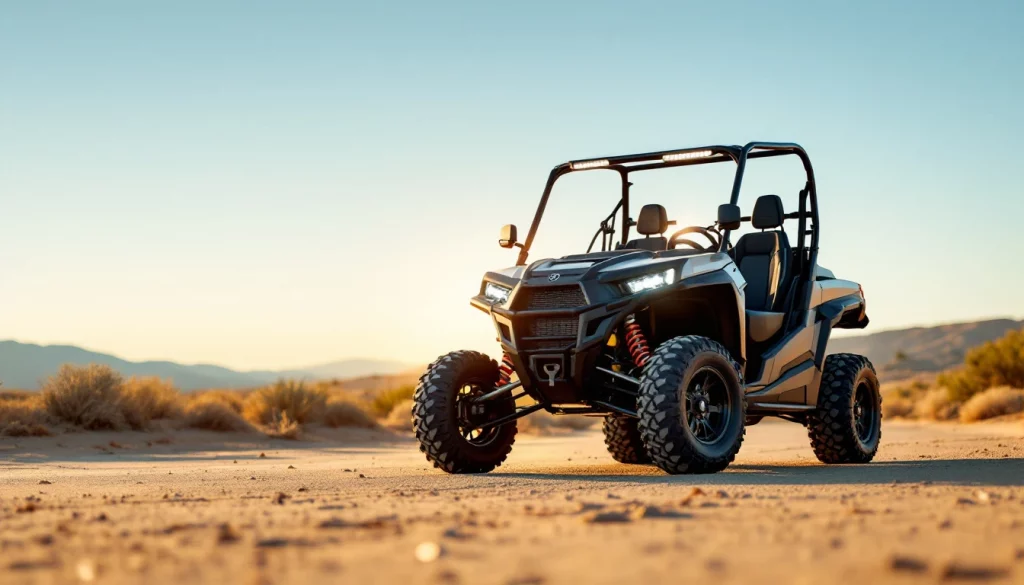
California has some of the strictest vehicle laws in the country, and side-by-sides (UTVs) exist in a tricky gray zone. Most UTVs roll off the factory floor built for off-road use only, which means getting one street-legal in California takes real work, specific equipment, and a willingness to deal with the DMV. The questions below cover what the law actually requires, what most owners do instead, and how registration alternatives can save you serious time and money.
Can You Drive a Side-by-Side on California Streets?
Technically, yes, but with major conditions. California does allow UTVs to be registered for street use under certain circumstances, but the vehicle must meet all California Vehicle Code requirements for motor vehicles, including lighting, mirrors, turn signals, a windshield, and more. Most stock UTVs don’t come close to meeting those standards without significant modifications. For a detailed look at how the process actually works, check out this guide on how to make a UTV street-legal in 2026, which walks through the five key steps most owners face.
What Equipment Does a UTV Need to Be Street-Legal in California?
California requires street-driven vehicles to have a specific set of safety and visibility equipment. For a UTV, that list typically includes:
- Headlights and taillights
- Brake lights
- Turn signals (front and rear)
- Mirrors (driver-side and rearview)
- Horn
- Windshield with wipers
- Seatbelts
- DOT-approved tires
- A working speedometer
Most UTVs need an aftermarket lighting kit, mirror additions, and a DOT tire swap at a minimum. Some models also require a catalytic converter to pass California emissions standards, which adds cost and complexity.
Does a Street-Legal UTV Need to Pass Smog in California?
Yes. California requires emissions testing for most vehicles, and UTVs are no exception if you want to register one for street use. This is one of the biggest hurdles for UTV owners in the state. Many UTVs don’t have catalytic converters and aren’t tuned to meet California Air Resources Board (CARB) standards. Getting a UTV to pass smog often means engine modifications or aftermarket catalytic converter kits, neither of which is cheap.
What Does Registration Car CA Require for a UTV?
For registration car CA purposes, a UTV being registered for street use goes through the California DMV like any other motor vehicle. You’ll need a Manufacturer’s Certificate of Origin or existing title, proof of insurance, a completed application, payment of registration fees, and a VIN inspection. A VIN inspection confirms the vehicle’s identification number matches its paperwork, which the DMV requires before issuing plates. California registration fees vary by vehicle value, but expect to pay several hundred dollars upfront plus annual renewal costs.
Are Street-Legal Quads and UTVs Treated the Same Way in California?
Not exactly. Street-legal quads (ATVs) face similar modification requirements, but they fall under a slightly different category in California law. UTVs with side-by-side seating are generally treated more like low-speed vehicles or off-highway vehicles, depending on their top speed and weight. Quads are typically registered as motorcycles or off-highway vehicles. Both require modifications to be street-legal, but the inspection checklist and registration category can differ. Check with your local DMV office to confirm which category your specific vehicle falls into before starting modifications.
Can I Register My Side-by-Side Through a Montana LLC Instead?
Yes, and this is the route many UTV owners across the country choose. Montana has no sales tax, no emissions testing requirements, and no annual smog inspections. By forming a Montana LLC and titling your UTV through it, you can get Montana plates without going through California’s modification and smog gauntlet. You still can’t ride on California public roads without the physical modifications required by state law, but you avoid California’s sales tax (which can be 10%+ in some counties) and the registration cost burden. If this option interests you, how the process works is straightforward, and Dirt Legal handles the paperwork with our paperwork support.
What Are Montana Plates and Why Do UTV Owners Use Them?
Montana plates come from registering a vehicle, including UTVs and side-by-sides, through a Montana LLC. Montana is one of the few states with no sales tax on vehicle purchases and no emissions testing requirements. For a $60,000 UTV, avoiding California’s sales tax alone can save $5,000 to $6,000 or more. The vehicle is owned by the LLC, and the LLC is registered in Montana. Car registration in Montana is a well-established option for high-value vehicles, RVs, and powersports equipment. You can find the Montana fee schedule at the Montana Vehicle Title and Registration page for full transparency on costs.
Do I Need a DMV Title Transfer If I Buy a Used Side-by-Side?
Yes. A DMV title transfer is required any time ownership of a titled vehicle changes hands. If you buy a used side-by-side with a clean title, the seller signs over the title to you and you file the transfer with the appropriate state. Problems come up when sellers don’t sign properly, or when the title has been skipped through multiple owners, which is sometimes called title jumping. The seller never signed the title? Here’s what to do covers exactly that situation and the steps to get your paperwork sorted. Skipping the title transfer creates problems down the road when you try to register, sell, or insure the vehicle.
What Is a Bill of Sale for a UTV Purchase and Do I Need One?
A bill of sale, an automotive document is a written record of a private vehicle sale. It includes the buyer and seller names, vehicle description, VIN, sale price, and date of sale. For a UTV purchase in California, a bill of sale is especially important if the seller doesn’t have a proper title or if you’re buying from a private party. It’s not a substitute for a title, but it supports your ownership claim during the registration process and can be required for a bonded title application if the title is missing.
Can I Ride My Side by Side on California Off-Highway Vehicle (OHV) Areas Without Street Registration?
Yes. California has a separate OHV registration program for vehicles used exclusively off-road. If your UTV stays on designated trails and OHV parks and never touches a public road, you register it as an off-highway vehicle with California DMV, which is a simpler and cheaper process. The OHV sticker is not the same as a street registration plate. Mixing the two up creates problems. If you want both trail and street access, you need the full street-legal modification and registration process described above.
What Happens If I Drive an unregistered side-by-side on a California Road?
Driving an unregistered vehicle on a public road in California can result in fines, vehicle impoundment, and citation. UTVs are frequently targeted in areas near OHV recreation zones where riders sometimes mistakenly cross public roads. Law enforcement can also check insurance status at the same stop. The fines for unregistered operation in California are not trivial, and an impound adds towing and storage fees on top. Getting registration sorted before you ride, whether through California directly or through a Montana LLC, is the smart move. The true cost of letting your registration expire covers just how quickly fees and penalties stack up.
How Do I Get Started Registering My Side-by-Side?
Your path depends on your goals. If you want to ride on California public roads, you’ll need the equipment modifications, a smog check, and California DMV registration. If your main goal is off-road use with proper title documentation and you want to avoid California sales tax, a Montana LLC registration is worth a serious look. Dirt Legal handles the full Montana LLC registration process for you, including title and plates, without a trip to any government office.