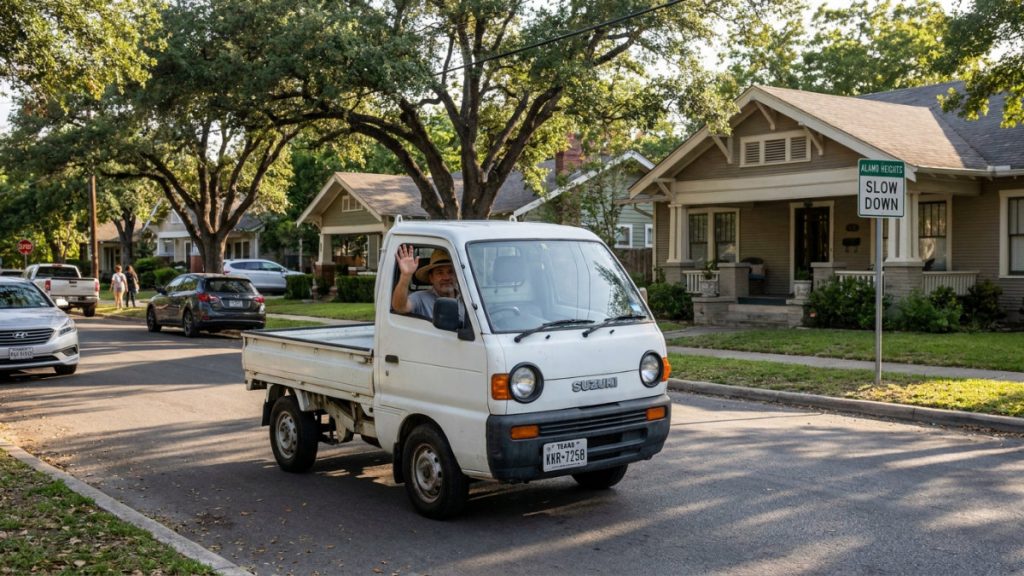
Are kei trucks street-legal in the US? The short answer is: it depends entirely on your state. These compact Japanese mini trucks have built a devoted following among farmers, hunters, and off-road enthusiasts, but the rules around driving one on public roads vary dramatically from one state to the next. Some states welcome them with open arms. Others barely acknowledge they exist.
This guide breaks down exactly where kei trucks stand under US registration and road-use rules, what equipment you typically need to make yours road-ready, and how the registration process actually works. By the end, you’ll know what your state requires and what your realistic options are.
If you’re already past the research phase and just want to get your kei truck registered, we can help with that too.
What Exactly Is a Kei Truck?
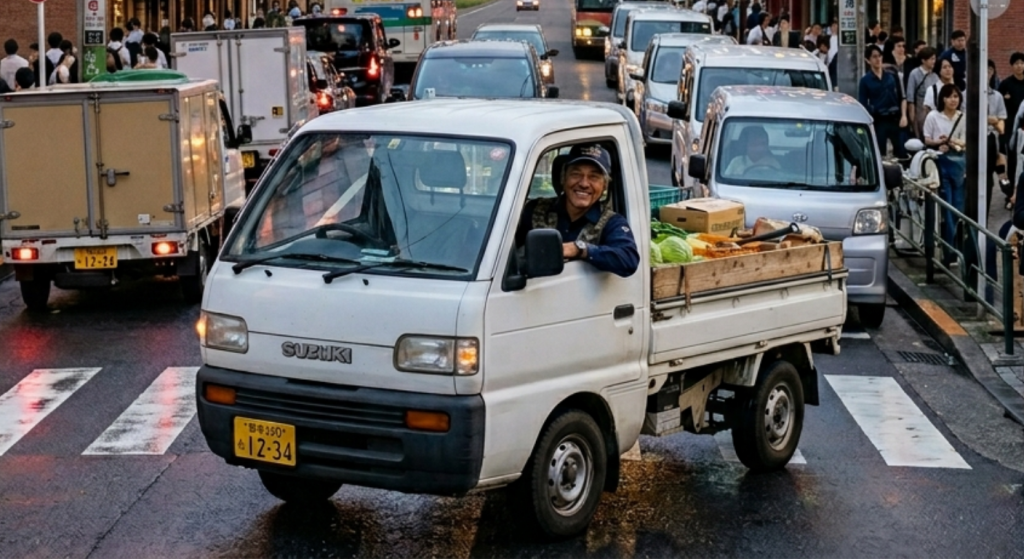
Kei trucks, known in Japan as kei class vehicles (軽自動車), are a category of miniature work trucks designed under Japan’s kei car regulations. The most common models you’ll see in the US are the Honda Acty, Subaru Sambar, Daihatsu Hijet, Suzuki Carry, and Mitsubishi Minicab. These trucks were built for Japan’s narrow roads and tight farm lanes, and they’ve become popular imports for the same reasons here.
Key Specs That Define a Kei Truck
- Engine displacement: typically 550cc to 660cc
- Gross vehicle weight: under 1,500 lbs in most cases
- Bed length: roughly 6 feet or less
- Top speed: generally 55 to 65 mph
- Drive options: 2WD or 4WD, often with low-range gearing
Because these trucks were originally manufactured for Japan’s domestic market and were never certified under US federal safety standards, they fall into an unusual regulatory category here. That distinction is at the root of almost every question about whether they’re street-legal.
The 25-Year Import Rule
Under NHTSA regulations, vehicles that are at least 25 years old are exempt from the federal motor vehicle safety standards that apply to newer imports. Most kei trucks on the US market today were manufactured in the 1990s and early 2000s, meaning a growing number of them now clear that 25-year threshold. This is what makes registration and road use possible in many states. For more context on the broader JDM import picture, see our guide on Japanese Domestic Market Vehicles: JDM Imports US Market, which covers how the 25-year rule applies across different vehicle categories.
Are Kei Trucks Street-Legal? How State Law Decides
Federal rules clear the way for older kei trucks to enter the US, but actual road use is governed at the state level. There is no single national answer to whether kei trucks are street-legal. Each state sets its own standards for what vehicles may be titled, registered, and driven on public roads.
Ready to register your vehicle?
Join thousands of vehicle owners who use Dirt Legal to handle their registration quickly and hassle-free.
States Where Kei Trucks Are Generally Permitted
A solid number of states have either specific provisions for low-speed or off-road utility vehicles or general registration frameworks that kei trucks can fit into. States that have historically been more accommodating include Montana, Kansas, Wyoming, Tennessee, and several others in the rural South and Mountain West. Montana in particular has no emissions testing requirement and a relatively flexible approach to vehicle registration, which makes it a popular choice for kei truck owners nationwide.
If you own a kei truck and live somewhere with stricter rules, registering through a Montana LLC vehicle registration is a legitimate option that many owners use. Montana charges no sales tax on vehicle purchases and imposes no emissions inspections, which can result in meaningful savings on top of the registration benefits. You can read about how that process works in our breakdown of Hidden Perks of a Montana License Plate.
States With More Restrictions
States like California, New York, and Illinois impose stricter safety equipment requirements and often require vehicles to meet federal motor vehicle safety standards to be titled for street use. In California, kei trucks typically cannot be registered for on-road use without significant modification. That said, rules do change, and your local DMV is the authoritative source for your state’s current requirements.
What Equipment Do You Need to Make a Kei Truck Street-Legal?
Even in states that permit kei trucks on public roads, you’ll typically need to confirm that your truck meets that state’s minimum equipment standards. Most states follow a similar baseline, though specifics vary.
Standard Equipment Requirements
- Headlights and taillights: Front and rear lighting that meets your state’s brightness and positioning standards
- Turn signals: Front and rear, often required to be amber in front and red in rear
- Brake lights: Working brake lights visible from a defined distance
- Horn: Functional and audible from a minimum distance
- Windshield with wipers: Required in virtually every state for on-road use
- Mirrors: At minimum a driver-side exterior mirror and rearview mirror
- Speedometer: Functional and in miles per hour for US roads
- DOT-compliant tires: Many kei trucks import with Japanese-market tires that may not carry DOT markings
Speed and Road-Type Restrictions
Even in permissive states, some kei trucks are classified as low-speed vehicles (LSVs) with a top-speed cap of 25 mph, which restricts them to roads with speed limits of 35 mph or less. Others, particularly the more powerful models, can be registered as standard light-duty trucks without speed restrictions. The classification your state assigns will determine where you’re allowed to drive. If you’ve worked through similar questions for side-by-sides or UTVs, the framework is comparable. Our article on whether you can make a UTV street-legal in South Dakota walks through a similar equipment-and-classification analysis worth reading.
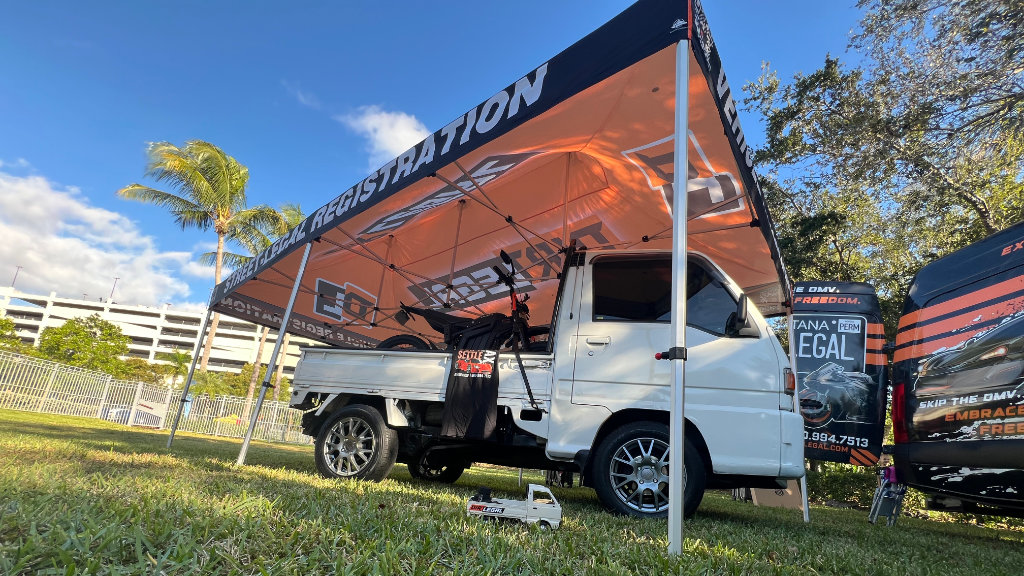
State-by-State Kei Truck Registration Overview
The table below gives a general sense of how different states approach kei truck registration. Requirements change, and you should confirm current rules with your state DMV before purchasing or registering.
| State | Kei Trucks Generally Permitted? | Notes |
|---|---|---|
| Montana | Yes | No emissions testing, no sales tax, flexible registration framework |
| Kansas | Yes | Specific mini truck statute in place since 2007 |
| Wyoming | Yes | Permitted on roads with speed limits under 35 mph in most areas |
| Tennessee | Yes | Registration allowed with standard safety equipment |
| Texas | Conditional | Some counties permit, others restrict; confirmation required locally |
| Arkansas | Conditional | LSV classification may apply depending on top speed |
| California | Generally No | CARB emissions and FMVSS compliance barriers are significant |
| New York | Generally No | Strict inspection requirements limit road registration |
| Illinois | Generally No | Equipment and safety standards create barriers in most cases |
| South Dakota | Yes | Low-fee registration, straightforward title process via SD DMV |
Not sure which registration path fits your kei truck? We’ve spent ten years helping people work through exactly these situations, starting with our own need to register vehicles the system wasn’t built for.
How to Register a Kei Truck for Road Use
The registration process for a kei truck follows the same general framework as any vehicle, but a few steps are unique to imports. Getting your paperwork right from the start saves a lot of back-and-forth with the DMV.
Step-by-Step Registration Process
- Confirm your truck is 25 years old or older (or meets your state’s specific import exemption rules)
- Obtain the Japanese export certificate, known as a shakken or export certificate, from the seller or importer
- Get a US-issued title by presenting import documents to your state DMV or, in some cases, using a bonded title process if documentation is incomplete
- Verify equipment compliance for your state’s road-use standards
- Submit your title application and registration fee to your state DMV or county treasurer
- Receive your plates and registration card
If your truck arrived without clean title documentation, our guide on how to get a title when you don’t have one covers the bonded title process in detail. The same principles apply to kei trucks as to motorcycles and other off-road-origin vehicles.
Montana LLC Registration for Kei Trucks
One option that kei truck owners across the country use is forming a Montana LLC and registering the vehicle through it. Montana imposes no sales tax on vehicle purchases, which means you could save thousands depending on the purchase price. The Montana Motor Vehicle Division handles titles and registrations for vehicles owned by Montana LLCs, and the process doesn’t require you to live in Montana. This approach is popular for expensive vehicles and specialty imports alike.
If you want to understand how the registration process works end to end, how the process works is a good place to start before committing to any particular path.
Where Kei Trucks Came From, and Why Rules Are Still Catching Up
Japan’s kei class was created in 1949 to encourage small, affordable vehicle production during the postwar recovery period. For decades, kei trucks were purely a domestic tool, primarily used on farms and construction sites. They were never designed for US roads or tested against US safety standards.
When US importers started bringing them over in the late 1990s and early 2000s, most states had no idea what to do with them. The 25-year exemption eventually made importation straightforward at the federal level, but state legislatures and DMVs were slow to create registration categories that fit these vehicles cleanly. Some states acted proactively and created mini truck statutes. Others left it in a gray area. A few effectively banned them by omission, simply because they didn’t fit any existing category.
That’s improving, but unevenly. If you’re shopping for a kei truck today, checking the registration situation in your state before you buy is genuinely important. It’s much harder to solve a registration problem after the fact than to choose a truck you can actually use the way you intend.
For a look at how similar regulatory situations have played out in the broader off-road vehicle space, our article on navigating vehicle registration laws and car registration requirements gives useful background on how state-level rules interact with federal standards across different vehicle types.
Frequently Asked Questions About Kei Truck Street-Legal Status
What states allow kei trucks on public roads?
States with the most permissive kei truck rules include Montana, Kansas, Wyoming, Tennessee, South Dakota, and parts of Texas. Kansas was one of the first states to pass specific mini truck legislation in 2007. Montana’s lack of emissions testing and sales tax makes it popular even for owners in other states who register through a Montana LLC. The list of accommodating states has been growing, but you should always verify current rules with your state DMV before purchasing.
Do kei trucks need to be inspected to be street-legal?
It depends on the state. Many rural and Western states do not require safety inspections for older vehicles, which works in kei trucks’ favor. States that do require inspections, like New York and Virginia, may reject kei trucks that don’t meet lighting, safety equipment, or emissions standards. Even in inspection states, some kei trucks can pass if they’ve been properly modified with DOT-compliant components. Check your state’s DMV website for current inspection requirements.
Can you drive a kei truck on the highway?
Generally, no. Most kei trucks are limited to roads with speed limits of 35 to 45 mph in states that permit them, due to their low-speed vehicle classification. Even in states without a formal speed cap on kei trucks, driving one at highway speeds carries real safety risk given their weight, size, and crash performance relative to modern vehicles. Most owners use them for farm roads, rural routes, job sites, and low-speed utility purposes, which is what they were designed for.
How old does a kei truck need to be to import it to the US?
Under NHTSA’s 25-year rule, a vehicle must be at least 25 years old to be imported to the US without meeting federal motor vehicle safety standards. This is why most kei trucks on the US market are 1990s and early 2000s models. Trucks manufactured in 2000 became eligible for import in 2025. EPA emissions rules also carry a 21-year exemption, and most trucks that clear the NHTSA threshold will clear the EPA threshold as well.
Can you get a title for a kei truck without the original Japanese documents?
Yes, in many cases. If you purchased a kei truck without clean title documentation, a bonded title or court-order title may be available depending on your state. A bonded title involves purchasing a surety bond, typically valued at 1.5 times the vehicle’s appraised value, and presenting it to the DMV as proof of ownership. Not every state offers bonded titles, so the process varies. See our guide on getting a title when you don’t have one for a full breakdown.
Is a Montana LLC a real option for registering a kei truck?
Yes, and it’s one that thousands of vehicle owners use for exactly this kind of situation. Montana has no sales tax, no emissions testing requirement, and a registration process that can be completed remotely through an LLC. The Montana Secretary of State’s office handles LLC formation, and vehicle registration goes through the Montana Motor Vehicle Division. This approach is most beneficial for higher-value vehicles where sales tax savings are substantial, but it’s available regardless of your home state. You don’t need to be a Montana resident.
What’s the difference between a kei truck and a low-speed vehicle classification?
A low-speed vehicle (LSV) is a specific federal category for vehicles with a top speed between 20 and 25 mph that meet certain safety equipment standards. Some kei trucks fall into this category, but many do not, either because they’re faster or because they weren’t built to LSV specs. Whether your kei truck gets classified as an LSV, a light-duty truck, an off-highway vehicle, or something else depends on your state’s registration system and the vehicle’s specifications. The classification matters because it determines where you can drive it and at what speeds.
Do I need insurance to drive a kei truck on the road?
Yes. If your kei truck is registered for road use, your state will almost certainly require liability insurance at minimum. Some states may also require proof of insurance before they’ll issue registration. Standard auto insurance policies may or may not cover kei trucks depending on the insurer, so it’s worth contacting your insurance provider directly before you finalize your registration. Specialty vehicle or farm vehicle insurance policies can be a good fit for kei trucks used primarily in agricultural settings.
Ready to Get Your Kei Truck Registered?
Dirt Legal started because we wanted to register our own vehicles and couldn’t find an easy way to do it. Ten years and thousands of registrations later, we’ve built the process that didn’t exist when we needed it. If you have a kei truck sitting in your driveway waiting on paperwork, we know exactly how to help.
The Bottom Line on Kei Trucks and Street-Legal Status
Are kei trucks street-legal? In many states, yes, but the answer depends on your state’s specific rules, your truck’s age and equipment, and how it gets classified in your DMV’s system. The 25-year federal import exemption clears the biggest hurdle for most late-1990s and early-2000s models, and states like Montana, Kansas, Wyoming, South Dakota, and Tennessee have registration frameworks that accommodate these vehicles well. States with stricter safety and emissions requirements are harder, but not always impossible. Getting the right title documentation, confirming your equipment meets state standards, and choosing the right registration path, whether in your home state or through a Montana LLC, makes the difference between a truck you can drive and one that sits in your field.